Showing posts with label Roberto Clemente. Show all posts

Sunday, June 09, 2019

CARLOS DELGADO EMBRACED THE LEGACY OF 21


By Adrian Burgos
https://www.lavidabaseball.com/carlos-delgado-clemente-legacy/
June 8, 2019
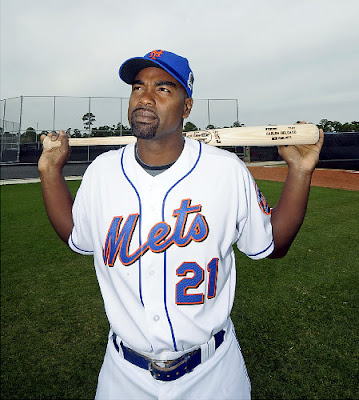
Image result for carlos delgado mets


Twenty one is a sacred number for many throughout baseball, especially Latino fans and players.  For so many, 21 stands for so much more than a number. It represents the legacy of Hall of Famer Roberto Clemente. This is why it’s unsurprising that, as James Wagner wrote for the New York Times, for the current crop of Puerto Rican players that includes All-Stars Javier Báez, Francisco Lindor, Carlos Correa and Eddie Rosario, among others, No. 21 is virtually retired.
A lot of responsibilities come when a Puerto Rican or any Latino player decides to wear 21. Expectations are raised, not only of the player’s on-field performance but also of what the player does in their community.
A seasoned veteran when he joined the New York Mets in 2006, Carlos Delgado knew exactly what he was doing when he decided to wear No. 21. Delgado embraced the legacy, deciding to put 21 on his back as a way to honor the legacy of fighting for others and speaking for justice. It was the ultimate tribute to Clemente, Delgado insists.
“The reason why I wore 21 is because of Clemente,” Delgado said at his Extra Bases Foundation office in Dorado, Puerto Rico. “As a Puerto Rican, you understand how big Clemente was. Obviously, we can go into his stats, the Gold Gloves, the All-Star games, and the batting champions … but the legacy, that fight for justice, social justice, I think is more important.”

HONORING THE PAST

The native of Aguadilla, Puerto Rico spoke with more than his bat with which he struck 473 home runs during his major league career. More than a decade before football player Colin Kaepernick’s decision to kneel for the U.S. national anthem in protest of police brutality, Delgado took his own stance by not coming out of the dugout for the playing of “God Bless America” in protest of the U.S. invasion of Iraq and the U.S. military’s continued test bombings in the Puerto Rican island of Vieques.
Delgado’s stance did not generate the social tumult that surrounded Kaepernick’s protest. Nonetheless, Delgado’s protest was entirely in character with his commitment to speaking out on issues of justice.
The decision to wear No. 21 and to speak out on issues of justice was inspired by Delgado’s understanding of the history of the Puerto Rican players who came before him.
“As a player, a black player from Puerto Rico, a Latino, getting into the big leagues and hearing the stories of Clemente and (Orlando) Cepeda and Victor Pellot, how hard they had it, when you go in it’s much easier,” he said. “I’m not saying we did not see discrimination, because I did. I personally did. But it wasn’t like, colored players here, whites here. You sit on the back of the bus, or you can’t eat here. It wasn’t as blatant like that. But I feel like Clemente was one of the icons that opened that door, so it’s a tribute to him to wear No. 21.”
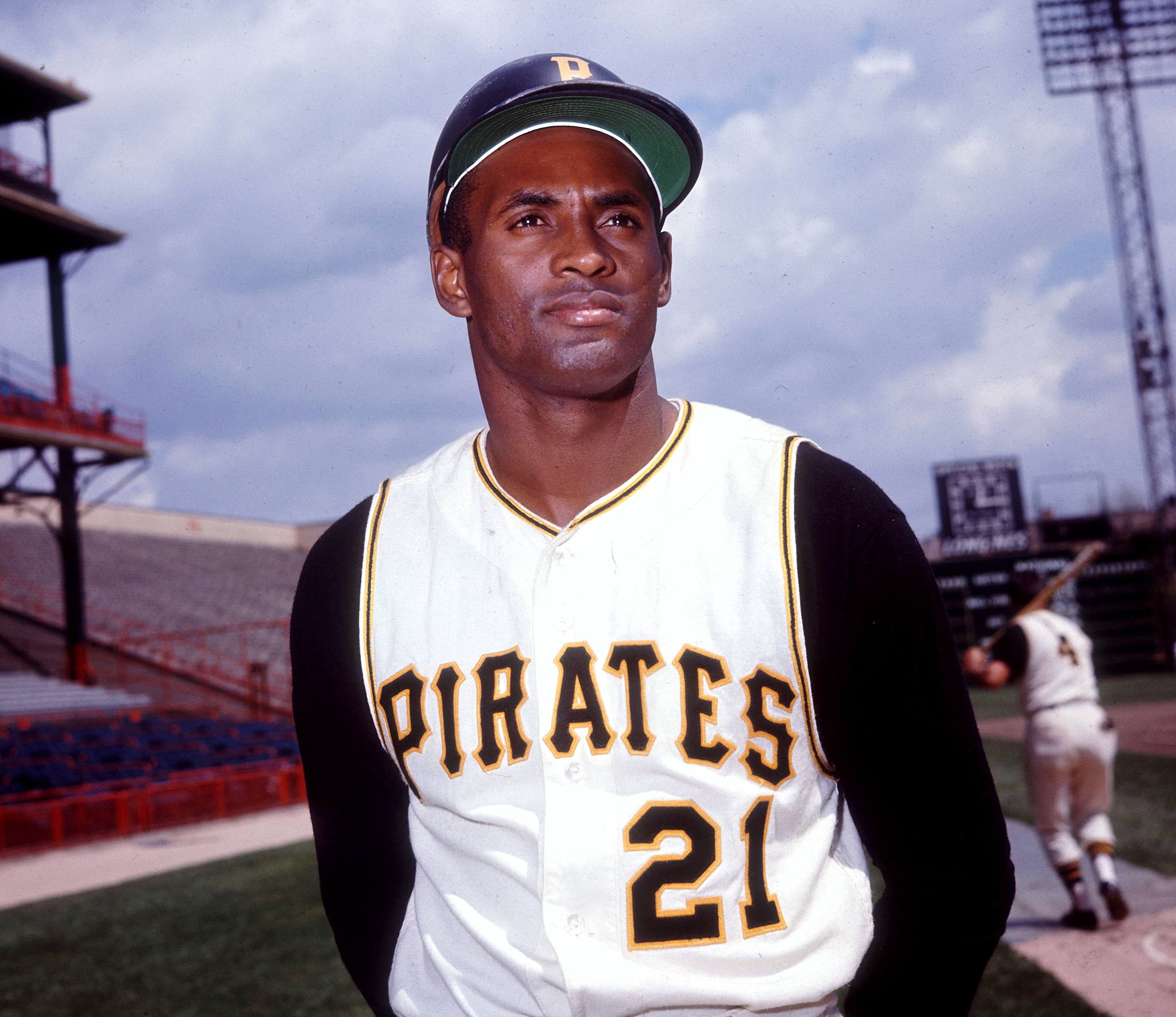
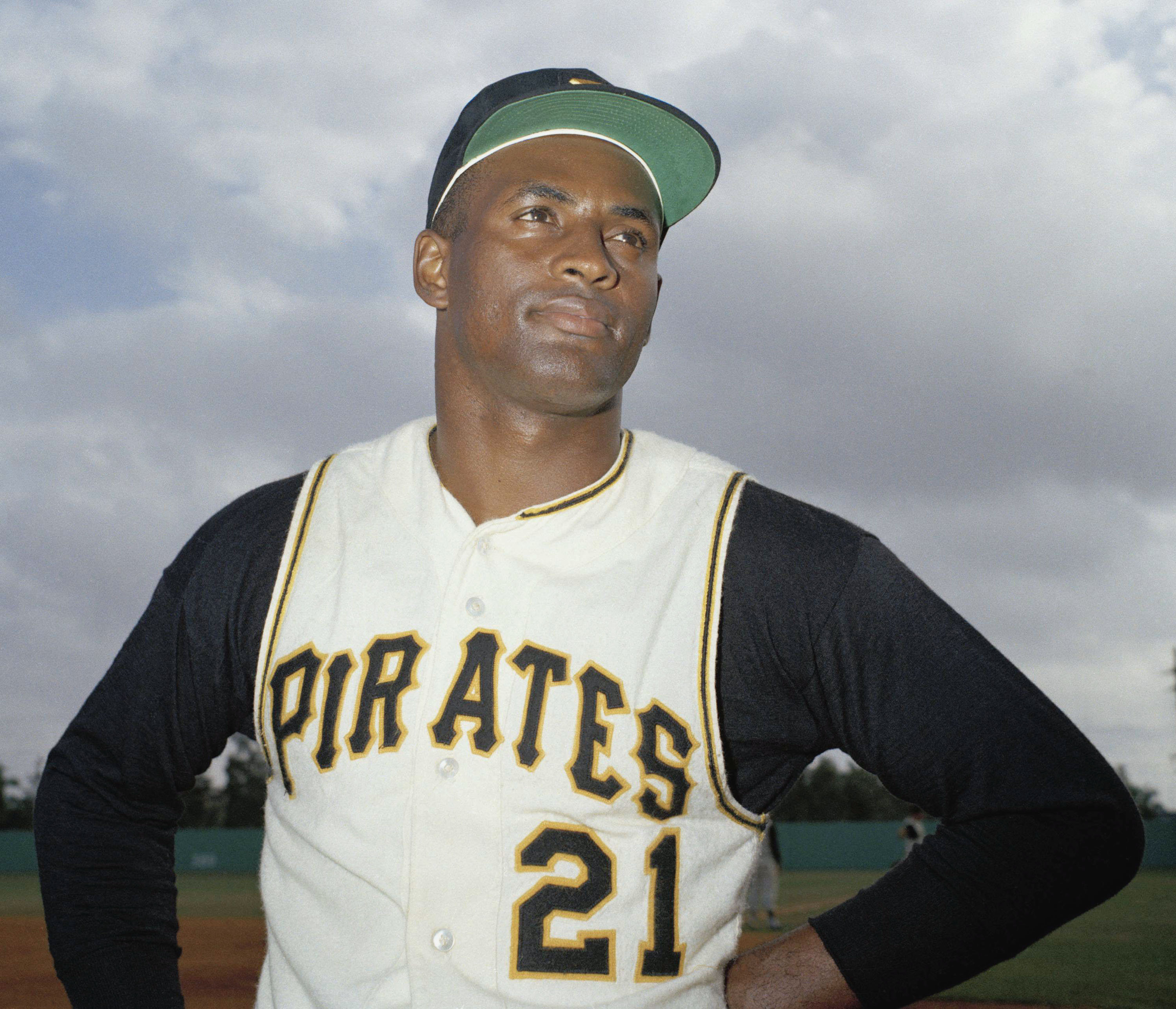
Image result for roberto clemente

A GOOD EXAMPLE

Delgado had heard stories about Clemente since he was a young boy. Everyone seemingly had a Clemente story to share, whether it was about his greatness as a player, the example Clemente set in helping others, or of the genuine humility and dignified pride Clemente possessed.
“Sense of compassion, I would think it came from my dad. He’s a social worker. He was a social worker by heart. I’m not taking anything away from my mom. My mom is a great person, and she’s very compassionate, in a completely different way from my dad. So maybe I’m a hybrid between the two,” Delgado said.

A DIRECT LINK TO CLEMENTE

In 2006 Delgado received the ultimate recognition for the work he did beyond the playing field and gained a direct link to Clemente. That October, Delgado was named recipient of the Roberto Clemente Award during the World Series between the Cardinals and the Tigers.
In the ceremony prior to Game 3 in 2006, Vera Clemente said Delgado’s “performance on the field and dedication and commitment to the community truly embody the spirit of this Award.”
“The Roberto Clemente Award is probably one of the biggest accomplishments that I ever received, just because having your name attached to the name of the person that you follow, that you emulate, is priceless, in a very humble way,” Delgado said.
Entering into the special fraternity of Clemente Award winners was the ultimate recognition of good works for Delgado.
“I don’t do things to get awards. I do things because I believe they’re good. I try to do it for the right reasons. … It was rewarding because, you know what?  … You are doing the right thing, more than anything else … That’s always going to be special,” Delgado declared.
Wearing 21 was the ultimate tribute on the field, according to Delgado. Just as important, Delgado firmly believes that the work done beyond the ballpark, such as his involvement in humanitarian work and supporting youth initiatives through his Extra Bases Foundation is another way he and others continue to pay tribute to Clemente’s legacy.

Tuesday, January 01, 2019

'Roberto was our brother': Dave Parker recalls first Pirates spring training after Clemente's death


By Dave Parker and Dave Jordan
March 22, 2018
Image result for dave parker roberto clemente
Editor's note: The following is former MLB All-Star Dave Parker's remembrance of the Pirates' first spring training after the death of Roberto Clemente, who died in a plane crash on New Year's Eve 1972. Parker's account is co-authored with writer Dave Jordan.
This week marks 45 years since the Baseball Writers' Association of America held a special election to vote Clemente into the Hall of Fame.

New Year's Day 1973

“They can’t find him.” 
That’s what my teammate Ron Mitchell said to me on the phone, New Year’s Day 1973. 
Whenever there’s a horrible accident or tragedy, and even if it’s more search and recover than search and rescue, you never talk in terms of death. You never use that word until you absolutely know for sure. You cling to every possibility, every hope, that there’s a chance things will be OK. 
“Roberto was in a plane crash last night. They can’t find anybody.” 
I was out that night with friends celebrating the end of a great year and the joyous coming of a new one. This would be the year that I finally made the Pirates roster. When I signed with Pittsburgh out of Courter Tech High School in Cincinnati in 1970, I gave myself three years to make the bigs. I missed the Triple Crown by a home run for the Salem Pirates only a few months earlier. The team was calling me their No. 1 prospect. With everyone saying our outfield was the deepest in all of baseball, I knew competing with them would be tough but I never had a moment’s doubt. I batted .400 last spring training, hit a couple of dingers, a few doubles and triples. But I put that all aside when I got the phone call from Ron. 
Roberto Clemente was more than a humanitarian, more than our spiritual team leader, more than a baseball angel. Roberto was our brother, and I never experienced a life shock this close to me. I started getting phone calls from friends and family, asking whether I heard what happened. Sometimes people want to connect with you over a tragedy, be there for you, and it’s genuine and all, but sometimes you just need to sit down by yourself and process what happened.
My New Year’s Day was like a blur. I couldn’t enjoy spending time with my family, didn’t want to take anymore phone calls. I just didn’t want to believe it. I tried to watch the Rose Bowl like I did every year to get some peace. Curt Gowdy’s play-by-play kept me company like he did to millions of other folks. I tried to think about Ohio State taking on ‘SC — it always made me feel good watching the Buckeyes because they recruited me as a football player. I was a halfback in high school — football was my first sports love — and if it wasn’t for a senior year knee injury, I’d have red stars on my helmet rather than a "P" on my baseball cap. My sister and my mom were making our New Year’s dinner while I was on the couch in the den watching the game. Every half hour, mom would check up on me, try to smile and understand what I was going through.
“David,” she said with a shoulder hug, but I just shook my head and was like, “I’m OK.” 
I lost track of the Rose Bowl at halftime, went up to my room, put on my headphones, just looked at the ceiling, spinning my football in the air over and over as I listened to my hi-fi stereo. Sly and the Family Stone, The Temptations, and our local boys, The Isley Brothers. They came from Millville, a town about 30 minutes from Cincy. I had most of their albums and their soulful ballads got me through many moments in my life. I wasn’t the kid who sat in his room for hours listening to records, but my life did have a soundtrack. What I loved most about them was that they were related, there were blood relatives in the group, just like with Sly, and that was something important to me in baseball. The Pirates’ general manager was Joe Brown, and he treated all the players like one of his own. It was a family affair, and I wanted them to be my brothers in the worst way.
I was numb over Roberto’s death. I had no deep thoughts as I laid there, no “a-ha” moments. I just mourned my fallen team leader, worked through my emotions with the Isleys, and tossed my football while missing my baseball brothers. 
Click on the link below to read the rest of the article:

Monday, April 02, 2018

‘More than a ballplayer’: After MLK shooting, Roberto Clemente halted MLB Opening Day 1968


March 28, 2018
Image result for roberto clemente
In the shock wave that followed the Rev. Martin Luther King Jr. being killed by an assassin’s bullet, Roberto Clemente and his Pittsburgh Pirates’ teammates found themselves in Houston for their role in baseball’s Opening Day. They were scheduled to play the Astros on April 8, 1968, four days after King was felled and one day before he was to be buried.
A few teams across the country postponed games because their stadiums were in the midst of urban rebellions sparked by King’s assassination. The Senators postponed their opener at D.C. Stadium (which became RFK Stadium) after it became unapproachable, so close to the epicenter of Washington’s uprising and surrounded by troops. Baseball commissioner William Eckert told each club to do what they thought best.
As one of the first Latin major leaguers who couldn’t hide his blackness, and didn’t want to, Clemente decided what was proper for him.
“Roberto was more than a ballplayer,” said Luis Mayoral, a longtime mentor for Latin players in the big leagues who I’ve known for years, in a conversation this week. “Before becoming a pro, he seriously considered attending the University of Puerto Rico. He had intellect. The man I knew was aware of the social cancer affecting Puerto Rico . . . many of them based on race.”
So while the neighborhoods around the Astrodome did not erupt, Clemente told his teammates he wouldn’t play.
Clemente had become an admirer of King after meeting him following a speech he witnessed during one of King’s few visits to Clemente’s Puerto Rico.
“The speech . . . was on Friday, Feb. 16, 1962,” Mayoral recalled, at what is now the Inter American University in San Germán. Mayoral told me he still has copies of King’s address.
Afterward, King met Clemente at the ballplayer’s farm, Mayoral said, “. . . in the outskirts of [Clemente’s] home town, Carolina.”
Mayoral didn’t remember what Clemente told him he discussed with King, but one spring training years later, Mayoral said Clemente told him, “Martin Luther King is a man I admired for many years. I know what he stood for. I liked the ways he went about his business, muy tranquilo [very calm], and I always thought that his accomplishments would not only benefit the USA, but the world.”
In “Clemente: The Passion and Grace of Baseball’s Last Hero,” former Washington Post writer David Maraniss quoted Clemente’s feelings about King further: “[King] put the people, the ghetto people, the people who didn’t have nothing to say in those days, they started saying what they would have liked to say for many years that nobody listened to. Now with this man, these people come down to the place where they were supposed to be but people didn’t want them, and sit down there as if they were white and call attention to the whole world. Now that wasn’t only the black people but the minority people. The people who didn’t have anything, and they had nothing to say in those days because they didn’t have any power, they started saying things and they started picketing, and that’s the reason I say he changed the whole world.”
With the commissioner leaving teams to their own devices, some queried their few black players whether to play as scheduled or postpone.
“When Martin Luther King died, they come and ask the Negro players if we should play,” Clemente told the Pittsburgh Post-Gazette. “I say, ‘If you have to ask Negro players, then we do not have a great country.’ ”
Clemente’s singular resolution was embraced by his teammates, 10 of whom were also black and made up the largest contingent of black players on one roster in the game at the time.
It was a decision reached not without potential trouble. Some owners protested to the commissioner to penalize players who refused to play in the wake of King’s assassination. After all, the Pirates’ decision to follow Clemente’s lead meant the Astros couldn’t play, either — not for one day, but two.
In “One Nation Under Baseball: How the 1960s Collided with the National Pastime,” authors John Florio and Ouisie Shapiro pointed out that Clemente and white Pirates pitcher Dave Wickersham asked general manager Joe L. Brown to postpone the game on April 9 that fell upon King’s funeral. Clemente and Wickersham then wrote a statement to the public on behalf of the club that explained, in part: “We are doing this because we white and black players respect what Dr. King has done for mankind.”
In St. Louis, Cardinals pitcher Bob Gibson felt the same about playing before King was buried. In his book, “Stranger to the Game,” Gibson wrote that he and some of his teammates gathered in the apartment of first baseman Orlando Cepeda and reached the same conclusion as the Pirates. They wouldn’t play as scheduled on Opening Day and informed Cardinals management.
But with the Astros’ home openers already shut down by Clemente, Eckert’s office announced before hearing from the Cardinals that the entire slate of Opening Day games would be moved to April 10, the day after King’s internment.
“We’ve been waiting seven weeks. A day won’t matter,” Gibson told the Associated Press.
“He never spoke to me directly as to the stoppage,” Mayoral told me. “But we in Puerto Rico knew since it happened what he had accomplished.”
Clemente died on New Year’s Eve 1972 on a plane in Puerto Rico loaded with aid for victims of an earthquake in Nicaragua. The plane crashed into the sea on takeoff. Clemente’s body was never found.
But his enduring spirit for social justice was nurtured in 1962 by Martin Luther King Jr., whom Clemente honored 50 years ago when he spurred a shutdown of America’s pastime during its highest holy day.
Kevin B. Blackistone, ESPN panelist and visiting professor at the Philip Merrill College of Journalism at the University of Maryland, writes sports commentary for The Washington Post.

Friday, December 29, 2017

A legacy cherished: Remembering Roberto

Hall of Famer synonymous with heroism thanks to charitable spirit, baseball feats

By Joe Posnanski
https://www.mlb.com/
December 28, 2017

Related image

Old film of athletes rarely ages well. You see black and white footage of Bob Cousy dribbling in circles or Jim Brown running over would-be tacklers half his size or Babe Ruth swinging that tree trunk of a bat in what looks like fast-forward speed, and it's hard to connect with their greatness. There's a brilliance and magic about their talents that doesn't quite translate, that does not travel through the years.
But every now and again, there's a rare athlete whose gifts are so beautiful, so pure, so timeless that the crackling video looks as modern and fresh as if it was taken yesterday. Just watch Roberto Clemente throw a baseball.
Just watch him throw in the documentary short "Remembering Roberto."
It looks as beautiful now as it ever did.
"I think it is unproductive, if not mindless, to compare athletes from different generations," says David Maraniss, author of the marvelous "Clemente: The Passion and Grace of Baseball's Last Hero." "Everything is different: diet, training, gene pool, equipment. … Statistics offer the illusion of an even way to judge and compare, but it's only an illusion.
"Overcoming race and language, Clemente became the undisputed leader of the Pirates, something that all the statistics utterly fail to measure, just as in the matter of joy and beauty they fail to measure the thrill of watching him go to the wall and uncork a rope to third."
Clemente's story cannot be told enough times. It is at first, as Maraniss says, "the story of a migrant worker, essentially, black, and Latino, the greatest of the first wave and someone who fought against his own pride and fears of mortality, and against the white sporting press establishment and yet somehow emerged beloved."
Click on the link below to read the rest of the article:

Saturday, May 06, 2017

Roberto Clemente items to be auctioned during MLB All-Star Fanfest


SARAH K. SPENCER
May 5, 2017

Image result for clemente all star auction

Some of the items the Clemente family will auction off during the All-Star Fanfest

At PNC Park on Friday, Roberto Clemente Jr. held up a baseball that featured his father’s name. That’s a rarity in the memorabilia field, he said, since Pirates fans tend to hold on to anything with Roberto Clemente’s signature.

“I remember, with this ball, playing in the house,” Clemente Jr. said. “You know kids.”
The signed baseball and more Clemente items and memorabilia will be auctioned off at All-Star FanFest during Major League Baseball’s All-Star week in Miami in July. The Clemente family and Hunt Auctions made the announcement Friday.

The auction will take place at the Miami Beach Convention Center, with the collection of Clemente’s items up for grabs July 11. Tickets to All-Star Fanfest, sold on a timed-entry basis, are $35 for adults and $30 for children 12 and under.

Click on the link below to read the rest of the article:

Tuesday, November 01, 2016

Roberto Clemente to be Honored in South Bronx with Chair, Sugar Cane Stalks


October 11, 2016
Image result for roberto clemente
(The Sporting News)
THE HUB — A 5-foot tall chair surrounded by 21 towering sugar cane stalks meant to honor famed ballplayer and humanitarian Roberto Clemente should arrive in the South Bronx by spring.
The sculpture, called "Para Roberto," was selected as the permanent art installation for Roberto Clemente Plaza with broad support from the public and the selection panel, according to Michael Brady, director of special projects at the economic development group SoBRO, which is helping spearhead the plaza's creation.
Artist Melissa Calderón came up with the winning idea and wrote on her website that it was inspired by what she thinks Clemente's life would be like if he were still alive today at age 82.
"I imagine him sitting on his most comfortable chair, on his porch in Puerto Rico, surrounded by loved ones," she wrote. "...I imagine Roberto sharing his history with his grandchildren, telling them about the island, growing up playing stickball with his friends from school and working in the sugar cane fields, wishing that he could be a baseball player when he grows up."
While Clemente was a Hall of Fame baseball player who won an MVP award and two World Series titles with the Pittsburgh Pirates,  he was just as renowned for his humanitarian accomplishments.
He was killed in a plane crash on his way to Nicaragua to help with earthquake relief, and Major League Baseball now gives out an award in his name to players who are exemplars of sportsmanship and community involvement.
"Para Roberto," which will also include a bronze plaque dedicated to Clemente, is meant to honor his charity work and ideally to inspire others to be more like him, Brady explained.
 Artist Melissa Calderón has developed a sculpture called
Artist Melissa Calderón has developed a sculpture called "Para Roberto" that will serve as the permanent artwork installation at Roberto Clemente Plaza (SoBRO/DDC)

"The art is meant to be interactive," he said. "People are supposed to sit in the chair and hopefully ponder and assume some of the humanitarian traits that Roberto Clemente sought to extol in people during his life."
The sugar cane stalks surrounding the chair are also meant as a tribute to the Puerto Rican immigrant experience, Brady continued.
"So many first-generation Puerto Ricans, or even second-generation Puerto Ricans, have memories of their parents or grandparents working the sugar cane fields, and it’s a nod to that heritage," he said.
The entire sculpture will be cast in bronze to match the color of items like baseball bat grips and "spaldeen" balls.
The plaza will be located near the Hub at Third Avenue and 149th Street and should be completed by the end of the year, according to Brady. "Para Roberto" would then likely be installed in the spring.
"It’s going to be a very substantial project," he said, "and it's going to be backlit and really be a nice centerpiece to what will be a completed plaza."
Calderón wrote that Clemente's history was similar to the histories of many other Caribbean people, and she hopes that "Para Roberto" will serve as a fitting tribute to his entire life story.
"The work pays homage to Roberto's humble beginnings, outstanding athleticism, and humanitarian spirit," she wrote, "while giving the public a chance to sit and enjoy a moment of La Isla del Encanto."

Thursday, December 31, 2015

ESPN Deportes presents The Clemente Effect

The Power of 21: Exploring Roberto Clemente’s Signature Number

Mysterious and meaningful stories surround Roberto Clemente and his signature number. Here, we explore how his legacy lives on.


By Andrea Bosco
http://whirlmagazine.com/the-power-of-21/
August 23, 2013


It was 5 p.m. on New Year’s Eve, 1972. The day was short, dark, and high-spirited. For three days, generous hearts and beloved baseball fans scoured their pantries and nearby grocery stores to contribute to a philanthropic mission they would never forget. Number 21, The Great One, Roberto Clemente called for action after a 6.2-magnitude earthquake struck Managua, Nicaragua’s capital. For Tom Walker, a 23-year-old rookie from Florida, it was an afternoon of admiration. Walker, the father of Pittsburgh Pirates standout Neil Walker, recounts what happened next:
“Over three days, thousands upon thousands of people showed up to Hiram Bithorn Stadium in San Juan with goods,” his voice shakes. “We managed to get it all to the airport. Two, young, strong Puerto Rican men loaded the plane. I was in the best shape I had ever been in and did a lot of work myself. Roberto’s friend owned the aircraft. His friend’s brother was the co-pilot. The plane had a history of problems and was supposed to leave at 2 p.m. While we were loading the plane, it was shut down and being repaired. Whoever repaired the plane said it was repaired. It was 5 p.m. I walked up to Roberto and said I wanted to help. I was single — what else did I have to do other than party with my teammates? He walked up the ramp of the plane, looked down, and said, ‘No, no, no. You go home and party,’ in Spanish. There was no additional room on the plane. I turned around and said goodbye. Not for a moment in my life did I ever think that would be the last time I would see Roberto.”
While en route to deliver aid, the plane went down. Clemente, 38, and four others never made it to Nicaragua. “He did anything for anybody that needed help, and it actually cost him his life,” says Walker.
The two baseball brothers had a bond. And shared names. Tom’s given name, Robert. Clemente’s full name, Roberto Clemente Walker, comprises 21 letters and was the foundation for his jersey number. He was raised with his mother Luisa’s maiden name following his father’s, as per Puerto Rican culture. Now, star second baseman, Neil runs onto the field every game day with The Clemente Wall along right field directly in his line of sight. Coincidence or fate? “I don’t think a day goes by that Neil doesn’t think, ‘If my dad got on that airplane, he wouldn’t be my dad,’” says Walker.
With that said, the mystique continues. This year’s Pittsburgh Pirates are well on their way to October. For 20 consecutive seasons, our beloved Buccos have endured losing records, but this season — the 21st — could be the one.
Twenty-one, the number that lives on to represent one of the greatest humanitarians in the world and one of the best players to ever play the game. Conceivably, the handwriting is on the wall and Clemente’s son, Clemente, Jr., feels it too. “It’s amazing how mystical that number is in our life as a family and for me personally,” he says. “If they stop the streak this year, we’ll really be part of something special.”
The titillating game of baseball is not a sport to discount when it comes to prophecy through higher being, and, in many cases, superstition. “I don’t discount anything in baseball or the baseball gods,” says Walker. “There have been so many strange things that have occurred.”
When you ask Clemente, Jr. about unplanned instances, he says: “That’s Dad.”
For example, few months ago, he and his wife, Melissa — divorcée of the late Los Angeles Dodger Jose Lima, Sr. — visited Pittsburgh to present the first scholarship endowment in his father’s name at Duquesne University. Clemente, Jr. fortuitously crossed paths with Andrew McCutchen on his father’s namesake bridge during our June cover shoot. It was by happenstance. They exchanged conversation, phone numbers, and Cutch told us Clemente has always been one of his heroes. That night, McCutchen hit a double and the Pirates rocked the Seattle Mariners, 4-1.
Sports photographer, and owner, curator, and executive director of The Clemente Museum, Duane Rieder says, “Clemente lived the way he died. He died helping — he gave up his whole life for other people.” Rieder tells us Clemente felt God had a plan for him. “He dreamt of himself dying in a plane crash,” he says. “He made sure his best friends were with Vera and the kids on the night of New Year’s Eve.” Each year, Rieder hosts a fundraiser in No. 21’s honor. This year, it will be held on September 19. From 6-9 p.m., hors d’oeuvres and Enginehouse 25 Wines will be served among the archives. A VIP gathering with Rieder, the Clemente family, local sports legends, and Pirates alumni will start at 5:30 p.m. And, a wing for Manny Sanguillen, Clemente’s best friend, will be unveiled.
Clemente, Jr. says he forever visualizes his father as the young man he was.
Clemente, Jr. is a father of three, a grandfather, and now Dad to Jose Lima, Jr., 15, and Preston Lima, 6. In fact, Preston was born on September 30, the momentous day Clemente, Sr. batted his 3,000th and final hit.
Stories such as these, and others never disclosed, are featured in the family’s first published pages, “Clemente: The True Legacy of an Undying Hero,” which will grace bookstores on September 24. “We wanted to share an inside look from the family celebrating Dad’s accomplishments in such a short time,” says Clemente, Jr.
The day he died and years thereafter, the island of Puerto Rico went into mourning. “You couldn’t see a car without a white handkerchief or a white veil tied to the antennae,” says Walker. “Everything was focused on his death.” Today, his legacy lives on through Clemente, Jr.; Vera, Luis, and Ricky Clemente; Tom and Neil Walker; Rieder; and every fan who sports a Clemente jersey or shirt at PNC Park. “The aura of Roberto Clemente still being part of the club is absolutely there,” says Walker. “It doesn’t go away and it’s not going to go away.”
The ever-gracious Hall of Famer touched the City of Pittsburgh, the people of Puerto Rico, others worldwide, everyone he knew, and those, like me, who’ve always revered the young photos representing the svelte, lion-hearted ball player.
So, as our current superstars take the field each night, let’s cheer them on with 21 in mind. The season is here. The time is now. And, as we’ve been shown, truth speaks to the phrase there is power in numbers.
“I was always in awe of the man. He always treated me like a superstar, but I wasn’t even a twinkle,” says Tom Walker, on friend, Clemente.
Our sources: Tom Walker, Roberto Clemente, Jr., and Duane Rieder.

→ Pittsburgh Pirates, pirates.com.
→ Roberto Clemente Foundation, robertos-kids.org.
→ The Clemente Museum, clementemuseum.com.


Friday, November 20, 2015

Baseball should retire Roberto Clemente's No. 21

http://triblive.com/sports/
Thursday, Nov. 19, 2015, 9:24 p.m.


Baseball is sending the Pirates to Puerto Rico to play on Roberto Clemente Day.

That is a good call by commissioner Rob Manfred. It should be only the beginning to a great plan.

Here's the plan, Mr. Commissioner.

You mandate that for the first of two games between the Pirates and Marlins on May 30 in San Juan, everybody in uniform wears No. 21. Then, after Roberto Clemente Jr., throws out the ceremonial first pitch at Hiram Bithorn Stadium, you command everybody to “take off those jerseys.”

And then you turn to Vera Clemente and say, “Nobody will ever wear your husband's number again.”

A few days later at PNC Park, the Clemente family finds the Pirates have cut No. 21 into the right-field grass. Owner Bob Nutting tells them the grass will look that way forever.

Sounds perfect, doesn't it, Mr. Commissioner?

Actually, it's a sound that is long overdue. Your predecessor, Bud Selig, missed two obvious opportunities to retire the number of the Pittsburgh baseball legend who is a Latin American icon.

The 1994 All-Star Game was at Three Rivers Stadium, where Roberto Clemente recorded his 3,000th (and final) hit. That was Strike 1.

The 2006 All-Star Game was at PNC Park, where baseball's best view includes the striking yellow bridge renamed in Clemente's honor. That was Strike 2.

Don't whiff, Mr. Commissioner.

There's a fat, juicy fastball coming. If you can't hit it over the fence, at least rip it into a gap like “The Great One” did so often during 18 sensational seasons.

The upcoming summer represents the 50th anniversary of Clemente's MVP season. It was one of his many firsts for the Latin American community.

In 1960, he became that community's first regular position player for a World Series champion. In 1971, he became that community's first World Series MVP. In 1973, he became that community's first Baseball Hall of Famer.

If you're wondering what all those firsts mean now, take a look at your latest Opening Day, Mr. Commissioner.
Latin Americans made up 29.3 percent of players on major league rosters.

The percentage of Latin Americans on Opening Day rosters actually increased from 2014 to '15. There was a decrease in the percentage of whites, blacks and Asians.

A study authored annually by noted expert on sports racial equality, Richard Lapchick, suggests the National Pastime isn't a passion anymore for an awful lot of people.

Latin Americans live and breathe baseball.

Latin Americans also are breathing life into baseball.

No. 21 should be retired for Latin Americans, just like baseball retired Jackie Robinson's No. 42 for black Americans.

I never thought any number should be universally retired until Thursday. But when baseball announced the Pirates-Marlins games in Puerto Rico, my thoughts steered toward what might happen when a child asks his parents why the number of a Dodgers' player is retired in Pittsburgh.

I also thought of that famous saying about baseball, apple pie and America.

Maybe it needs said more often why apple pie and Major League Baseball weren't always available to all Americans.

If sports can keep us talking, sports will have served a greater purpose. By retiring Robinson's No. 42, baseball provided a gateway into conversations for generations of Americans who might not believe stories they need to hear.

I'm part of a generation of Pittsburgh kids who never watched Clemente play for the Pirates. We've all heard the stories, and every version of Clemente's ends the same way.

The baseball player who could do anything and had everything died trying to deliver supplies to victims of an earthquake.

The 50th anniversary of Clemente's MVP should be the year we have a conversation about what truly makes a man “valuable.”

Even timeless stories need to keep being told, Mr. Commissioner.

Retire No. 21.

There will never be a day at the ballpark that isn't made better by talking about Roberto Clemente Walker.

Rob Rossi is a staff writer for Trib Total Media. Reach him at rrossi@tribweb.com or via Twitter @RobRossi_Trib.


Read more: http://triblive.com/sports/robrossi/9473502-74/clemente-baseball-americans#ixzz3s2D0Poly 
Follow us: @triblive on Twitter | triblive on Facebook

Saturday, October 31, 2015

McCutchen named Clemente Award winner

PITTSBURGH -- Andrew McCutchen's baseball career has been full of awards and accolades, but the honor he received Friday resonated in a special way for the Pirates' star center fielder.
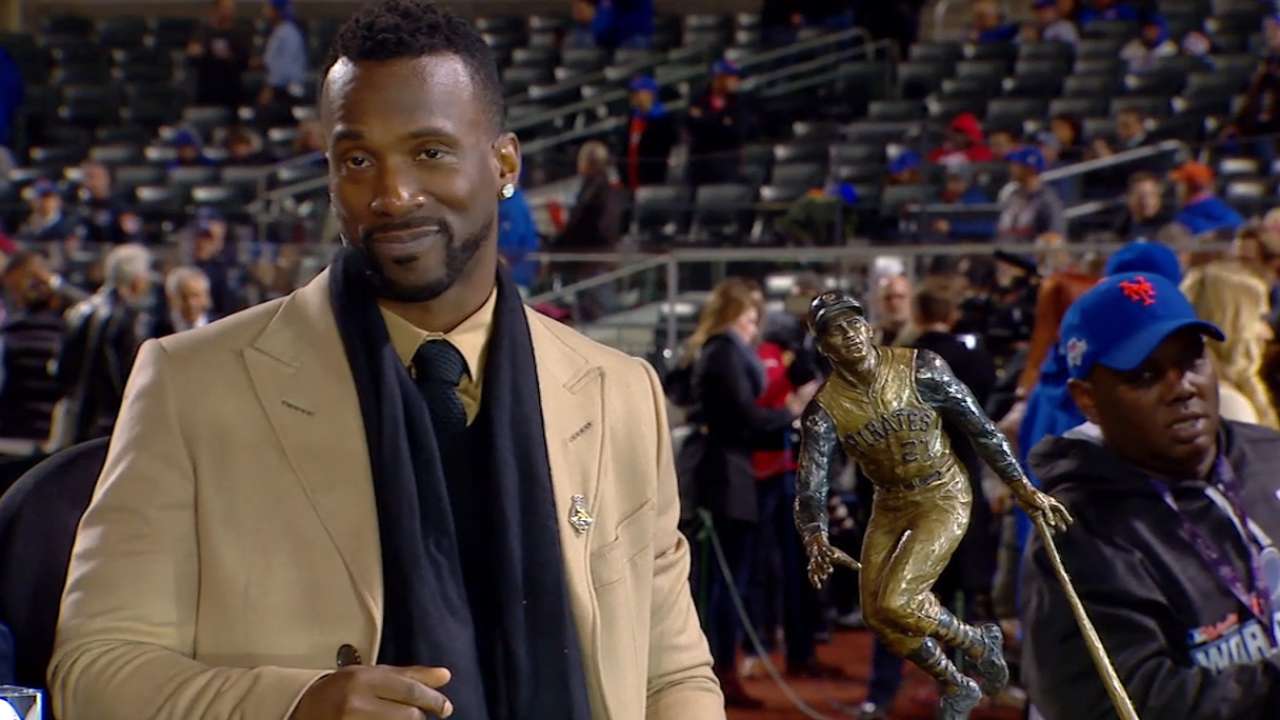
McCutchen was named the winner of the 2015 Roberto Clemente Award presented by Chevrolet before Game 3 of the World Series at Citi Field, an honor named after the iconic Pirates outfielder for his positive contributions on and off the field, including sportsmanship and community involvement.
"It means a lot. I feel like it means a bit more to me, just because of it being Roberto Clemente and him playing for the Pirates, wearing the same uniform," McCutchen said Friday. "It just shows that I'm moving in the right direction as far as being able to do the things that I want to do off the baseball field. Just getting a prestigious award like this is very humbling."
McCutchen is the second Pirates player to win the Clemente Award; the first was Willie Stargell in 1974. The award is a tribute to Clemente's achievements and character, as well as a recognition of those who reflect them today.
For McCutchen, the continued association with Clemente is an honor greater than his 2013 National League MVP Award trophy, the five All-Star nods or any of his previous accolades.
"Definitely at the top," McCutchen said. "That's for sure."
McCutchen, 29, was selected from a list of 30 nominees -- one from each club -- by a panel of dignitaries that included Commissioner Rob Manfred and Vera Clemente, the wife of Roberto and an MLB Goodwill Ambassador.
Clemente, a Hall of Famer and 15-time All-Star, died in a plane crash on New Year's Eve 1972 while attempting to deliver supplies to earthquake victims in Nicaragua.
"I am very happy that you are part of this family, too, and from this family of award winners," Vera Clemente said to McCutchen at Citi Field. "I know Roberto would be very happy to see a Pirate player being on his team."
McCutchen is actively involved with a number of community and nonprofit organizations in Pittsburgh and in Bradenton, Fla., the Pirates' Spring Training home.
He and Pirates Charities founded "Cutch's Crew," his signature program, in 2010 to mentor Pittsburgh's inner-city youth baseball players and at-risk children. He also supports the Make-A-Wish Foundation, the Children's Hospital of Pittsburgh Foundation, the Homeless Children's Education Fund, the Light of Life Rescue Mission and Habitat for Humanity, among others.
"Andrew always makes it a priority to be a positive impact in our community, the very same way that Roberto Clemente once did," said Pirates chairman Bob Nutting, who was in New York on Friday to support McCutchen. "Having a Pirates player recognized for carrying on Clemente's legacy of giving back makes this extra special."
McCutchen, the Pirates' franchise player and one of baseball's most recognizable stars, does not draw much attention to his charitable efforts. Still, his giving spirit is hard to hide.
Several times this season, from McKechnie Field in Bradenton to PNC Park in Pittsburgh, McCutchen welcomed children from the Make-A Wish Foundation to spend the day with him. When he cut off his signature dreadlocks this spring, he auctioned them off and gave the proceeds to charity. This week, he provided Halloween costumes for patients at the Children's Hospital of Pittsburgh so they could go trick-or-treating.
McCutchen flew to New York City on Friday to accept the award. Before heading to the ballpark, however, he and Manfred visited patients in a cancer ward at Mount Sinai Hospital.
"Those sorts of activities build the kind of bond that's so crucial to growing our game over the long haul," Manfred said. "And it's especially important, in addition to giving his time, he goes out on the field and is one of the best players in the game."
Even when he's not doing community work, McCutchen has found ways to give back. One of the most enduring images of the entire season came just after the final out of a game in San Diego. McCutchen ran back to the outfield wall and handed his batting gloves to a pair of kids decked out in Pirates gear, a small but meaningful gesture that won't soon be forgotten.
"You're just trying to make a difference," he said. "Baseball is a great sport and has blessed me a lot. I'm just trying to do my best to give back."
During his time in Pittsburgh, McCutchen has spoken to plenty of people who knew Clemente. Through those conversations, McCutchen has learned why Clemente still means so much to this city and to baseball. McCutchen has been inspired to create a similar legacy of his own.
"The thing is, you never hear a story about how he played the game. You always hear about how great of a person he is," McCutchen said. "I feel like what was most important to Clemente was helping others. You can see it through other people.
"That definitely made a big impact on me. That's how you want to be remembered."
Adam Berry is a reporter for MLB.com. Follow him on Twitter at @adamdberry. This story was not subject to the approval of Major League Baseball or its clubs.