Showing posts with label 70's Steelers. Show all posts

Friday, September 13, 2019

Former Steelers teammates remember ‘beloved and respected’ guard Sam Davis


By Joe Rutter
https://triblive.com/sports/former-steelers-teammates-remember-beloved-and-respected-guard-sam-davis/
September 11, 2019

Image result for sam davis steelers

On a team full of stars, MVPs and Hall of Famers, he was simply a four-time champion. He never was an All-Pro selection or invited to the Pro Bowl, yet he was named a team captain and owned as many Super Bowl rings as his more decorated teammates.
Sam Davis, a guard who trapped and pulled the way for running backs Franco Harris and Rocky Bleier to enjoy great success in the 1970s, was underappreciated and perhaps little-known on the national landscape — but never inside the Pittsburgh Steelers locker room.
“To Sam’s teammates, he was a superstar,” former Steelers tight end and tackle Larry Brown said Wednesday. “For linemen, your name usually isn’t talked about a lot, but if you don’t hear your name, that means you’re really good. Sam was really good.
“Maybe that’s why Sam may have floated under the radar to some people, but not to his teammates.”
Davis, 75, died Tuesday at an adult care facility in McKeesport after going missing for 14 hours earlier in the day. Davis suffered from dementia and was legally blind.
“We are deeply saddened to hear of the passing of Sam Davis,” Steelers president Art Rooney II said in a statement, adding the former guard was “beloved and respected by his Steelers teammates, coaches and staff.”
Undersized for his position at 6-foot-1, 255 pounds, Davis spent 15 years with the Steelers, including 13 on the active roster, before retiring in January 1982.
He pre-dated Chuck Noll, his Hall of Fame coach, and he shared the field and locker room with nine players bound for enshrinement in Canton, Ohio, and 11 other Pro Bowl or All-Pro members. Although he didn’t get the same recognition, Davis was considered instrumental to the only NFL team to win Super Bowls on back-to-back occasions.
When the Steelers unveiled their 50th anniversary team in 1982, Davis was tabbed as the left guard.
“He was the leader of that offensive line,” Bleier said, “unheralded as he might be.”
Davis appeared in 168 games with the Steelers, making 114 starts. A reserve on the Steelers’ first two championship teams, Davis started in Super Bowl XIII and XIV. In the third championship, a 35-31 victory against the Dallas Cowboys, Davis was tasked with blocking future Hall of Famer Randy White, the Super Bowl co-MVP the previous year.
Thanks in part to Davis’ blocking, quarterback Terry Bradshaw threw for 318 yards and four touchdowns to become Super Bowl MVP.
“ ‘Tight Man’ did his job,” Bleier said. “Did it well.”
Tight Man was one of several nicknames Davis earned throughout his Steelers tenure. Jon Kolb, who lined up at left tackle next to Davis for a decade, said the moniker was coined because Davis kept the ’70s Steelers and the many egos on the roster banded together as a close-knit — or tight — group.
“Ann Landers wrote that column in the paper and solved everybody’s problems. Sam was the Ann Landers of our football team,” Kolb said. “He could talk to the coaches. He could talk to the players. He was a team captain. It wasn’t a cursory thing. He took that seriously.”
Davis went undrafted in 1967 after playing at tiny Allen University in Columbia, S.C., a historically black college where he was discovered by legendary Steelers scout Bill Nunn. When Noll arrived as head coach two years later, he cut many holdover players who he deemed unworthy of the NFL, but he kept Davis, who had started only three games the previous two seasons.
“He fit into all the pulling and trapping that Chuck wanted from his linemen,” said Kolb, who was part of Noll’s initial draft class, “and he could pass protect.”
Added Brown: “I think Chuck appreciated him very much.”
After starting just one game in 1975, Davis regained his job the following season and helped Harris and Bleier become only the second duo in NFL history to rush for 1,000 yards in the same season.
“That offense was perfect for me with Sam leading the charge,” said Harris, who held Tuesday night poker sessions that Davis regularly attended. “He was a great guy and had so much fun. He was a big part of our football life during our playing years.”
Image result for sam davis steelers
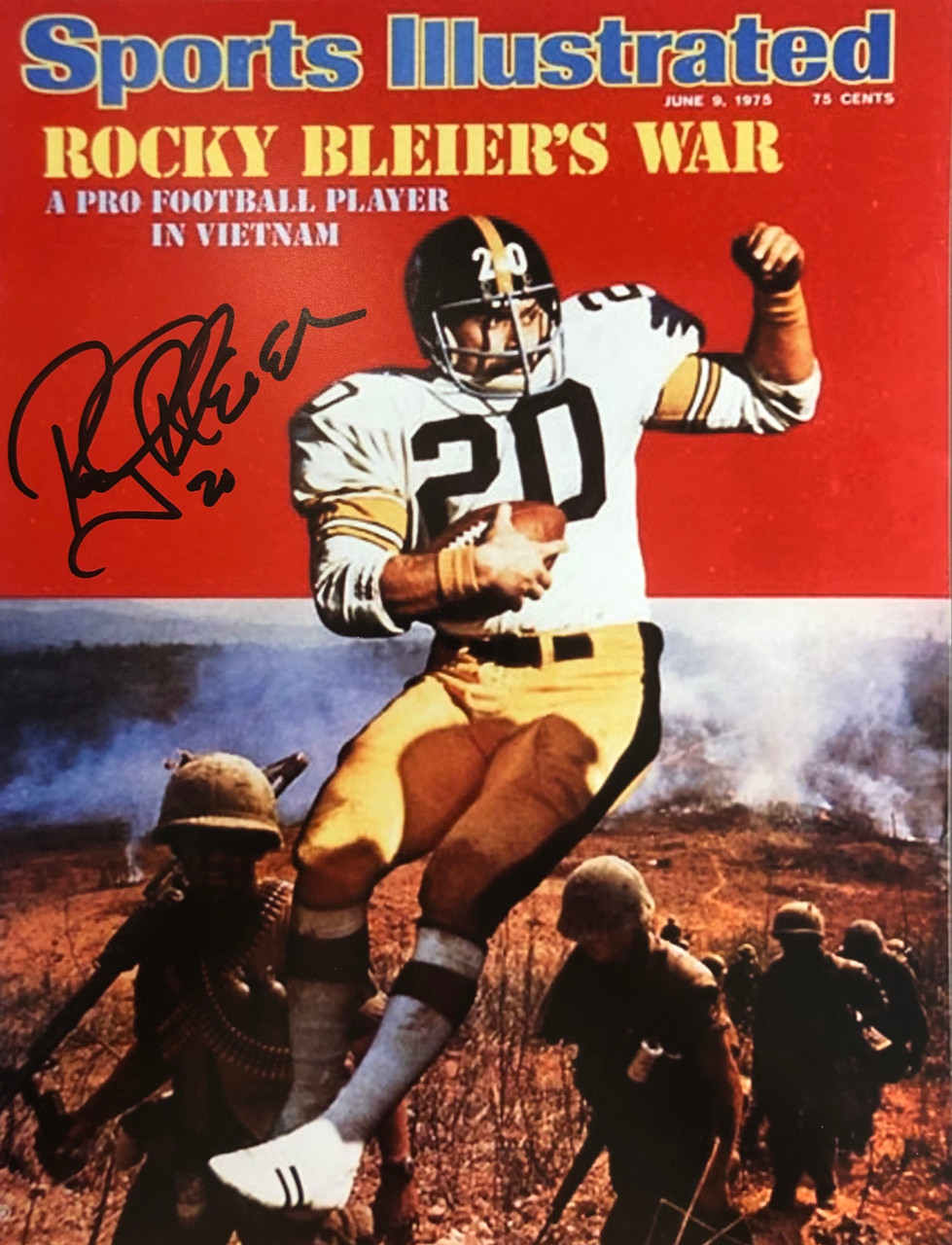
Davis made the cover of Sports Illustrated that season in a photo that depicted him leading a block against the Cincinnati Bengals with Bleier in tow.
“It was so apropos of Sam’s ability to pull, run sweeps, run traps that Chuck had put in,” Bleier said. “He was an imposing force.”
Injuries slowed Davis after the Steelers won their fourth championship in January 1980. He spent his final two seasons on injured reserve. In 1980, with the Steelers trying to replenish their line, they drafted guard Craig Wolfley in the fifth round.
It was on the first or second day of training camp at Saint Vincent that Wolfley was approached by Davis and given the veteran’s dormitory room number.
“If you need help or are confused about things, come see me,” Wolfley said Davis told him. “And I did. I went a number of times. He would help me, mentor me. He was an encyclopedia of how you play the game as a guard.”
Wolfley referred to Davis by another nickname that predated his arrival in 1980 — “Hero.”
“That’s what he was to me,” Wolfley said.
In September 1991, Davis was seriously injured in a fall, and he suffered a traumatic brain injury. He was beset by health problems for the rest of his life. In May, with dementia robbing Davis of his memories, his wife unveiled the Sam & Tamara Davis Family Scholarship at the Heinz History Center. It was believed to be Davis’ last public appearance.
The Davis family awarded three scholarships — all in dollar amounts ending in 57, Sam’s uniform number — and recognized young adults dealing with a parent suffering from a mental or physical disability.
“I’ve seen a number of people have injuries and the family disintegrates,” Kolb said. “It’s cruel. Yet, all these years, Tammy and Sam’s family and kids have been there for him. They stood by him through all of his difficulties.”
Among the teammates in attendance that night were Harris, Brown, and J.T. Thomas.
Yet it was his partner on the offensive line that got Davis’ attention.
“He had this faraway look,” Kolb said. “I said, ‘Sam, what do you do on 34 Trap.’ All of a sudden that faraway look leaves.”
“I pull and block the (defensive) tackle,” Davis responded.
Kolb asked Davis about his role in a 60 Base.
“I have the tackle in front of me, and it’s a pass,” Davis said.
Kolb asked which lineman is tasked with providing help.
“You,” Davis replied. “Then, he points at me and says Jon … Kolb.”
Joe Rutter is a Tribune-Review staff writer. You can contact Joe by email atjrutter@tribweb.com or via Twitter .
Categories: Sports | Steelers

Tuesday, August 20, 2019

Steelers' Rocky Bleier continues to live his American dream


By Jeremy Fowler
https://www.espn.com/nfl/story/_/id/27399315/steelers-rocky-bleier-continues-live-american-dream
August 18, 2019


Image result for rocky bleier vietnam

PITTSBURGH, Pa. -- Rocky Bleier isn't sure how his valiant story -- from Purple Heart honoree in the Vietnam War to four-time Super Bowl winner with the Pittsburgh Steelers -- would have played out had it happened this decade.
More media coverage, he figures. More opinions about the merits of war, thanks to social media.
And maybe even a Hollywood mega-star eager to portray him. "I probably could have gotten Dwayne Johnson to play me in a real movie," Bleier joked.
But Bleier wouldn't change a thing about a script he's still writing.
On a lazy Sunday in August 2019, Bleier is looking energized. The 73-year-old is wearing a tan Hawaiian shirt and black sunglasses, sipping wheat ale in a downtown Pittsburgh restaurant and generously chatting up random fans who approach him. Save a few knee surgeries and wiry gray hair, Bleier moves and acts like a 50-year-old, telling stories with the pace of a dive play up the middle for a quick 10 yards.
Those who know him wouldn't expect any less tenacity from a modest athlete who ascended from special-teams contributor to Franco Harris' lead blocker to owner of a 1,000-yard season with Pittsburgh.
"There's no one like him," said Hall of Famer Joe Greene, Bleier's teammate on the Steelers' famed 1970s teams. "He's special. He always captures your attention."
Just a year ago, though, it was a different story for Bleier. He visited Vietnam with ESPN to honor the 50-year anniversary of his tour there, returning to the spot where he absorbed an enemy rifle shot to the left thigh and grenade injury to his right leg and foot in a 1969 platoon ambush. He didn't eat much on the day of his return, so low blood sugar coupled with the raw emotion from the site dropped his blood pressure and he briefly passed out. After being attended to by ESPN producers, Bleier, as always, was quickly back on his feet.
There was a sense of closure in Vietnam that Bleier found, even though he didn't know he needed. Mostly, because he was too busy living his best life to ever wallow in it.
Also, the war was never something that Bleier kept from others, as we hear with so many other veterans. He decided decades ago he would openly discuss his experiences as therapy, and he turned that openness into a successful nationwide speaking engagement business. He's supported veterans by spreading the word about non-profit programs such as Veterans Guardian Angels Inc., designed to aid post-traumatic transitioning.
When he's not at a speaking engagement or running his Pittsburgh-based construction company, he might be starring in his one-man play, "Rocky Bleier's The Play," which he calls an intimate portrait of his multifaceted life as Super Bowl champion, wounded warrior, family man and community activist. The next show is in his hometown of Appleton, Wisc., in September. Sure, Bleier hustles for a financial cushion, but there's also that feeling of gratitude that continues to push him.
Image result for rocky bleier vietnam
"Opportunities exist in life," Bleier said. "They come across your path. You have to at least explore them."
That approach has guided Bleier in a life that always seems to work out. As a 5-foot-10 16th-round pick, Bleier was hardly a lock to be a factor in Pittsburgh's offense. His odds worsened after being wounded in Vietnam, which required diligent rehab to both legs. In fact, he now admits today's game would probably phase him out, with increasingly little need for a blocking back without 4.4 speed. Yet Bleier's toughness and production earned a Steelers Hall of Honor nod, and despite countless collisions in the open field, he says he never suffered a concussion during his 11-year career.
Recently, Bleier started a series of Facebook videos to increase his social media platform, and last fall he ripped the Steelers organization for losing too many close games. "I'm done. I mean, they've ripped my heart out," Bleier said. "With the talent they have, how can they lose three out of their last four games, and in the manner they did?"
But he wasn't done. He tells the story of appearing at Heinz Field for pregame autographs when team president Art Rooney II approached him. "He said, 'I think we need to get you your own podcast,'" Bleier said with a smile.
Ben Roethlisberger said then that Bleier was "obviously entitled" to his opinion. Coach Mike Tomlin said he respected and appreciated Bleier's criticisms despite the ex-Steeler taking aim at him.
Bleier never had a passion bigger than football. He didn't want to run the family's bar business back in Appleton. He wasn't going to be a doctor or lawyer. He always loved the way a locker room united, and he's been trying to draw people together ever since.
"I use what I do best -- talk to people," Bleier said.
Greene sees the duality in Bleier, who was once so purple from head to toe after a game that teammates swore he wouldn't practice. When he did without complaint, "that set the tone for our football team," Greene said.
There's Bleier's deep desire to contribute, and his desire to laugh about how he did it. Bleier might take 30 minutes recalling a play that took 9-10 seconds, and his story might include a generous 36-inch leap on a reception (the vertical was more like 2 inches, Greene says, but that's not the point).
"Rocky had the ability to smile and laugh at himself, but he had the greatest admiration for other people," Greene said. "He can always see the better part of any given situation. And he can hold your attention."
Talking with veterans about their transitions appeals to Bleier, who wants them to know resources are available. Bleier considers his return to Vietnam important for the raw perspective of post-war trauma, but he has no desire to go back now. He mostly asks himself what the point of the war really was.
Nowadays, Bleier would rather adapt to his current surroundings, just like he says he would if he tried to make it onto a team in today's game, channeling his "Boulder Bleier" nickname from teammates for his penchant for weightlifting.
"I wouldn't be me," Bleier said. "I'd be 6-3, 225 pounds with more speed."

Friday, August 16, 2019

Rocky Bleier: A true American hero

By Bryan Deardo
July 3, 2019
Image result for rocky bleier
Rocky Bleier is more than just a Pittsburgh Steelers' legend. He's a military hero who nearly sacrificed his pro football career to help ensure the freedoms that Americans continue to enjoy today. 
After helping Notre Dame win a national championship, Bleier was drafted by the Steelers in 1968. But in December of that year, after just 10 games in Pittsburgh, Bleier was drafted into the United States Army, and then volunteered to fight in the Vietnam War. In a matter of months, Rocky went from a NFL running back to a Specialist 4 in the 196th Light Infantry Brigade.
On a mission in Vietnam on August 20, 1969, Rocky was searching for wounded comrades in a jungle when his platoon was ambushed. Bleier was hit during the ambush, suffering a bullet wound in his left leg and shrapnel from a grenade in his left leg.
Bleier was pulled to safety by a comrade, and later earned a Purple Heart and a Bronze Star for his service and bravery.
"Fox hole prayers, you hear those a lot; those times where our backs are up against the wall," Bleier said. "From every conflict, there’s always been that one moment in time where you take a look at yourself, and you ask for the grace of God to be able to get you out of this situation."
Bleier survived that near fateful situation and returned to Pittsburgh a year after suffering his leg injuries in Vietnam. Aided by a cane and still in pain, Rocky began a grueling rehabilitation process that lasted two years. Despite not seeing any action for two more seasons and even being waived twice, Bleier continued to fight and improve, and by 1971, he resumed his NFL career.
"I never wanted to get to a place in my life where I’d look back and say ‘What if’. And I wanted to erase all of those ‘what ifs’, and especially in my case, coming back to play professional football," Bleier said.
By 1974, Bleier had earned a permanent place in the Steelers' starting backfield alongside Hall of Fame running back Franco Harris. Rocky played a pivotal role in Pittsburgh's first Super Bowl run, catching a touchdown pass in the Steelers' first playoff win over Buffalo, and then rushing for 98 yards a week later in Oakland. Along with helping Franco rumble for 158 yards, Rocky totaled 76 all-purpose yards in Super Bowl IX that included a key 17-yard run that set up the game-sealing touchdown in Pittsburgh's 16-6 triumph over Minnesota.
Harris and Bleier, the most successful running back-fullback combo in NFL history, became the second pair of teammates in NFL history to each rush for over 1,000 yards in a season in 1976. But it was a catch, not a run, that Bleier made in Super Bowl XIII that still lives on in Steelers' lore.
With the score tied late in the first half against Dallas, Bradshaw rolled right and found Bleier in the back of the end zone. Bleier's leaping catch over Dallas' D.D. Lewis not only graced the cover of Sports Illustrated, it was an inspirational play and one that gave the Steelers the lead for good in an eventual 35-31 victory.
By the end of his career, Rocky Bleier was regarded as one of the cornerstones of Pittsurgh's Super Bowl championship teams. More importantly, Bleier was revered and respected for his service to this country, and is still an example of what the military sacrifices on a daily basis to ensure our freedom to do things like play a football game.
"Like thousands of other young men during that conflict, there was no choice," Bleier said. "There was an obligation and a responsibility. As I reflect back, it was a turning part in my life. It was an important part in my life. I’m very proud to be a Vietnam veteran and I’m proud to have served in my military."

Rocky Bleier confronts his past in ESPN's 'The Return'


By Joshua Axelrod
https://www.post-gazette.com/sports/steelers/2019/08/13/Rocky-Bleier-ESPN-The-Return-Steelers-Vietnam-Rinaldi-Bradshaw-Harris/stories/201908130104
August 13, 2019

Image result for rocky bleier
Rocky Bleier still isn’t used to being the center of attention, despite all he has accomplished in his documentary-worthy life.
“I think that the majority of people don’t know [my story], unless you’re an old Steelers fan,” he said. “I now am introduced to people outside of this area or even younger people in this area, and their parents or friends will say he played for the Steelers. I get that blank look, so then I have to put it in perspective.
“I go, ‘Listen, have you heard of Terry Bradshaw? Have you ever heard of Franco Harris? I’m the other guy.’ ”
Bleier’s story is about to be thrust into the national spotlight again due to “The Return,” a 30-minute documentary chronicling Bleier’s life from his days winning Super Bowls with the Steelers to him going back to the spot where he was injured as a soldier in Vietnam 50 years ago.
The full Tom Rinaldi-hosted documentary will debut on ESPN2 at 8 p.m. on Tuesday, Aug. 20, with a shorter version airing as part of “SC Featured,” a weekly series on “SportsCenter” Aug. 17-18.
“It’s a very powerful story,” producer Jon Fish said. “It’s an important story. Rocky was wonderful sharing himself with us and being so open. … “[I]t was really great and it’s one of those stories you’re proud to be a part of.”
Bleier’s career as a running back included a college football national championship with Notre Dame in 1966 and four Super Bowl rings with the Steelers . His most famous play as a Steeler was a touchdown he caught in Super Bowl XIII that gave the Steelers a lead over the Dallas Cowboys they never relinquished.
The lesser known part of Bleier’s story involves his time in Vietnam. He was drafted into military service in 1968 and came home a year later after suffering a severe injury to his legs while on patrol in Vietnam’s Hiep Duc district. Bleier was shot through the thigh and suffered a grenade blast to his foot.
He was told he could never play football again, but Bleier worked his way back into health and form enough to help Franco Harris anchor the backfield during the Steelers’ dynastic run. In “The Return,” Bleier goes back to the place where he was hurt 50 years ago and tries to make sense of his experiences since and the Vietnam War itself.
Click on the link below to read the rest of the article:

Wednesday, August 14, 2019

Rocky Bleier’s return to Vietnam gives new perspective


By Kevin Gorman
https://triblive.com/sports/kevin-gorman-rocky-bleiers-return-to-vietnam-gives-new-perspective/
August 12, 2019


Image result for rocky bleier return


When Rocky Bleier surveyed the open rice paddy at Hiep Duc in the Que Son Valley last August, the Pittsburgh Steelers great tried to visualize the differences of nearly five decades.
“Jesus Christ,” Bleier said, stopping in his tracks. “You think about those guys that got killed.”
Bleier sniffled, then started sobbing, his hands trembling.
“For what?”
Forty-nine years to the day he was wounded by gunshot and grenade shrapnel, Bleier’s return to Vietnam brought an emotional breakdown he never anticipated.
Bleier’s raw vulnerability — and the unexpected, dramatic moment that followed — was captured by a camera crew and makes for a powerful scene in the SC Featured documentary, “The Return.”
“All of a sudden, I had this overwhelming sense of emotion that I really couldn’t put a finger on of why or what took place,” Bleier told the Tribune-Review on Friday. “What I felt was this complete sense of waste — not loss, but waste. Why? Fifty-nine thousand died in Vietnam, for what? That was my justification or reason why it was overpowering. And I still feel that now.”
Regarded as one of the “grittiest players” on the Super Steelers of the 1970s, Bleier had been adamant beforehand that he carried no emotional scars — only to be moved to tears.
“You knew his demeanor going into that. He was like, ‘I don’t know if there’s anything there but we’ll see,’ ” said Jon Fish, who directed and produced “The Return.”
“As a filmmaker, we were just willing to roll the cameras and see what happens. … When it happened, it was really powerful. It was just really powerful, and we just let it happen.”
“The Return” is scheduled to air a shortened version on SportsCenter this weekend and the full 30-minute documentary on ESPN2 at 8 p.m. Aug. 20. That coincides with the 50th anniversary of the mission by 33 men from Charlie Company 4th Battalion (Light), 31st Infantry 196th Light Infantry Brigade to recover the bodies of nine soldiers killed in an ambush. Four more soldiers died, and 25 others, including Bleier, were wounded when they emerged from a wooded trail to face enemy fire in that open field in Hiep Duc.
Bleier was awarded the Bronze Star and Purple Heart after he was shot in the left thigh, lost part of his right foot and took shrapnel in both legs. The documentary, reported by ESPN’s Tom Rinaldi, is a moving tribute to Bleier interrupting his NFL career to serve in the Vietnam War and his courageous comeback.
“No one told me no,” Bleier said, simply.
Not that he would have listened anyway.
“How can you not admire Rocky Bleier?” Terry Bradshaw said. “He had a dream, and he wasn’t going to quit on it. That’s the kind of people you want to play with.”
The storytelling is splendid, from scenes of the Steelers winning four Super Bowls to Bleier’s touchdown catch against the Dallas Cowboys in Super Bowl XIII gracing the cover of Sports Illustrated.
The interviews, from Art Rooney and Joe Greene to Bradshaw and especially Franco Harris, are incredible. Fish found it amazing that almost everyone he interviewed connected to Pittsburgh is in the Pro Football Hall of Fame.
While Bleier’s story was a worthy subject on its own, what makes it powerful is the depth it delves into finding fellow soldiers from the Vietnam War, including one who fought for the Viet Cong. Where Bleier initially downplayed the idea, one that was a decade in the making, it gave him a new perspective.
“For people that knew the story, this is a new layer to it. For people that didn’t know the story, they’re blown away. That’s the wonderful thing about the story,” Fish said.
“Rocky Bleier now is the same Rocky Bleier who came back after being wounded to make the Pittsburgh Steelers. The essence of him then is the same as now: We’re going to come back, and we’re going to finish this story. You see the power and inner strength that he has, that started the story way back when. Years later, he’s the same person.”
Except that Bleier isn’t. He admits the visit to Vietnam — something he never felt a desire to do – changed him for the better. That was especially true when, a month after returning, he was inducted into the Steelers’ Hall of Honor. It made him realize how blessed he was to survive and succeed.
“That’s what we all want, to be recognized for your contribution along the way,” Bleier said. “It doesn’t mean you need to be in the Hall of Fame or an All-Pro, just that somebody recognizes that you put time and effort in and you played on a team that allowed you to be in position to win four Super Bowls.
“It’s not you. It’s that conglomeration of you and the owners, coaches and players you got to be part of. Hopefully, you can look back and say, ‘I made a difference in the lives of my kids, community, church, marriage’ or whatever it may be. That becomes essential, that you did something worthwhile.”
What is most essential to Bleier is those who watch “The Return” can make sense of the senseless by starting a conversation that will help them find their own closure toward the Vietnam War, which has touched all of our lives, whether that’s through a family member or a friend.
“Unlike the majority of Vietnam veterans at that time, who came back to a hostile environment here in the States and weren’t appreciated for their service — and they had nobody to talk to or talk about and had to suppress their feelings — I came back and became a story,” Bleier said. “That was somewhat of a catharsis for me, that I had to talk about those feelings and everything that had taken place. And I’ve been telling that story for 50 years.”
“The Return” tells Bleier’s story in a new way, with a moment of weakness actually showing his strength.
Kevin Gorman is a Tribune-Review staff writer. You can contact Kevin by email atkgorman@tribweb.com or via Twitter .


Monday, January 28, 2019

50 years ago this weekend, the Steelers met their transformation


By Gene Collier
https://www.post-gazette.com/sports/gene-collier/2019/01/27/Steelers-Chuck-Noll-50-years-Super-Bowl-Rooney-The-Chief/stories/201901270078
January 27, 2019

Related image
Chuck Noll with Terry Bradshaw in 1973 (AP)

No historical marker stands outside India Palace Cuisine on Sixth Street these days, nor along the sidewalk between there and the 7-Eleven on the corner of Sixth and Penn, but that’s a situation eminently fixable by the proper authorities.
For it was just behind these storefronts on Sixth, inside the walls of the old Roosevelt Hotel, where three Rooneys and an obscure defensive backs coach for the Baltimore Colts immersed themselves in the crucial conversation that begat the Steelers hiring Charles Henry Noll 50 years ago this Sunday.
None of the four men could imagine how momentous that meeting was, not only in the history of the football team but of the city and region it had represented often dreadfully for all of its prior history. But Art Rooney Jr., writing about it some four decades later, committed to literature the kind of details only transformative events deserve.
It happened in the hotel’s Sylvan Room, where, at a large round table, Steelers founder Arthur J. Rooney, The Chief, routinely held court, and Art Jr. meticulously re-envisioned it almost as though it should be a painting in some museum.
There’s another good idea. You’re welcome.
“There were three empty chairs at the table,” he wrote in “Ruanaidh (Gaelic for Rooney): The Story of Art Rooney and his Clan.” “On the face of a clock, I’d have been at seven, with (older brother) Dan at six, Noll at five, and AJR at four.”
Penn State coach Joe Paterno had turned the job down and Nick Skorich, the former Eagles head coach, got an interview after Noll. But if a typical process of NFL networking led the Rooneys to Noll, that was to be the last unremarkable thing about the relationship between the Steelers and the Hall of Fame coach who died in June, 2014.
“I miss him every day of my life,” said Marianne Noll, who this week so graciously remembered those moments across the fleeting half century. “In those days, the league was very rigid about approaching coaches for head jobs before the season ended. He’d get calls from people who were not ‘officially’ associated with teams, but he wouldn’t take them. After the disastrous loss to the Jets (and Joe Namath in Super Bowl III), one of his players (Rick Volk) was having seizures and we were in the hospital with him until 1 a.m. The next morning he was starting the interviews.”
Click on the link below to read the rest of the article:

Monday, January 14, 2019

Antonio Brown the Steelers' greatest receiver? Not so fast


By John Steigerwald
January 13, 2019

Related image
Lynn Swann and John Stallworth

Antonio Brown, the greatest wide receiver in Steelers history …
Hold on a minute.
It seems to have become a requirement to include the declaration that Brown is the Steelers’ greatest receiver ever in any story about his most recent immature, narcissistic, selfish, stupid behavior.
If you’d like to make the argument that he’s the Steelers best wide receiver ever, go ahead. There are plenty of stats to back you up. Multiple 100-catch, 1,000-yard seasons. Touchdowns. He’s among the NFL all-time greats if if we’re talking about stats.
But could we please acknowledge the obvious fact that NFL passing and receiving numbers have been ridiculously inflated over the last 10 years?
To say that Brown is the Steelers’ best receiver ever is, of course, saying that he has surpassed both Lynn Swann and John Stallworth. If we’re going by raw numbers there is no argument, but we’re talking about different eras.
Ben Roethlisberger threw 675 passes this season.
Terry Bradshaw led the NFL in just about every important passing statistic in 1978 and he threw the ball 368 times. He had four games with more than 30 attempts and never more than 33. This season, Roethlisberger had three games with fewer than than 30 attempts — and it was 29 in two of them. He threw more than 50 passes three times.
In 1984, when he was 32, John Stallworth caught 80 of the 443 passes thrown by Mark Malone, David Woodley and Scott Campbell, none of whom is expected to make the Hall of Fame. That’s actually a slightly higher percentage of catches than Brown’s 104 of Roethlisberger’s 675 this season.
Only someone who never saw Stallworth or Swann play or has no appreciation for the huge difference in eras would believe Brown is the undisputed best wide receiver in Steelers history.
Of Brown’s 104 catches this season, 78 were on passes thrown behind the line of scrimmage to 10 yards “down” field. Those stats aren’t available on Swann and Stallworth, so you’ll have to trust me or someone else who saw most of their games: They didn’t make their living catching passes within 10 yards of scrimmage. Or, I guess you could try YouTube.
Swann averaged 19.7 yards per catch in 1978 and 16.3 for his career. Stallworth averaged 19.5 in 1979 and finished at 16.2. Brown has averaged over 16 once — in 2011 — and has averaged 13.4 for his career.
Back then, the Steelers meant business when they threw the ball. There were no five wide receiver sets on third-and-2.
Brown does nothing better than either Swann or Stallworth. All three could make the acrobatic catch and were great runners after the catch. Brown is the only one with the advantage of gloves as sticky as gaffer’s tape. That comes in handy on those one-handers.
Would Brown have been great in the Swann/Stallworth era?
Probably.
But he would have had to survive the first four years against the bump-and-run when defenders could knock a receiver on his butt anywhere down field before the ball was in the air. Swann and Stallworth dealt with that from 1974-1977. And the league didn’t have much of a problem if those hits were to the head. Including helmet to helmet. We’ll never know if Brown would have been tough enough.
And then there is the Super Bowl. The Steelers, speaking of different eras, completed a total of 18 passes in Super Bowls IX and X. Stallworth only caught three passes in IX for 24 yards but had 11 catches in four Super Bowls for 268 yards. That’s 24.4 per catch.
Swann may be the greatest wide receiver in Super Bowl history. After no catches in his first one, he caught 16 passes for 364 yards and three touchdowns in his last three. That’s 23 yards per catch.
I’ll have to get back to you on Antonio Brown’s Super Bowl numbers.
John Steigerwald is a freelance writer.


Thursday, August 30, 2018

Nice gesture: Mean Green to honor alum 'Mean' Joe Greene with statue

By Adam Rittenberg
August 29, 2018
Related image
When North Texas Mean Green fans come to Apogee Stadium on Sept. 29, "Mean" Joe Greene will be waiting for them.
North Texas today announced plans to build a statue of Greene, a former All-American at the school and a Pro Football Hall of Famer, at the main gate of the stadium. The statue will be unveiled Sept. 29, before the Mean Green host Louisiana Tech.
"For over 50 years, Joe Greene has made a tremendous impact on our university and the athletic program," athletic director Wren Baker said in a prepared statement. "As a football player, as an alumnus and as a regent, he has made significant contributions to this campus and brought great honor to the Mean Green family. He is one of the greatest defensive linemen in the history of football and he's one of us. We are very excited to recognize Joe's achievements and contributions with this statue."
Greene earned consensus All-America honors for North Texas in 1968 before the Pittsburgh Steelers selected him fourth overall in the 1969 NFL draft. In 1983, Greene became the first black person appointed to North Texas' board of regents. In May, the regents approved a new campus residence hall to be named after Greene, 71.
Despite his deep ties to the program, the "Mean Green" nickname is not related to Greene.
The 8-foot bronze statue will be mounted on a 4-foot pedestal. Brian Hanlon, who has sculpted statues of Jackie Robinson, Jim Brown, Charles Barkley and Shaquille O'Neal, will build the Greene statue.
"I am overwhelmed by the thought of a Joe Greene statue at the University of North Texas," Greene said in a prepared statement. "It is beyond my wildest expectations that the university thought enough of me as a player and a person to bestow such an honor to me and my family. It will be special for my kids, grandkids and all the generations that follow to see their father and grandfather displayed in such a manner."
North Texas also will hold a groundbreaking ceremony for its future indoor football practice facility on Sept. 29.