Showing posts with label Steelers History. Show all posts

Tuesday, August 06, 2019

These Steelers could benefit from Hall of Fame expansion


{L.C. Greenwood, Andy Russell and Donnie Shell should be in the Hall of Fame...I don't care how many 70's Steelers have already been  inducted...that seems irrelevant. - jtf}


By Mark Madden
https://triblive.com/sports/mark-madden-these-steelers-could-benefit-from-hall-of-fame-expansion/
August 5, 2019

Image result for l c greenwood
L.C. Greenwood

In 2020, the Pro Football Hall of Fame will induct a one-time-only class of 20 new members to commemorate the NFL’s 100th anniversary. Ten senior-era players will be included.
Nine players from the Steelers’ dynasty in the 1970s are enshrined in Canton.
Does this decision open the door for more?
A survey of my Twitter followers (2,941 voting) suggests defensive end L.C. Greenwood deserves a spot.
A very informal poll of Pittsburgh football media also chose Greenwood.
But one of said media put it best: “None. Seriously.”
I concur. Nine is plenty. Enough already with the Steelers of the ’70s.
It would be better if safety Troy Polamalu made it in his first year of eligibility, or if Alan Faneca made it after missing out the last four years despite being the best guard of his generation.
Receiver Hines Ward will never make it. Ward’s stats don’t cut it, and being football’s best blocking receiver ever adds little. He’s barely in this discussion.
But Polamalu, Faneca and Ward aren’t senior-era players. (Senior-era players are defined are having been retired for more than 25 years.)
It seems difficult to believe that 10 senior-era players legitimately worthy of induction have slipped through the cracks.
But if they have, it’s logical to think that players from that Steelers’ dynasty in the ’70s could be among them. It’s arguably the greatest football team of all time.
My poll included tackle/tight end Larry Brown, Greenwood, safety Donnie Shell and safety Mike Wagner.
Linebacker Andy Russell was left off because Twitter only allows four choices. But he’s an interesting candidate.
Russell first played for the Steelers in 1963. He was with the team when it was terrible. He made second-team All-Pro in 1968, when the Steelers won twice, and in 1970 when they won five games. He was second team again in ‘72, first team in ‘75. He made seven Pro Bowls and won two Super Bowls.
Does Russell’s excellence when the Steelers were bad burnish his case?
Shell has the best raw credentials: 51 career interceptions, first-team All-Pro three times, second-team All-Pro once, five Pro Bowls, four rings.
Greenwood was first-team All-Pro twice. He made six Pro Bowls. He was second-team All-Decade as per the NFL.
Like Brown, Shell and Wagner, Greenwood won four rings. But Greenwood had a standout Super Bowl performance: Four sacks in Super Bowl X, a 21-17 victory over Dallas on Jan. 18, 1976. That’s a Super Bowl record that still stands.
That should help Greenwood. (Ward’s MVP in Super Bowl XL makes his meager chances a bit better.)
But Greenwood is also dead. Does it mean as much to induct someone posthumously, especially all these years later?
Brown and Wagner are minimally qualified, relatively speaking.
Brown made three Pro Bowls. The late Chuck Noll said he was the best of the ’70s Steelers not in the hall.
Wagner got first- and second-team All-Pro once each. He made two Pro Bowls.
Image result for andy russell steelers
Andy Russell
The argument for Russell is a bit different, and thus compelling.
Noll’s first Steelers team went 1-13 in 1969. When the franchise won its first Super Bowl five years later, Russell was one of just five remaining from that ‘69 team, and the best.
But if you put me to a choice, I’d say Greenwood. His exploits in Super Bowl X put him over the top.
Frustration about Faneca is now an annual story. Faneca was first-team All-Pro six times, second team twice. He made nine Pro Bowls. He made first-team All-Decade. He won a ring. How much more qualified could he be?
Polamalu should be a lock in his first year of eligibility. Polamalu was first-team All-Pro four times, second team twice. Eight Pro Bowls. Second-team All-Decade. NFL Defensive Player of the Year in 2010. A human highlight reel.
But the selection process involves 48 men debating, so nothing is assured.
It would be funny to see Polamalu make Canton on the first ballot when he missed out on the Steelers’ Hall of Honor in his first crack at that.
Polamalu should get in. So should Faneca. One Steeler from the ’70s could.
But, even in an expanded class of 20, would the hall induct three Steelers?
Canton should have a wing for the greatest teams ever. Maybe one from each decade. It’s a team game, after all. Nobody would argue honoring those ’70s Steelers thusly.


Sunday, December 09, 2018

Steelers-Raiders rivalry rich with NFL history


By Chris Adamski
December 8, 2018

Image result for raiders steelers

The Pittsburgh Steelers played their first game at the Oakland-Alameda County Coliseum on Oct. 25, 1970, and from that point over the next six years, two months and two days, the Steelers would visit the multi-purpose park six times.
The franchises never have shared a division. But during their common heydays, it seemed like they did.
“It felt like we went out there every year,” four-time Steelers Super Bowl champion running back Rocky Bleier said. “And it felt like we played them twice a year: once in the regular season and again in the playoffs or (conference) championship game.”
The Steelers and Raiders did, in fact, meet nine times over five seasons between 1972-76. The Steelers played just as often at the Oakland Coliseum in that span (five times) as they did the home stadiums of AFC North rivals Cleveland, Cincinnati and Houston.
“You knew going there,” Bleier said of Oakland, “that their fans were absolutely rabid.”
The Black-and-Gold. The Silver-and-Black. Two iconic American sports franchises. Sunday’s 4:25 p.m. Steelers-Raiders matchup might not necessarily be the most anticipated NFL game of the day, but that is only because the 2018 Raiders are 2-10.
Ask any football fan over 50, though: Steelers-Raiders instantly conjures up memories of what was once must-see NFL TV.
“It brings me back to my childhood,” Raiders coach Jon Gruden said this week, “and really when I fell in love with football was watching these two teams play.”
Adding extra nostalgia is Sunday’s meeting almost certainly will be the final one in Oakland. The Raiders announced their intention to move to Las Vegas, ending a history of Steelers-Raiders games in Northern California that dates to a 31-14 Raiders win on that October day 48 years ago.
Steelers coach Mike Tomlin this week gave his players what veteran guard Ramon Foster called “a history lesson” for playing in what is one of the NFL’s oldest stadiums.
“He was just letting guys know where we are going,” veteran receiver Darrius Heyward-Bey said. “Into the Black Hole.”
Arguably the NFL’s most renowned fan seating section, the Black Hole is known for its colorful personalities and less-than-hospitable treatment of opposing players.
“Obviously, being a visitor in that stadium, for people who have never been before, you got the guys with costumes,” Heyward-Bey said. “And then there’s the bad locker room. I mean, it’s horrible.”
No questioning that, but that 52-year-old visiting football locker room is also the spot of one of the Steelers’ greatest moments. It’s where the franchise celebrated earning its first Super Bowl berth via a 24-13 victory Dec. 29, 1974.
That was just one of two AFC title games the Steelers played in Oakland and also part of a stretch of five consecutive seasons the Steelers and Raiders met in the postseason.
The most famed moment among those meetings, of course, came at Three Rivers Stadium: Franco Harris’ Immaculate Reception in 1972. The Hall of Fame running back will be in Oakland for Sunday’s game.
“There’s a rumor going around that Phil Villapiano is going to be escorting Franco Harris to the stadium,” Gruden said. “If that happens, that will be one of the coolest things I’ve ever seen.”
The linebacker who was covering Harris when he made the famous deflected catch, Vallapiano is one of several Raiders who, to this day, believes the Immaculate Reception was illegal.
For almost four decades until his death, eccentric Raiders owner Al Davis was among that group of Immaculate Reception truthers. And to hear Bleier tell it, it was the frosty relationship between Davis and Steelers coach Chuck Noll that led to the rivalry. The two were on the staff of the Los Angeles/San Diego Chargers together from 1960-62.
“One of the reasons that we didn’t have numbers on our practice jerseys was because of the fact that Chuck Noll just never trusted Al,” Bleier said. “And it would be harder for them to be able to spy on us and understand who’s playing what position.
“Or at least that’s how part of that story goes.”
Heyward-Bey will be the only active player on the field Sunday to have played in a game for the Steelers and the Raiders.
“There’s teams that when you think of the NFL you think of: the Steelers, the Raiders, the Cowboys,” he said. “They are the staples of the NFL. So it’s always a big game when it’s storied franchises like that.
“And, no doubt, it’s a cool place to play.”
A place where the Steelers haven’t won for 23 years and are 2-6 all-time during the regular season.
After Sunday, the next time they meet — in all likelihood — the “Oakland” will have been stripped from what is decades of history in the Oakland Raiders-Pittsburgh Steelers rivalry. Think it won’t be the same?
Remember, this happened once before (the Steelers played at the Los Angeles Raiders four times in the 1980s and ’90s), and the memories and the rivalry endured.
“There’s a lot of games to look forward to,” Steelers defensive captain Cameron Heyward said. “But when these two teams meet, there’s a lot of history that goes along with them.”
Chris Adamski is a Tribune-Review staff writer. You can contact Chris at cadamski@tribweb.com or via Twitter @C_AdamskiTrib.

Sunday, July 29, 2018

Steelers 2018 Hall of Honor Class revealed


By Teresa Varley
July 28, 2018

Image result for steelers hall of honor bleier
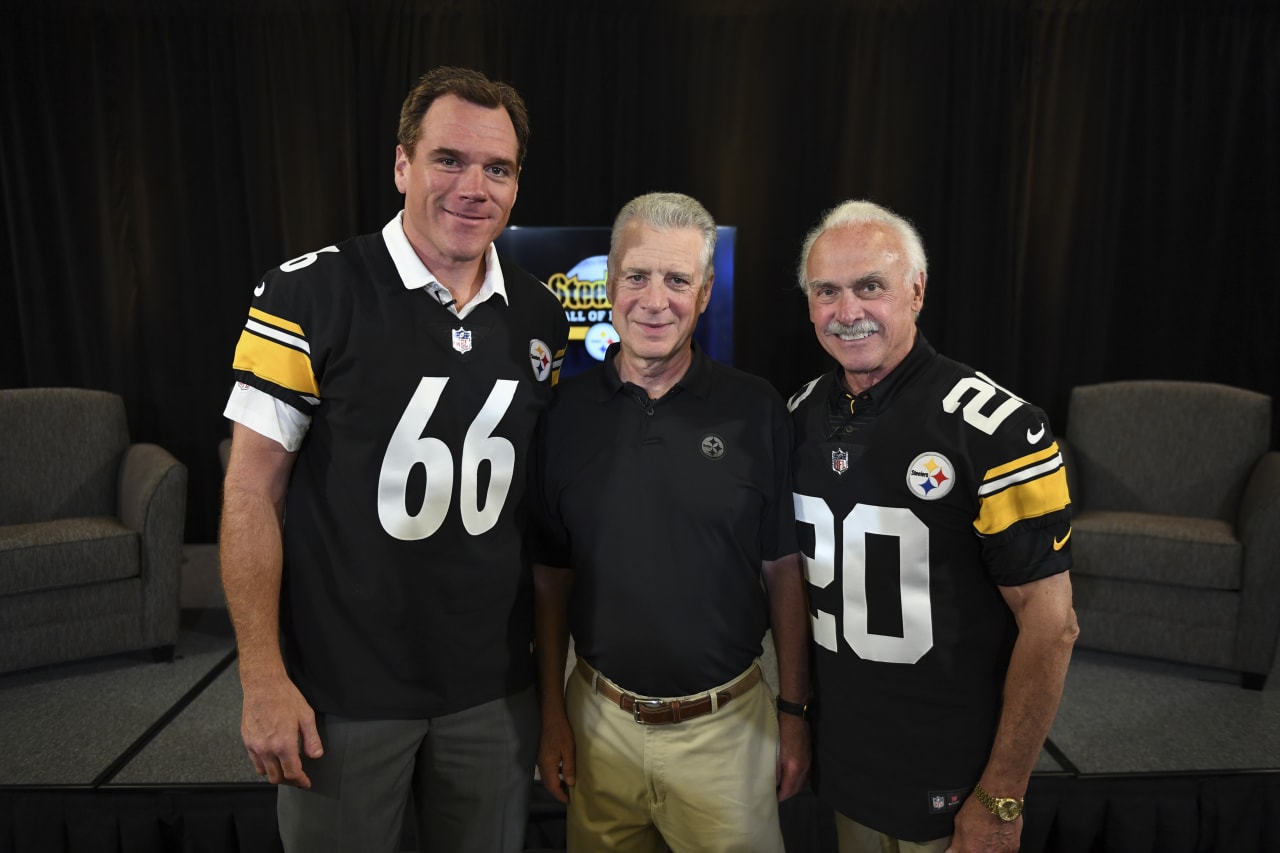
Alan Faneca, Art Rooney II and Rocky Bleier

They are Steelers legends. They made an impact on the team, on the organization. And they are an integral part of the Steelers rich history.
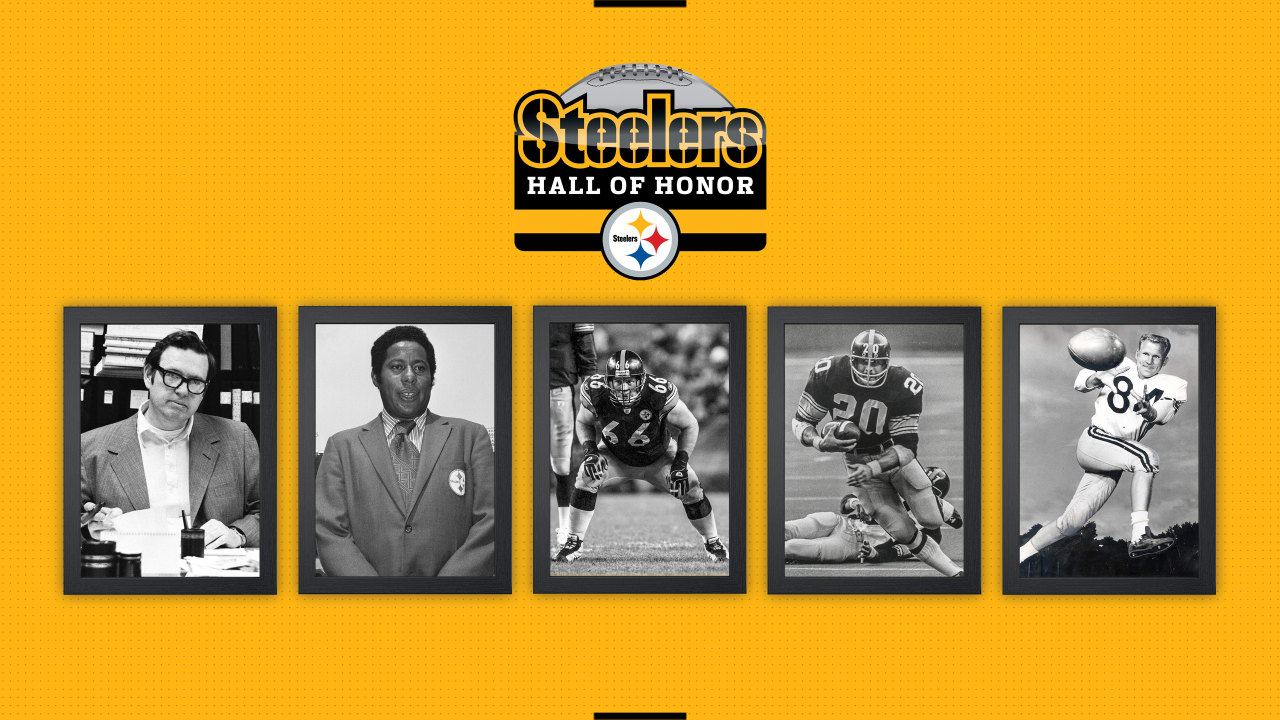
That is exactly why these five individuals will make up the second class of the team’s Hall of Honor, which was revealed today at a press conference held at Saint Vincent College.
 “We wanted to recognize all of the great people that made Steelers football what it is today,” said Steelers President Art Rooney II. “It’s open to anybody who made a significant contribution to Steelers football. We had a tough selection process again this year. Five great Steelers and great contributors. We are excited to induct these guys into the Hall this year. It’s great to have people each year who some may be in Canton, many won’t be. It’s great to recognize them.”
The individuals who will be inducted into the Hall of Honor for 2018 include, in alphabetical order, Rocky Bleier, Buddy Dial, Alan Faneca, Bill Nunn and Art Rooney Jr.
“It’s something very special,” said Bleier, a 16th round draft pick who played 12 seasons for the Steelers, including being a member of four Super Bowl teams. “To be compared to all the great players who played for the organization, and have your name attached to theirs, is a great honor. In this game, everybody does a job and does it well. You like to get recognition, and I got a lot playing on those teams and winning the Super Bowls. That was enough for me. To be able to be a part of this distinction is truly a wonderful honor for me.”
Last year the team introduced the Hall of Honor, an idea that came from Steelers President Art Rooney II, along with late Chairman Dan Rooney. The Hall of Honor was established to recognize former players, coaches, and front office personnel who played an integral role in the success of the franchise, from the beginning in 1933 until now. To be considered, a player must be retired at least three years and played a minimum of three seasons for the Steelers. Former coaches and contributors had to make significant contributions to the team and community.
“The Steelers have always taken care of their own and praised their people in front of crowds and behind the scenes,” said Bleier. “Within that confine a gesture like this is really special to honor players for what they have done for the team and community.
“Just to play professional football is a dream come true, no matter when you played. As you look back, when you plan your life you say I want to play professional football, you think what would that look like? No one would ever say you would be a part of the greatest dynasty that won four Super Bowls and you played with all of those Hall of Famers. You were a part of that tradition.
“What better organization would there to be a part of than the Pittsburgh Steelers. I am proud to be a part of what they are today.”
The first class included the team’s Hall of Famers, as well as a select group of individuals. They were Jerome Bettis, Mel Blount, Terry Bradshaw, Jack Butler, Dermontti Dawson, Bill Dudley, Joe Greene, Kevin Greene, L.C. Greenwood, Jack Ham, Franco Harris, Dick Hoak, John Henry Johnson, Walt Keisling, Jack Lambert, Bobby Layne, John McNally, Chuck Noll, Arthur J. Rooney, Sr., Daniel M. Rooney, Andy Russell, Donnie Shell, John Stallworth, Ernie Stautner, Lynn Swann, Mike Webster, and Rod Woodson.
This year’s class is significantly smaller, which will be the norm moving forward. And to be a part of the Hall of Honor is something that means the world to Faneca, who has been a finalist for the Pro Football Hall of Fame the last three years.
“Being in the Hall of Honor, being in with the great players that came before me and the reputation the Steelers have. That is what hit me first,” said Faneca. “It is humbling. It hasn’t been that long since I played. It seems like a lifetime ago, but I have only been done playing seven years. It’s an honor.
Art called me and informed me. It caught me off guard. You don’t get those phone calls from Mr. Rooney every day. I knew something was up. I was excited.
“The Steelers are special. You get drafted, go somewhere, and looking back I realize how lucky I was to come to Pittsburgh. If I could go back to me at that point and let myself know how lucky I was to be a part of the Steelers, it would be amazing. Not knowing it at the beginning but learning it along the way was fun.”
And what Faneca learned along the way is that the Steelers are like no other.
“It’s like something in the water there,” said Faneca. “It’s so special. It has always been that way and it keeps getting passed along. It’s the people there, the people that work for the team, play for them, coach, the front office. It’s a family run business and that feeling permeates through the players and they put their heart and soul into the team.
“You see some teams have a ring of honor for just the elite of the elite. It’s not many that get that honor, and more deserve it. The way the Steelers are doing it is great. It’s the Pittsburgh way, the family way. We are a family and encompassing a broader group is a great way to do it. It’s why the Steelers are special.”
The 2018 Steelers Hall of Honor Induction ceremony will be held on Friday, Sept. 28, at Heinz Field, the weekend the Steelers host the Baltimore Ravens on Sunday Night Football (Sept. 30). All will be presented with a steel football, a replica of one presented to Art Rooney Sr. by the U.S. Steel Corporation at the team’s 50th Season celebration.
“It’s going to be exciting,” said Faneca. “Any time you are around the fans it’s special. When you stop playing, you miss the locker room first. But you miss the fans. Those moments are special. To come back and be with the fans, those moments are always special.”
* * *
The Hall of Honor Selection Committee consists of Steelers President Art Rooney II, Joe Gordon, Bob Labriola, Stan Savran, Andrew Stockey and Tony Quatrini.
Image result for steelers hall of honor bleier
Rocky Bleier: Running Back (1968, 1970-80)
Football often is compared to war by the overly-dramatic. Rocky Bleier knows the difference. A 16th-round draft choice by the Steelers in 1968 as a halfback out of Notre Dame, Bleier also was drafted by the U.S. Army in 1969. Eventually shipped overseas, Bleier was wounded in combat during the Vietnam War. Awarded the Bronze Star and a Purple Heart for his military service, Bleier then began the arduous rehabilitation process on his foot that would enable him to return to professional football. Known primarily as a blocker, Bleier finished with 3,855 yards rushing, including 1,036 in 1976 when both he and Franco Harris finished the seson with over 1,000 yards rushing. Still ranked ninth of the team’s all-time rushing list, Bleier also finished his career with two touchdown receptions in the playoffs, including an acrobatic one in Super Bowl XIII.
Buddy Dial: Wide Receiver (1959-63)
If average yards per catch is used as the criteria, Buddy Dial was the foremost big-play receiver in franchise history. Dial played his first five NFL seasons with the Steelers, and he amassed 4,723 receiving yards on 229 receptions (20.6 average). He was the first receiver in Steelers history to post a 1,000-yard receiving season, and he did it twice (1,047 yards in 1961 and 1,295 yards in 1963). His 20.6-yard average is the highest in team history, and he added 42 receiving touchdowns to his Pittsburgh resume. Upon leaving the Steelers for Dallas following the 1963 season, his 42 touchdowns were a team record. Dial was voted to the 1962 Pro Bowl.
Alan Faneca: Guard (1998-2007)
During the days leading up to the 1998 NFL Draft, Jimmy Johnson was surveying the pool of talent. Then the Dolphins coach, Johnson had much draft-day success when he built the Cowboys championship teams of the early 1990s. “The guy most ready to play in the NFL,” Johnson told a reporter, “is that kid Faneca from LSU.” The Steelers picked Alan Faneca in the first round of the 1998 draft, and he deserves to be recognized as one of the best offensive linemen in franchise history. Faneca was a six-time first-team All-Pro during his years with the Steelers, and he was voted to nine Pro Bowls overall. In 2003, Faneca exhibited uncommon versatility by playing nine games at left tackle when injuries ravaged the line. He was named a member of the Steelers All-Time Team, and a member of the NFL Team of the Decade (2000s).
Bill Nunn: Scout, Assistant Director Player Personnel, Senior Scout (1968-2014)
Before accepting Dan Rooney’s job offer in 1968, Bill Nunn was a newspaper guy – first a sports writer, then the sports editor, then the managing editor of The Pittsburgh Courier during an era when it was one of the most influential black publications in America. Starting in 1950, Nunn personally selected the annual Black College All-America Football Team for The Pittsburgh Courier, and in the course of performing that duty he developed relationships with players and coaches at those colleges that would serve him well during his career in the NFL. Before the rest of the league caught on to the wealth of talent available in the programs at the Historically Black Colleges, Nunn helped the Steelers add many players who would go on to fill integral roles in the four Super Bowl championship teams of the 1970s. Included among those were L.C. Greenwood from Arkansas AM&N, Mel Blount from Southern, Frank Lewis from Grambling State, Dwight While from Texas A&M-Commerce, Ernie Holmes from Texas Southern, Joe Gilliam from Tennessee State, John Stallworth from Alabama A&M, and Donnie Shell from South Carolina State. For his decades of service, Nunn was enshrined as a member of the Inaugural Class of the Black College Football Hall of Fame.
Art Rooney Jr.: Personnel Director (1965-1986) ; Vice President (1987-Current)
During Buddy Parker’s eight-year reign as the Steelers coach from 1957-64, the team posted five winning seasons while showing a complete disdain for the NFL Draft. Parker traded away the team’s draft picks in droves, and during his tenure that included four first-round picks and five second-round picks. Of the top 40 potential draft picks during his eight seasons as coach (Rounds 1 though 5 each year), Parker traded away 40 of those. That changed when Parker was fired in 1965, and it was the start of the Steelers turning to the draft as their primary method of roster-building, a philosophy that continues to this day. It also was when Art Rooney Jr. was hired as the team’s Personnel Director. When Chuck Noll became the coach in 1969, he teamed with a Scouting Department headed by Art Rooney Jr. to draft nine Hall of Fame players, in addition to adding 11 more (nine draft picks and two undrafted rookies) from 1969-74 who would earn four Super Bowl rings with the team during the 1970s.

Saturday, August 06, 2016

Hall of Famer Kevin Greene was born to be a Steeler, former teammates say


Jeremy FowlerESPN Staff Writerhttp://www.espn.com/blog/pittsburgh-steelersAugust 5, 2016

LATROBE, Pa. -- Newly minted Pro Football Hall of Famer Kevin Greene played three seasons with the Pittsburgh Steelers more than 20 years ago, but his name still comes up around these parts.
Even now, when inside linebackers coach Jerry Olsavsky evaluates pass-rushers in the NFL draft, he wonders whether they'll rush with power or finish plays like Greene once did. Greene mastered this move, Olsavsky might say in a film study.
"We still reap the benefits of that today because that's what we're looking for," said Olsavsky, who was teammates with Greene in Pittsburgh. "KG was always on fire."
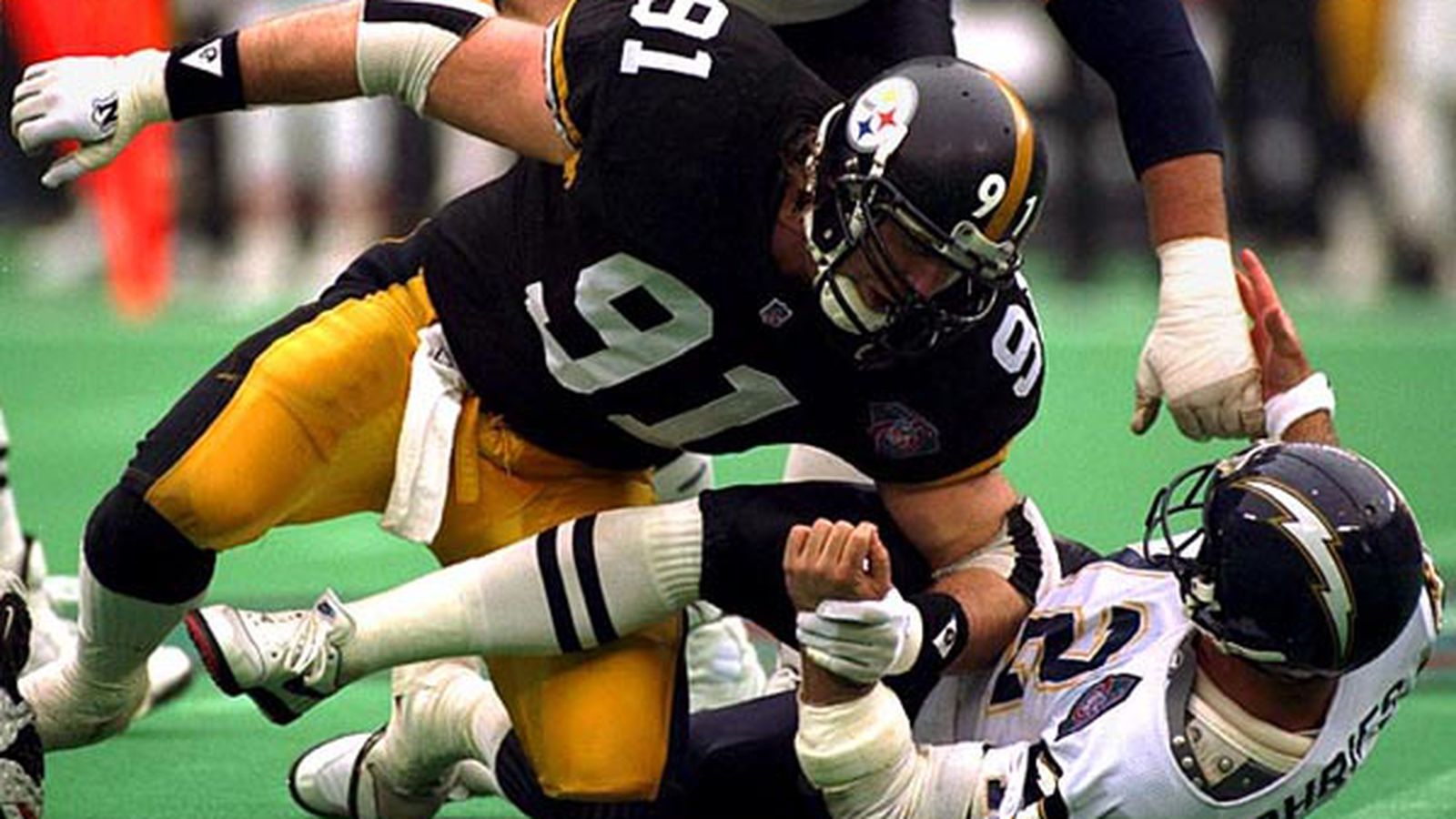
As Greene enters the Hall on Saturday in Canton, Ohio, he might be best remembered as a Steeler despite playing just one-fifth of his 15-year career with the team. With a combined 13 sacks in his last two seasons with the Los Angeles Rams, Greene needed a safe landing strip. He found it in Pittsburgh, and responded with 35.5 sacks in three seasons for the Steelers' loaded defense. Greene recently called his time in Pittsburgh the "pinnacle" of his career, and he has chosen the Steelers for his Hall of Fame ring ceremony.
Greene's 160 career sacks place him third in NFL history, but in 1993, Steelers players didn't know what to expect.
Until they saw him in action.
"He far outdistanced our expectations for what we expected," said Carnell Lake, now the Steelers' defensive-backs coach. "No one at the time knew he was going to be a Hall of Famer. He came in and established himself right away with double-digit sacks. He had a great work ethic. His focus and attention to detail was good."
In 1996, Greene followed former Steelers assistant Dom Capers to the then-expansion Carolina Panthers and recorded 14.5 sacks.
But for a time, Greene was like something built out of a Steelers lab. He was known as physical and accountable. He would outwork anybody but still treated the game with the joy of a Pop Warner player, Olsavsky said. Sack numbers were personal because they meant he knew how to finish plays. The Steelers didn't try to change him. They put him on the left edge opposite Greg Lloyd and let them both go off.
"KG was one of the rare people who can come in and it's like a blood transfusion," Olsavsky said. "His blood is the same as ours. When he came here, he was like, 'Oh,' and it kind of revitalized him a little bit. [Offenses] knew what they were getting. They were getting fastball. They couldn't stop it."
Lake would have loved to share a Super Bowl XXX victory with Greene. Most Steelers defenders from that 1995 team feel they should have defeated the Dallas Cowboys that year. But Lake is proud that Greene identifies as a Steeler first, even though he played his first eight seasons with the Rams.
"There's something special about the Steelers," Lake said. "The atmosphere, the environment, the history, the legacies that the players of the '70s, Super Bowl teams, they kind of got it started for us. ... The game is changing and the Steelers have to change along with it, but for some of the fundamentals of the game, hard-nosed, tough football, I don't think that will ever change."

Wednesday, December 31, 2014

Steelers-Ravens rivalry steeped in bitterness, respect


Tuesday, Dec. 30, 2014, 10:45 p.m.

Steelers safety Ryan Clark levels Ravens running back Willis McGahee during the 2009 AFC Championship Game. (AP)

Seven years ago, on a field at Baltimore Ravens training camp in Westminster, Md., I asked then-Ravens defensive coordinator Rex Ryan about the Steelers.

“I don't like Pittsburgh,” Ryan said. “But I respect them.”

The feelings were mutual. They still are. That's the great news here: Steelers-Ravens has endured.

The names have changed. It'll never be the same as when Hines Ward, James Farrior, Bart Scott, Ray Lewis, Ed Reed and the boys were bangin' heads. But the rivalry endures, and rivalries are what make sports great.

Imagine your life as a Pittsburgh sports fan without the Ravens or the Philadelphia Flyers to loathe. If you're well past the halftime intermission, imagine it without the old Cleveland Browns or Oakland Raiders or Philadelphia Phillies … or the Flyers. Imagine it without Penn State and West Virginia.

It is a bloody shame the Backyard Brawl disappeared. Steelers-Ravens easily could have done the same after a long, strong run. Both teams needed serious retooling. Either could have faded. It's a testament to the strength of their organizations that neither sank below 8-8 during the process.

For my money, Steelers-Ravens remains the best rivalry in the NFL and the best this town has.

With that in mind, one man's snapshots of Steelers-Ravens from the Mike Tomlin era …

FIVE INCREDIBLE HITS

5. Courtney Upshaw nearly breaks Ben in half. Call it the modern-day version of Bart Scott's Ben blast, the one of which Scott memorably said, “It felt good to hear the air leave his body.”

4. Hines Ward rocks Reed and Scott in the same 2007 game. The second one had Scott threatening to “kill” Hines, who just kept on smiling.

3. Ray Lewis snaps Rashard Mendenhall's shoulder blade like a piece of kindling. Was this the play that drove Mendenhall into deep thinking?

2. Jarret Johnson de-cleats Ward. One thing about Hines: He knew the Ravens would get him someday. It happened during Baltimore's blowout win in the 2011 opener, when Johnson ambushed him running across the middle without the ball. Said Johnson: “Everybody wants to knock that guy out.”

1. Ryan Clark nearly maims Willis McGahee. One of the scariest hits you'll ever see, from what might have been one of the most violent championship football games ever played.

THREE WEIRD SCENES

3. Byron's scramble. Who could forget statuesque, 250-pound Byron Leftwich rambling 31 yards down the right sideline for a touchdown two years ago? It was the longest run of Lord Byron's career and proof that when it's Steelers-Ravens, somebody who normally would skip out of bounds just might decide to turn upfield. Even if he's moving at the rate of an inch worm.

2. Clark's invasion. Steelers safety Ryan Clark entered the Ravens' locker room after a 2012 loss at Heinz Field and pretended to interview childhood friend Ed Reed. I was standing there, and let me tell you: It was mighty uncomfortable. I couldn't help but think what might have happened if Ward or Joey Porter had entered the Ravens' room in such fashion.

As then-Steelers lineman Max Starks put it: “I don't think Hines would have been received well at all.”

1. Tomlin's blowoff. This was a beauty, after a 2012 win in Baltimore, as Icy Mike tried to keep running after a cold and silent shake. John Harbaugh held on. He pulled Tomlin back and said, “Hey, hey, hey, I said congratulations.” Tomlin looked back and offered a “Thank you. Good job.” before moving along. If there were a Passive Aggressive Hall of Fame, these guys would be first-ballot inductees on that exchange alone.

THREE UNFORGETTABLE MOMENTS

3. Troy's parting of the seas. Close your eyes, and I'll bet you can see it: Late in the 2008 AFC title game, a young, crazy fast Polamalu sprinting untouched through a sea of Ravens inside the 10 and holding the ball aloft with both hands — a gift for the football gods? — as he crosses the goal line. Heinz Field nearly exploded in ecstasy.

2. Tomlin's near tackle. The Steelers were fined $100,000 after Tomlin stepped over the sideline and nearly tripped Jacoby Jones on a kick return last season. Tomlin claimed innocence. At least one Ravens player wasn't buying it. This is what Joe Flacco, who had threatened such a move in the previous year's Super Bowl, said at the time: “(Tomlin) was looking at the big screen the whole entire time. He knew where he was, and he knew where Jacoby was. He pulled my move.”

1. Charlie's last stand. Ancient Charlie Batch, in the final start of his career, beat the Ravens on a dramatic late drive. “To silence those 71,000 people? Wow. What better feeling could you have?” he said.

THREE FABULOUS QUOTES

3. “A little 5-9 linebacker gets four sacks. That will never happen again in his life. He knows that.” — Ravens defensive end Trevor Pryce, referring to James Harrison, who had nine tackles, 3.5 sacks, six quarterback hurries, three forced fumbles, one recovered fumble, an interception and a TKO of Ed Reed on a punt return in a 2007 game.

2. “Who is Trevor Pryce?” — Harrison.

1. “That team beat us last week, then they went and got their (butt) kicked this week.” — Harbaugh, to his players in the locker room after a win over Tennessee this season, referencing the Steelers' loss to Rex Ryan's Jets.

You can bet Tomlin will repeat those words once or twice behind closed doors this week. I'll repeat these, from The Book of the Great (Bart) Scott, in advance of Saturday night's bloodbath:

“Can't wait!”

Joe Starkey co-hosts a show 2 to 6 p.m. weekdays on 93.7 FM. Reach him at jraystarkey@gmail.com.


Read more: http://triblive.com/sports/joestarkey/7461235-74/ravens-steelers-tomlin#ixzz3NTz7CdRj 
Follow us: @triblive on Twitter | triblive on Facebook

Sunday, November 02, 2014

The story of No. 75

Ken Kortas


PITTSBURGH — Sunday night, amid all the pageantry, pomp and circumstance that arguably the most storied franchise in professional football history can muster, the Steelers will retire jersey No. 75.
Or as the voice on the other end of the phone cackles, “Hey, my old number.”
Joe Greene may have worn it best, but Ken Kortas wore it last before him. From 1965-69, Kortas donned the now iconic No. 75 for the Steelers.
Kortas won’t be at Heinz Field Sunday; he may not even turn on the TV to catch the festivities from his suburban Louisville, Ky., home. He hasn’t been in contact with anyone from the Steelers since he was unceremoniously dumped for a younger man 45 years ago.
Before “Mean Joe,” before the Steel Curtain and the four Super Bowls, before the Coca-Cola and Hungry Man commercials, Greene was a prized prospect from North Texas. The fourth pick in the ‘69 draft had his sights set on stardom, a certain number he wore in high school and college and Kortas’ job at defensive tackle.
“He was very confident in himself and his ability,” Kortas said of his successor.
Kortas never stood a chance, and he knew it.
THE PITTS
Forty-five years ago, the NFL wasn’t what it is today and the Steelers certainly weren’t what they were to become in the following decades. Different economics, different environment, different venues, different everything.
Playing in decrepit Pitt Stadium in Oakland, tickets, even the best seats in the house, were easy to come by.
“The fans of Pittsburgh, I’ve got to give them a lot of credit for going to football games at Pitt Stadium,” Kortas said. “There was no parking and you had to walk up hill to get there. It was brutal.
“I thought if any one goes there they ought to get in for half price. Those days, 50-yard line tickets were six bucks. My mom and dad came to every game, drove in from Chicago every game, every weekend that we were home and some of the away games too. I’d get tickets. ‘Want to be on the 50-yard line?’ Here ya go, I got ya.’”
The teams Kortas played on were as bad as the home stadium. In his four seasons, the Steelers went 13-40-3, including a 2-11-1 mark in ‘68, his final season.
Despite the poor showing on the field, Kortas thoroughly enjoyed his time in Pittsburgh and the passion of the fans, saying it reminded him of his native Chicago.
“People were pretty loyal to us even though we were losing,” he said. “It was just fun in that regard. I enjoyed the guys I played with. We tried like heck but we just couldn’t do things … We couldn’t score. We just had some problems. It was just too bad we couldn’t produce anything.”

KID ADVICE
Part of Kortas’ enjoyment in playing in Pittsburgh stemmed from his respect for the Rooney family. But it wasn’t the owner Art or his son Dan, who was taking on a bigger role in the team, that he was closest to.
When Kortas arrived, Art Rooney II was a 13-year-old equipment boy, cleaning laundry and doing whatever was asked.
“I used to talk to him because he thought I was the nicest guy on the team, me and my roommate Fran O’Brien,” Kortas said. “One time, Artie told me ‘If I was running the team, you’d be my head coach.’ I wish I would have taken him up on that.”
Obviously, players salaries weren’t quite what they are today. The average annual player salary in ‘69 was $25,000, compared to today’s $1.9 million. During his off-seasons, the 6-foot-4, 280-pound Kortas served as a substitute teacher in some of the toughest schools in Pittsburgh.
It was there, in a classroom, talking to a group of students about his day job that he received what he calls his tell-tale sign. He asked his pupils who he thought the Steelers would take in the draft.
“One kid had the answer,” Kortas said. “His dad said they’d take Joe Greene and I said, ‘I think you’re right.’
“I didn’t have any inside information. That’s just what I thought they were going to do.”
THE END
After first-year coach Chuck Noll indeed selected Greene, Kortas reported to training camp at St. Vincent College essentially a lame duck. Kortas may have been jettisoned sooner but only Greene’s contract holdout kept him around.
After Greene reported “a week to 10 days late,” Kortas didn’t have much of a conversation with either his replacement — who was temporarily given No. 72 — or his new coach. Although he says after his tumultuous dealings with Bill Austin, Noll’s predecessor, it couldn’t have been any worse.
“I could still play, but they had other ideas,” he said.
On Sept. 4, 1969, two weeks before the start of the regular season, Kortas, a first-round pick of then St. Louis Cardinals in ‘64, was traded. Kortas, along with halfback Don Shy, was dealt to New Orleans in exchange for Don McCall.
“I hated to go when I did because I thought someday we were going to make it and it’s going to happen,” Kortas said. “So I was three of fours years off on that prediction.”
He never played a down for the Saints, though. He was released but quickly latched on with his hometown Chicago Bears, where he spent the ‘69 season, which turned out to be his last in the NFL. He nearly signed with Washington and Vince Lombardi for the 1970 season but the legendary coach died and was replaced by, of all people, Bill Austin.
After three seasons with Austin in Pittsburgh, Kortas had had enough and was out of the league by age 27. He has no regrets about how it turned out.
Greene, who was handed No. 75 before the start of the ‘69 season, went on to win rookie of the year and took his first steps toward a legendary career. Kortas soon got on with his life with his family in Kentucky, a footnote in franchise history.
“I felt like I could play another four years,” he said. “I would have liked to, it just doesn’t work out. There’s a lot of guys that think they can play and maybe they can or maybe they can’t. Maybe I couldn’t. Nobody agreed with me.
“I think about plays today. I wish I would have done this or whatever. You replay a lot of games in your mind. I’m 72 now, still thinking about rushing the passer.”