Thursday, May 18, 2006

Cowher's Club


By Joe Starkey
PITTSBURGH TRIBUNE-REVIEW
Tuesday, May 16, 2006

As minicamp ended Monday with a grueling series of sprints, strong safety Troy Polamalu looked to his left and saw Bill Cowher, ballcap spun backward, trying to keep up.

Yes, the 49-year-old head coach was doing wind sprints.

Polamalu recognized the act as genuine, not as a contrived ploy to loosen up the troops.
"It's just who he is," Polamalu said.

Somebody asked free safety Ryan Clark if he could picture Joe Gibbs, his former coach with the Washington Redskins, racing his players.

"Coach Gibbs is more of a treadmill walker," Clark said, laughing.

A newcomer, Clark likes what he sees.

"One thing about this team," he said, "it's a close-knit group."

Cowher makes it so. That doesn't mean everyone likes him. He wouldn't be much of a boss if that were the case.

Openness and mutual respect are the keys to Cowher's success.

The Rooneys have created an atmosphere in which the head coach has the authority -- and security -- to run his program. The head coach, in turn, has created an atmosphere in which players know their roles and coaches can freely do their jobs.

There are no secrets -- and Cowher doesn't ask people to do anything he wouldn't do.

Including run sprints.

"Pretty much what you see is what you get," says defensive coordinator Dick LeBeau. "You never have to wonder where you stand with him. He's a good, honest coach -- very secure in what he's doing."

A sure sign of that security: Cowher's cravings for micromanagement have all but disappeared.
Not that he's lost his bite.

"It's still not too hard to get on the wrong side of him," LeBeau said, smiling.

At one time, Cowher was viewed as a tyrant who made life miserable for his assistants. There might have been some truth to that, but it seems like a ridiculous notion now, as his staff -- perhaps the NFL's finest -- has returned intact for a third consecutive season.

Don't discount such continuity as a critical factor in the team's bid to repeat as Super Bowl champion. It allowed Cowher to recharge his battery without having to conduct job searches and interviews, and it allowed everyone else to pick up where they left off in February once minicamp began.

"We're not coaching coaches, and there's a lot to be said for that," Cowher said. "You worry about coaching players, but sometimes you find yourself coaching coaches."

When LeBeau left in 1997 to run Cincinnati's defense, some figured he'd simply had enough of Cowher.

"I've never quite understood where all that came from," LeBeau said.

The theory crumbled when LeBeau chose to return two years ago, instead of taking a job in Buffalo or elsewhere. Cowher, for his part, never held it against LeBeau for having made a lateral move to a divisional opponent.

LeBeau enjoys his autonomy here.

"(Cowher) has never come into the room too often when I've been running the meetings," he said. "I guess, in a way, that's a compliment. I take it as such."

Quarterbacks coach Mark Whipple, integral to Ben Roethlisberger's development, feels the same sort of freedom.

"(Cowher) hires you to do a job, and there's respect there," Whipple says.

One of Cowher's underrated qualities is choosing top-notch assistants. He has the perfect mix of veterans such as LeBeau, Russ Grimm (offensive line), Dick Hoak (running backs), Bruce Arians (wide receivers) and John Mitchell (defensive line), plus bright young assistants such as offensive coordinator Ken Whisenhunt and secondary coach Darren Perry.

It's funny how people keep speculating on who'll replace Jerome Bettis as "the new face of the franchise."

The new face is the old face, the same face as before.

Cowher's.

Joe Starkey is a sports writer for the Pittsburgh Tribune-Review. He can be reached at jstarkey@tribweb.com

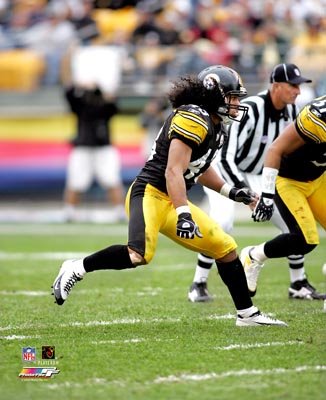
Polamalu a Reluctant Media Star


Commercial success not part of Polamalu's world
Tuesday, May 16, 2006
By Ron Cook, Pittsburgh Post-Gazette

Coming soon to a television near you ...

A Troy Polamalu commercial for Nike.

You gotta see it to believe it.

"I was pretty much forced into doing it," Polamalu said the other day at Steelers minicamp, his voice barely more than a whisper.

That's Polamalu away from football: shy, almost timid, the last guy in the world you would figure for an All-Pro.

You see him making fabulous plays all over the field and taking the occasional personal foul or unsportsmanlike conduct penalty when he momentarily loses his mind and control of his emotions.

But off the field?

Just say he's a very reluctant football hero.

Ben Roethlisberger has capitalized on his fame from Super Bowl XL and turned it into a small fortune. Hines Ward. Jerome Bettis. Joey Porter. So many of the others.

Polamalu could be bigger than all of 'em except for Big Ben -- quarterbacks, you understand -- for a couple of reasons. One, he has a distinctive look with that long, flowing black hair. You know it's him when you see him. And two, he might be the most unique talent in the NFL.
Remember how Lawrence Taylor redefined the outside linebacker position? Polamalu is doing it for safeties.

And all he has done since the Super Bowl is one Nike shoot?

After his agent, Marvin Demoff, twisted his arm?

"I don't like prestige," Polamalu said. "I could go off and live in the mountains and raise my family."

You laugh.

Polamalu is serious.

He must drive Demoff crazy.

"People can define themselves in different ways," Polamalu said. "I don't define my life by winning a Super Bowl. I'm not saying it's not important. It is because it's a blessing. It just doesn't define who I am as a person. My faith does that."

It has been a long time since Pittsburgh has had an athlete like this. Jeff King is the last one who comes to mind. The Pirates made him the No. 1 overall selection in the 1986 draft and he went on to have a fine career. But he never was comfortable in the spotlight. He had a hard time with the media scrutiny and the fan adulation. He was almost painfully shy.

Today, King lives about as far from civilization as possible, on a cattle ranch in western Montana.
Maybe Polamalu will be his neighbor one day.

It's funny, there has been an e-mail going around about Polamalu buying dinner for everybody at a local restaurant. You probably received it. Everybody else has. Anyway, the story goes, Polamalu was so grateful that the dinner patrons allowed him and his wife to enjoy their meal in peace that he stood up afterward, called for everyone's attention, thanked them for their courtesy, picked up all the checks and signed autographs to boot.

It's a wonderful tale.

Too bad it isn't true.

Polamalu has been known to pick up a check or two -- even for strangers -- but always right before he quietly sneaks out the door without the lucky party knowing about it. It's hard to imagine him standing in front of a group and calling attention to himself.

"Oh, my, no," he said, quietly again. "That didn't happen."

Polamalu said he doesn't go out in public much because he's uncomfortable with the attention. It's not as if he can sneak out and go unnoticed. Not even the scruffy full beard he has grown since the Super Bowl can disguise him. That long hair, tied back in a ponytail except during games when it flows freely in the wind, is a dead giveaway.

"People are always so nice and I appreciate it," Polamalu said. "But I would prefer it to be genuine, not someone just shaking your hand and telling you that you're a good football player."

Actually, they tell Polamalu he's a great football player, which makes him squirm even more.
It's true, though. There's not another player like Polamalu in the NFL. No one else can hit like a linebacker and cover like a cornerback.

The Steelers' defense was successful last season because coordinator Dick LeBeau used Polamalu in so many different ways. Opponents never knew where he was going to be or what he was going to do. You saw his pass-rush ability when he tied an NFL record for a safety with three sacks at Houston. You saw his coverage skills in the Indianapolis playoff game with his controversial interception that was, then wasn't and, as the embarrassed league office admitted afterward, should have been. You saw his toughness in the Denver playoff game when he blew through a block by tackle Cooper Carlisle to make a flying tackle on running back Tatum Bell after a 9-yard gain on a third-and-10 play. And you saw his amazing closing speed in that Denver game when he covered about 10 yards in the blink of an eye to blow up a screen pass and tackle back Mike Anderson for a 2-yard loss.

It's going to be fun to see what Nike does with that extraordinary package.

Well, fun for all of us.

Not for Polamalu.

(Ron Cook can be reached at rcook@post-gazette.com or 412-263-1525. )

Missing Jerome


Missing the Bus
Saturday, May 13, 2006
By Ron Cook, Pittsburgh Post-Gazette

Somehow, it just didn't seem right. Since the Steelers moved into their South Side headquarters in 2000, the same name had hung over the locker in the corner. BETTIS. Sorry, but it was more than a little unsettling to check it out yesterday at the first day of minicamp and see 15 REID.

No offense to rookie wide receiver Willie Reid, who couldn't possibly know what Jerome Bettis meant to the team or this city.

It's funny, all of us have spent a lot of time and energy wondering how the Super Bowl champion Steelers are going to replace Antwaan Randle El and Chris Hope. Hardly anyone has asked about replacing Bettis' estimable presence.

It is not an insignificant issue.

The Steelers are lucky. They have a great coach -- safe to say now, a Hall of Fame coach -- in Bill Cowher, who always sets the right tone for the team. They have proven, respected veterans in Alan Faneca, Jeff Hartings and Super Bowl MVP Hines Ward, who show how to be a professional by how hard they practice and play. And they have emerging superstar Ben Roethlisberger, who has come so far and done so much since he first stepped on the field for a minicamp practice two years ago.

They also have Joey Porter.

"It's Joey's team now," Bettis said in the wee hours after Super Bowl XL, not long after he parked the bus for the final time in Detroit.

Endorsements just don't come any better than that.

"I'm ready to fill that role," Porter said yesterday.

"I asked Jerome for the blueprint a long time ago. If you're going to learn, why not learn from the best? I watched Jerome. I saw how he handled himself. He got along with everybody. You can't just think about the guys on your unit. You have to be there for everybody. I think I can be that guy. I'll be there for all my guys, setting the tempo. Even the kickers."

You read that right.

Even the kickers.

Porter also learned about leadership from Levon Kirkland and Dermontti Dawson early in his career. "Everybody followed Levon," he said, the respect still obvious in his voice. "He always had the final say about everything."

As solid as Kirkland and Dawson were, they didn't have the locker-room impact that Bettis did. You have to go back to the 1970s -- to Joe Greene and Willie Stargell -- to find a player who was so respected and admired.

You saw that during the Steelers' march through the playoffs last season, the goal seemingly every week to win another game for Bettis, to give him a chance to go out as the ultimate winner in Detroit, his hometown.

You also saw it before Super Bowl XL when the Steelers gave Bettis the incredible tribute of sending him out alone for the pregame introductions. It was Porter's idea. You can see him on the tape of the game coverage, No. 55 standing with his arms outstretched, holding back his teammates who couldn't wait to play the biggest game of their life, yet thought so much of Bettis that they gladly allowed him one final terrific moment in the spotlight.

It turns out Porter -- who often comes across to the rest of the NFL as a big-mouthed jerk -- has a heart.

Not that he wants other teams to know.

"It wasn't a hard sell to the other guys," Porter said of his Bettis tribute. "They love Jerome, too."
Porter should be so lucky to be so loved when he retires.

It is a natural progression, Porter becoming more of a leader. He long has provided the emotional energy for the Steelers. His face -- usually snarling and yapping at opponents at the 50-yard line during the pregame stretch -- has been a prominent face of the team, almost as much as Cowher's with that glare and big jaw.

Sometimes, Porter doesn't even wait until game day to snarl and yap.

It happened before the Indianapolis playoff game last season when he insinuated the Colts were soft. He then walked the walk, playing a marvelous game, sacking Peyton Manning twice late in the fourth quarter.

It also happened before the Super Bowl when he used the word "soft" -- the heck with insinuations -- to describe Seattle tight end Jerramy Stevens because he thought Stevens had disrespected Bettis and his wonderful homecoming story. It's fair to assume, after watching Stevens drop several passes, that his head wasn't in the game.

That part of Porter's persona won't change.

"I've got to play angry to play good," he said.

But Porter's role must expand, especially now that Kimo von Oelhoffen has moved on, too. It's instructive that Bettis and von Oelhoffen were the two players who spoke to the team the night before the AFC championship game in Denver.

Like Porter said, he has to be there for everybody.

Even the lowly kickers.

"We've got a beautiful opportunity in front of us," Porter said. "We have a chance to win it all again.

"We'll be getting a lot of accolades from now until the season starts. People will be telling us how great we are. We can't buy into that because, once we get playing again, teams will be coming after us. We've got to show up and play."

Look for Porter to lead the way.

(Ron Cook can be reached at rcook@post-gazette.com or 412-263-1525.)

Friday, May 12, 2006

Ward Backs Off on Statements

By Kevin Gorman
PITTSBURGH TRIBUNE-REVIEW
Friday, May 12, 2006

Steelers receiver Hines Ward has a reputation for nasty downfield blocking, but the Super Bowl XL Most Valuable Player has proven proficient in backpedaling.

In a feature in this week's Sports Illustrated, Ward said of his relationship with Steelers coach Bill Cowher: "I don't have anything to say to him. After what he did to me, after how he treated me, no. The numbers I put up? The seasons I had, for them to keep on bringing in guys...?"

In an exclusive interview with WTAE-TV (Channel 4), Ward backtracked. He tried to clarify the context of his comments, which were made in reference to the organization using first-round draft choices on receivers Troy Edwards and Plaxico Burress.

"It was a good article, but everything got taken out of context," Ward said. "The question to me was about what was the lowest part of your contract holdout, what were some things going on in your mind."

Ward told WTAE's Sally Wiggin that, during his 15-day training camp holdout, Ward asked Jerome Bettis for advice and was told not to take it personal. Ward couldn't resist, calling Cowher to ask "man-to-man" how the coach felt about the Pro Bowl receiver "as a player."

In September, Ward signed a five-year, $27 million contract with $17 million guaranteed. It's the richest deal in team history. And it paid dividends.

"Once we had our talk, that was it," Ward said. "That's the reason why I came back to camp: I needed to hear that from him. That was the question, how it was set up and asked.

"So, the quotes that was said to that was speaking to the contract negotiation. So, it all got blown out of proportion."

It was nothing a Lombardi Trophy couldn't solve.

"I had to call coach Cowher and let him know kind of how it all got (this far)," Ward said, "but we're fine."

Kevin Gorman can be reached at kgorman@tribweb.com or (412) 320-7812.

Minicamp Begins Tomorrow For the Steelers

Friday, May 12, 2006
By Ed Bouchette, Pittsburgh Post-Gazette

Related information
Steelers Mini-Camp roster

They will gather tomorrow for the first time as a team since they paraded down Fifth Avenue more than three months ago. They will swap stories, high-fives and relive those moments of yesteryear when a late-season surge nudged them into the playoffs, where an unprecedented run on the road brought them their first Super Bowl victory in 26 years.

It will culminate June 2, when the Steelers visit the White House and, later that day, receive their Super Bowl rings in a private ceremony.

That will be it. The celebrations will end, and the 2006 season will begin. Little will be done after that to celebrate their Super Bowl XL victory, certainly not when the season opens Sept. 7 against Miami at Heinz Field.

The Steelers, starting with their three-day minicamp tomorrow on the South Side, can relive their Super moments for the next several weeks, but after that, coach Bill Cowher, along with Dan and Art Rooney, wants their focus on the 2006 season and a possible repeat.

Ownership and the coaching staff believe they have the talent to win another Super Bowl, and they don't want to celebrate that chance away. It's up to Cowher to set the tone, and he must do it without the locker-room leadership of such veterans as Jerome Bettis and Kimo von Oelhoffen.

"We're going to have a lot of new faces," Cowher said. "We're losing guys like Jerome Bettis and Antwaan Randle El and Chris Hope and Kimo. Kimo, Jerome and Antwaan Randle El in the locker room had a presence, they had a personality that exuded confidence, that exuded purpose, and some people are going to have to replace them. It's a process -- who it is remains to be seen, and what kind of identity we can re-establish remains to be seen."

The minicamp is mandatory, and everyone is expected to attend. There are dual practices tomorrow and Sunday and one Monday morning. After that, the voluntary portion of spring drills begins Wednesday with 14 sessions spread over the coming weeks until June 8, when Cowher sends them home until training camp.

They've done their best to fill the losses. Wide receiver Santonio Holmes was drafted in the first round to address the loss of Randle El. Duce Staley will get a crack at Bettis' short-yardage job at halfback. Ryan Clark was signed from the Washington Redskins to replace Hope at free safety and another, Anthony Smith, was drafted in the third round. Brett Keisel was retained in free agency to move into von Oelhoffen's spot at right end.

"There's a reality that we have a lot of people coming back," Cowher said. "There are some voids there, don't get me wrong, but there's a lot more foundation there that we can build from. It's going to take hard work and sacrifice and dealing with adversity, but, if we can do that, we'll be in the hunt."

It is supposed to be difficult to repeat as Super Bowl champion for many reasons, starting with the fact the team plays into February while most others had several weeks to lick their wounds or take a vacation. It not only delays the healing process and/or promotes fatigue, but it also delays the time when players resume their workouts for next season. Hines Ward, for example, acknowledged he's behind in his workout schedule but promised it won't be a problem for him.
There's also the matter of how every team on the Steelers' schedule should have more incentive to knock off the Super Bowl champion.

"Everyone's going to be gunning for us," Ward said. "I remember when we played Baltimore when they were champions; we wanted to mess them up every time: 'Look, ya'll [are] good but ya'll ain't going to make it to the Super Bowl again because y'all going to be hurt.' It all depends on the mind-set of each individual. Are you still living off that Super Bowl year?"

Cowher has emphasized the past few months that the Steelers were not a dominant team in 2005, so they cannot get too heady about themselves.

"I don't think we'll take ourselves too seriously," Cowher said. "I'm not so sure we were the best team in the National Football League last year. I think we were playing our best football at the right time.

"I think our guys understand that. It's a challenge. We have a lot of players back. We lost a couple of key players and we'll have to fill those voids, but, when you realize what you accomplished and you're part of history and you have an opportunity to do it back to back, it would be an unbelievable feat.

"It's going to be an unbelievable challenge in front of us as well. But I think our guys kind of want to separate themselves. We have a lot of hard work and a lot of sacrifice and a big commitment we'll have to make to get it done. But I think we're all relishing that opportunity, and until we get knocked out of the playoffs next year or we don't make the playoffs, we're the defending champs."

(Ed Bouchette can be reached at ebouchette@post-gazette.com or 412-263-3878. )

Thursday, May 11, 2006

Book Captures Clemente's Greatness


Pirates legend shown to be worthy of hero status

http://www.mlb.com
10 May 2006

• Clemente's statistics
• Maraniss to hold Clemente book signing at PNC Park

This is what can happen when a great reporter finds a tremendous subject.

"Clemente: The Passion and Grace of Baseball's Last Hero," by David Maraniss, is one of the best baseball biographies you will ever read. It is one of the best biographies you will ever read, period.

Roberto Clemente is not an easily categorized subject. His heroism is a matter of public record, but he was also a man of seemingly contradictory emotions and personal traits. Fortunately, Maraniss, as usual, is up to the task.

Maraniss, an associate editor at The Washington Post, has won a Pulitzer Prize for National Reporting. He has written the definitive Bill Clinton biography, "First in His Class." He has written the definitive Vince Lombardi biography, "When Pride Still Mattered." He has written an epic Vietnam era book, "They Marched Into Sunlight: War and Peace, Vietnam and America, October 1967."

With the progression from Clinton to Lombardi to Clemente, it could be argued that Maraniss is moving up the evolutionary ladder of biographical subjects. In any case, the topic of Clemente requires extreme diligence in reporting from the author, and the baseball legend receives that from Maraniss.


Just about anyone reading this Web site understands the greatness of Clemente as a player. There is plenty of baseball in this biography and a keen understanding of the game as well as Clemente's place in the game. If this were the only part of Clemente's story being told, this would still stand as a fine baseball book. But what is striking here is the quality of Maraniss' reporting, and the depth of his understanding of Clemente, the human being.

What you see unfold in this book is not merely Clemente's emergence as a true star of the game, but his personal growth.

"He was that rare athlete who was slowly achieving grace, not just as a ballplayer but as a human being," Maraniss writes. "The reality of many athletes, even those who become hailed as deities, is that they diminish with time; Clemente was the opposite, becoming more sure of himself and his larger role in life."

And it was not easy. As a Latin American pioneer in the Major Leagues, Clemente encountered prejudice in many forms, from the third-class living arrangements for non-Caucasian players in Spring Training to the sportswriters who, early in his career, delighted in quoting him in broken English and either underestimated or ignored the quality of his play. It was often, even with his growing success on the field, a lonely existence. The slights ate at Clemente, but he rose above them, as a player and as a man.

"He was shy, yet bursting with pride," Maraniss writes. "He was profoundly humble, yet felt misunderstood and undervalued."

In a recent interview with Wisconsin Public Radio, Maraniss said of Clemente: "He had what I call a beautiful fury about him, not unlike Jackie Robinson in that characteristic. Very proud, dignified, could be a pain in the butt, particularly to sportswriters, but a lot of them deserved it.

"There were so many different aspects to him; contradictory, but fascinating. He wasn't a saint, he had his flaws, but you could see him growing as a person and that's quite extraordinary."
Maraniss grew up in Wisconsin with a baseball-loving father, as a full-fledged fan of the Milwaukee Braves, but says that his favorite player was Clemente. "This book touched a part of me that none of the other books had," Maraniss said in the radio interview.

His fascination with Clemente was shared by many fans who normally would have had no rooting interest in the Pittsburgh Pirates. Clemente had the quality of greatness about him, visible to the eye and understood on sight. As is so often the case, numbers could not tell the story of Clemente's greatness.

"The rest of us were just players," Pittsburgh Pirates pitcher Steve Blass said. "Clemente was a prince."

As his playing reputation expanded, so did his understanding of what the role of a public figure could be. When asked to list his heroes, Clemente placed Martin Luther King, Jr. first. His own experiences taught him to view people as an individuals, rather than stereotyping them into a group. It was this understanding that was at the heart of his personal greatness.

The story of the circumstances of Clemente's death, in a plane crash, while bringing humanitarian relief from his home in Puerto Rico to earthquake-devastated Managua, is told here in painstaking detail. The plane in question was overloaded and under-maintained, a tragedy waiting to happen. And the tragedy happened.

What did it all mean, this spectacular player, this focal point of Latin American baseball, this emerging humanitarian, dying while still in the prime of his life? Maraniss places a clear and concise perspective around Clemente's life and death.


"The mythic aspects of baseball usually draw on cliches of the innocent past, the nostalgia for how things were," Maraniss writes. "But Clemente's myth arcs the other way, to the future, not the past, to what people hope they can become. His memory is kept alive as a symbol of action and passion, not of reflection and longing. He broke racial and language barriers and achieved greatness and died a hero. That word can be used indiscriminately in the world of sports, but the classic definition is of someone who gives his life in the service of others, and that is exactly what Clemente did."

There are not enough athletes, or enough human beings, for that matter, who rise to the legitimate level of hero. It is a term that has often been distributed too freely in our culture. But in this case, the usage is fully warranted.

"The word 'hero' sort of makes me cringe, because it is overused," Maraniss said in the radio interview. "But I thought I could defend it. I thought it fit for what Clemente was."
The word fits. This entire book fits. Clemente lived a complex, fascinating, and ultimately inspirational, life. This biography rises fully to the level of its subject.

Mike Bauman is a national columnist for MLB.com. This story was not subject to the approval of Major League Baseball or its clubs.

Ed Bouchette: WR Ward Will School Rookies...If They Ask


Thursday, May 11, 2006
Pittsburgh Post-Gazette

Santonio Holmes made a good first impression on Hines Ward, personally when they met last week at the Steelers' training complex and professionally from what the veteran receiver has seen on highlight tapes.

Ward also wants to help the rookie receiver assimilate into the Steelers' offense, though he learned a lesson about offering such help from the previous two receivers the Steelers drafted in the first round. So, if Holmes wants his help, starting with minicamp this weekend, he'll have to ask for it.

"If he wants to be helped and asks, I'm more than willing," Ward said this week. "But for me to go out of the way to try to help somebody, I'm not going to do it. I did that before, and it didn't work."

Ward said he was rebuffed in his efforts to help Troy Edwards, drafted in the first round in 1999, and Plaxico Burress, drafted in the first round in 2000. Ward felt those two receivers did not respect him because he was drafted in the third round in 1998.

Their reaction, he said, was something like this: "How can a third-round guy who doesn't even start -- I'm here to take your job -- help me?"

Eventually, Ward reacted this way: "All right, help yourself. You're a first-rounder anyway, you're here to beat me out."

"So, I stopped doing that," he said.

Nevertheless, he took Antwaan Randle El under his wing when the Steelers drafted him in the second round in 2002, he said, because Randle El asked for his help. He would do the same for Holmes or wide receiver Willie Reid, a third-round draft choice this year. He also believes that, with the loss of Randle El to the Washington Redskins in free agency, the rookies can help the offense.

"I think it's great. From what I've seen, they're playmakers. Does that mean we'll throw the ball more? I hope so. But ... probably not.

"I really don't know much about Reid other than what I've read about him. I know he's from Georgia. Santonio, I know he's a playmaker, and we need that in our offense because you only get so many opportunities, and the opportunities you do get you have to make something happen. If you want to be our stretch-the-field guy, you may get two opportunities a game. You're not going to get many."

It's unlikely any young receiver joining the Steelers would have less than abundant respect for Ward, 30, the reigning Super Bowl MVP, a four-time Pro Bowler, three-time Steelers MVP and holder of most of the club receiving records. The dynamics of the situation today also differ from that of six and seven years ago when the Steelers lacked depth at receiver and still were unsure of the young Ward.

Ward, though, apparently still harbors resentment over what he perceived were the team's attempts to push him aside in favor of Edwards and Burress. Sports Illustrated quotes him this week as saying he has never had a warm relationship with coach Bill Cowher.

"I don't have anything to say to him," he told the magazine. "After what he did to me, after how he treated me, no. The numbers I put up? The seasons I had, for them to keep on bringing in guys ...?"

Ward led the Steelers in receiving in each of the past six seasons and tied Edwards in 1999 for the lead with 61 receptions. Ward holds the team record with 574 receptions and has the top three receiving seasons in Steelers history. Edwards eventually fell out of favor and was traded in 2002. Burress signed with the New York Giants as a free agent last year.

Said Cowher: "Our decision to draft wide receivers in the first round of the 1999 and 2000 NFL drafts was not a reflection on Hines Ward. We had lost a couple of our top veteran receivers to free agency over the previous couple of offseasons, and drafting receivers in the first round of those two drafts was more a reflection of us trying to strengthen that position."

Perhaps Ward can still use that as his personal motivation, or somehow believe that another receiver, Holmes or Reid, was drafted to replace him. "Maybe one of those guys are supposed to take my job when I get older," he said.

He admits he thrives on such motivation. He says he was driven last year to prove wrong those people who thought he could not flourish without Burress and to show he was worth his new $27 million contract.

"How do I follow up?" Ward asks. "What can I do? Every year, I had motivation to do something. People said I couldn't do this, yet we won the Super Bowl and I'm Super Bowl MVP. Now, what's my next goal to try to set for myself?

"Every year, you have to prove yourself, there's nothing guaranteed. Jerry Rice said every year you get younger guys coming in and trying to replace you. You're Super Bowl MVP. My god, what's the next goal? I'm in new territory. I'm still looking."

(Ed Bouchette can be reached at ebouchette@post-gazette.com or 412-263-3878. )

Wednesday, May 10, 2006

Ed Bouchette: Ward Still Basking in the MVP Glow

Wednesday, May 10, 2006
Pittsburgh Post-Gazette

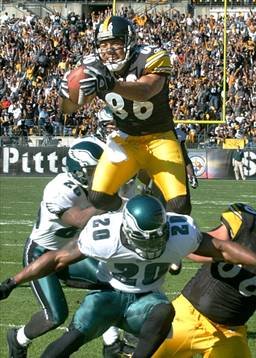
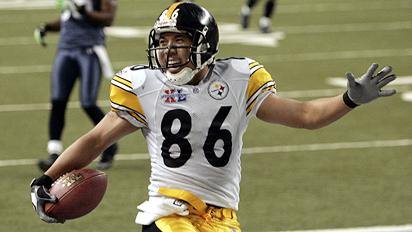
It's tough being Hines Ward, Super Bowl MVP, these days.

"I'm sick of these Super Bowl commercials you see for Sports Illustrated," Ward said yesterday, smiling widely for a man so ill from seeing himself on TV. "Everywhere I go, in a bar, people look up, they look at me, they look up, they look at me: 'Hey, that's Hines!'

"They have the camera phone. They're right here in your face. I'm like oh, geez, I can't do anything."

Then, the thought hits him.

"Hey, Peyton Manning isn't doing that now."

There's a price to pay for winning the Super Bowl and the game's MVP award, and Ward is delighted to pony up. If he's dreaming, don't pinch him, even though he's had little time for sleep. People say, 'What's it like?' I can't even describe it because it's been that phenomenal. It's been amazing, just everything.

"This is fun. I love the treatment. When you can walk in and see all the players from other teams, there's nothing they can say to you. You're on top that whole offseason. I've been all over, to L.A., to Vegas, to Miami and seen all the players from all over. Hey, Peyton Manning, I know you're great and all, but you don't have a ring. You can be all this, all world, but you don't have a ring. I have a ring. There's nothing you can say to me right now."

There were four golf tournaments, the trip to South Korea with his mom, the parade at Disney World, ESPN's Battle of the Gridiron Stars, Regis & Kelly, judging Miss USA, magazine covers and television interviews. Ward is featured in a Sports Illustrated story this week. His home town of Forest Park, Ga., honored him with a parade and named a street after him, Hines Ward Pass.

He will return to South Korea, this time with his whole family, on Memorial Day Weekend to help organize his The Helping Hands Foundation to benefit biracial children in his native Korea and the United States.

There also are many endorsement offers from companies in both this country and overseas.
"It's been wonderful, it's truly been," Ward said. "I'm really capitalizing on my opportunities as much as I can because it's truly a once-in-a-lifetime thing. It's a great experience. I'm going to enjoy it all I can. But once I get that ring, my season starts then."

The Super Bowl rings come June 2, the same day Ward and the rest of the Steelers visit the White House. He arrived in Pittsburgh last week to begin workouts with his teammates that become more formal with the start of a three-day minicamp Saturday, followed by 14 coaching sessions through June 8.

It feels good, Ward said, to get back to the game itself.

"I want to enjoy being with my teammates and reflecting on the year, and what a great year, and what are we going to do this year? Working out with your teammates, going through battles together, the camaraderie with teammates, that's what you need to be successful. That's why I'm here early."

In his wildest dreams, back to his days as a schoolboy, Ward never thought it would feel so good to win a Super Bowl. He also never dreamed he could use the game and his newfound celebrity as a platform to promote societal change in an entire country. His April visit to South Korea, scheduled long before the Super Bowl, was to be a quiet trip where his mother could introduce him to the land where he was born.

Then came the Steelers victory against Seattle and Ward's Super Bowl MVP award, and he became Korea's rock star. There, he discovered disturbing racism. He wants to seize the moment to help kids like himself, biracial, who are shunned, often officially, in that country.

"Because of the way the society views biracial kids, you can't get a job, nobody's going to accept you," said Ward, the son of a Korean mother and an African-American father who was stationed there. "If you do play athletics, your teammates treat you like [dirt]. For kids, me being over there helped provide a sense of hope. If I can do anything, as far as using my status, my accolades to help give them an opportunity, hopefully society will change its views."

Ward asked South Korean president Roh Moo-hyun to work on changing some laws and rules that affect biracial people.

"You can't even get into the military if you're biracial," Ward said. "That is their rule, 100 percent pure, you have to be pure Korean, it's the only way to be in the military. Korea's a great country, but it would be even a greater country if we could do things to help biracial kids because you may have the next Hines Ward, the next Tiger Woods waiting there, but he's never given an opportunity to do anything."

Ward said he saw such racism in effect.

"I met a young soccer player. By word of mouth, he was a pretty good soccer player. But his teammates treated him like crap, called him 'nappy-haired boy.' Coaches tell him he'll never have a chance, don't want to play him because he's biracial. Well, maybe you guys would win if he played. That's just their views and ways. That's the negative side of our culture that my mother hid from me so much. She still had animosity toward it and didn't want me to know."

Instead of getting angry, though, Ward became energized to help. He hopes it will be a lifelong crusade for him in honor of his Korean mother, Young He Ward, that elicits real change in Korea.

"It was a tribute to her, that's what I made the trip to Korea about, using the MVP award as a tribute to opening up opportunities and giving her something. I need to do something to help those biracial kids out and provide them with a sense of hope."

(Ed Bouchette can be reached at ebouchette@post-gazette.com or 412-263-3878. )

Tuesday, May 09, 2006

Mike Prisuta: Tough to Watch


Mike Prisuta
PITTSBURGH TRIBUNE-REVIEW
Tuesday, May 9, 2006

When the Pirates begin another homestand tonight, Billy Gardell will be watching from three time zones away thanks to the magic of DirecTV.

He'll also will be repeatedly throwing his pillbox Pirates cap on the floor in disgust if things continue against Arizona as they have throughout much of this 9-24 disaster.

"They say smoking takes 10 years off your life," Gardell said. "Try being a Pirates fan."

Gardell, a Swissvale native, has remained obsessive in his support of the Pirates, Penguins and Steelers, despite spending 15 years on the stand-up comedy circuit and compiling a television resume that includes "Yes, Dear," "Lucky," "The Practice," "The Dennis Miller Show" and "The Heist."

At 37, Gardell remains much more Swissvale than SoCal, even if his career has taken him to the Left Coast.

And like Michael Keaton, the guy who upstaged the home opener with his "Write A Check" declaration, Gardell has become frustrated from afar with the Pirates' inability to compete.

In the past, he's channeled that frustration into his act. One of Gardell's signature bits examines the dangers of certain trigger words or phrases.

"Whatever you do, don't mention Sid Bream," Gardell will warn a local audience.

The laughter that erupts eases his pain, but only slightly.

"That's completely me," he said. "Every time (Barry) Bonds hits a home run, I think I lose some hair."

Like many Pirates fans, Gardell has had it with the perpetual losing.

"I wouldn't be so frustrated if I didn't love 'em so much," he said. "I'm cursed and have been ever since the days of Bob Prince.

"My grandmother used to makes us sit on the back porch and listen to the radio. She always said, 'If you can follow the game on the radio, you'll have a good attention span later in life.'

"She used to get us out of school to take us to Three Rivers Stadium. Can you believe that? My grandmother let me cut school to see a doubleheader against the Phillies. Now, I'm not so sure I wouldn't stay in school."

In reality, Gardell would do no such thing.

His 3-year old son, Will, was named in honor of Willie Stargell.

He catches the Pirates at Dodger Stadium -- the only time he's "ever at Dodger Stadium" -- and on the road whenever their itineraries intersect.

And he plans to be at PNC Park for games against the Astros and Cubs when he returns to work The Improv in late August.

"That's how sick I am," Gardell said. "I know their schedule that far in advance."

That's as die-hard as it gets.

Still, he's not taking this latest capitulation lying down.

"I'm writing DirecTV a letter," Gardell said. "I want a refund on that baseball package.

"I mean, if they don't win 20 games, there ought to be a rule or something."

Mike Prisuta is a columnist for the Pittsburgh Tribune-Review.

Monday, May 08, 2006

Bob Smizik: Desperate Pirates Sinking


Pirates' desperate bid to win this season a losing proposition
Monday, May 08, 2006
Pittsburgh Post-Gazette

There is outrage across the region as the sad-sack Pirates slink lower than even the most pessimistic fan might have expected. They lost again yesterday, 5-4, to the almost-as-hapless Washington Nationals. No one expected this. No one expected 24 losses in the first 33 games.
Those who fervently follow the team thought this might be the year the Pirates would challenge for a .500 record. Instead, they are careening toward a 100-loss season.

It's not just the losing. It's the lack of anything resembling a plan and the continuing inability to evaluate.

In the offseason, Freddy Sanchez, despite a strong finish in 2005, was deemed not the answer at third base, as was Ty Wigginton. This required the team to badly overpay for journeyman Joe Randa, who finished the 2005 season on a decided downturn. Randa, whose $4 million salary is almost twice as much as he earned last year, was plugged into the sixth spot in the batting order. After a disappointing start, he's on the disabled list. His replacement is Sanchez, once considered a bench player, but suddenly good enough to bat third on a daily basis. Wigginton, who was released, has nine homers and 30 RBIs for the Tampa Bay Devil Rays.

Although the team acknowledged that, other than pitching, catching was its deepest position (talk about damning with faint praise), it gave no serious consideration to switching the glaringly deficient Ryan Doumit to first base or the outfield either in the offseason or spring training. After a panic prep course, Doumit started at first base Saturday and might have been there again yesterday if not for an injury.

Ronny Paulino, given no chance to make the team in spring training, is the starting catcher and so seemingly entrenched he caught a day game after a night game yesterday.
If the present is depressing, the future could be worse.

There's a reason the Pirates overpaid for Randa; there's a reason they gave Jeromy Burnitz a 33 percent raise to $6 million although his offensive numbers declined significantly over the previous season; there's a reason they traded for Sean Casey and are paying most of his $8.5 million salary; there's a reason they outbid the New York Yankees and are paying about $2.75 million to 41-year-old reliever Roberto Hernandez.

The reason? Ownership is desperate to win in 2006 and proof of that desperation is its willingness to plunge some of its profits into a higher payroll. Ownership's preferred method of handling profits is to plunge them into its pockets.

This is a crucial year for Pirates ownership. Season-ticket sales, boosted by the opportunity to buy All-Star Game tickets, are up by more than 20 percent to over 11,000. Season tickets are the financial lifeblood of a franchise like the Pirates. The only way to keep those ticket buyers happy and coming back is to win, which is why the Pirates added payroll.

But it goes much deeper than that. There is reason to believe the Pirates might soon be on the market. Kevin McClatchy has hinted he might want to sell after the All-Star Game.

Sellers would not normally be lining up to purchase small-market franchises with a history of losing. But a winning season puts a different spin on the Pirates. A winning season wipes out so much. It puts those 13 losing seasons in the background. Instead of a dismal recent history, the Pirates would have a bright future. They'd be a young team with a winning record and a thick season-ticket list playing in the best ballpark in America.

That might attract a sale price in excess of $200 million.

If McClatchy could get that, he might be willing to leave. The Nutting family, which has the greatest financial stake in the team and which makes most of the major decisions, would gladly follow. They're not baseball people, they're business people.

A losing season changes that. A losing season, particularly one the Pirates seem to be heading for, would send season-ticket holders fleeing. And not just those who signed on for the All-Star Game but many who have been on board for the long haul. They've had enough.

Buyers wouldn't be lined up. There would be no fat profit from a sale of the team.

There would, instead, be retrenchment. With the season-ticket base depleted, payroll would be cut back to ensure a continuing profit.

In other words, same old Pirates.

(Post-Gazette sports columnist Bob Smizik can be reached at bsmizik@post-gazette.com or 412-263-1468. )

Monday, May 01, 2006

Steelers Tempted by Reid's Speed

Team likes potential of WR/kick returner

Monday, May 01, 2006
By Gerry Dulac, Pittsburgh Post-Gazette

It wasn't as if the Steelers were looking for a punt returner to replace Antwaan Randle El, especially after they traded up in the first round of the NFL draft to take Ohio State wide receiver Santonio Holmes.

With Holmes, the Steelers found the perfect answer for Randle El's departure in free agency -- a receiver with the speed (4.38) to stretch defenses and a punt returner who was among the best in college football.

But, after trading with the Minnesota Vikings to get two third-round picks, the Steelers couldn't pass up the opportunity to draft another punt returner in the third round -- one who might be better than Holmes.

That's why they couldn't resist snatching Florida State wide receiver Willie Reid, a player Penn State coach Joe Paterno referred to as "terrifying" just two weeks ago.

Paterno should know. The memory of Reid returning seven punts for 180 yards, including an 87-yard touchdown, against the Nittany Lions in the Orange Bowl is still fresh in his mind. Reid's performance was a record for any bowl game.

"When coach Paterno would ask [special teams coach] Larry Johnson every day about Willie Reid, you know he was on coach Paterno's mind," Penn State defensive coordinator Tom Bradley said. "But what [Reid] did to us in the Orange Bowl is nothing he didn't do to other people."

That's why the Steelers took another receiver, another punt returner, with the 95th pick overall.

And they did it with an extra pick in the third round, just as they were hoping.

"To get a guy like Willie Reid was really a bonus," said Kevin Colbert, director of football operations.

"He was a guy who intrigued us," coach Bill Cowher said. "Santonio was more impressive as a kick returner and Willie was more impressive as a punt returner."

Indeed, Reid's numbers as a punt returner are staggering. He averaged 17.5 yards on 31 returns last season with the Seminoles, returning three for touchdowns.

One of those was in the Orange Bowl loss to Penn State. Another came in the Atlantic Coast Conference championship game upset against Virginia Tech, an 83-yard return that helped Reid win game MVP honors. Those returns helped elevate Reid's draft stock.

"It was a pretty big game for me," Reid said. "It followed the ACC championship game that I performed well in, and I did well in the Orange Bowl, as well. I think that helped put me in the position I am in today. It was a great bowl game overall."

OK, imagine the possibilities.

Holmes and Reid, two of the best punt returners in college football, each going back to return punts for the Steelers. Dual safeties -- reverses, fake reverses. The possibilities are endless.

"I don't know if I would have done that before," Cowher said, when asked about using two safeties on punt returns, "but it certainly was a thought going through my mind [Saturday] night after we picked Willie Reid."

If nothing else, the addition of Holmes and Reid might allow special teams coach Kevin Spencer to be creative and start designing plays as if he's an offensive coordinator.

"He needs to be," Cowher said, smiling.

Reid has the look of a Steelers player. At Florida State, he was recruited as a running back because of his 4.35 speed, but was switched to wide receiver before his redshirt freshman season. He was moved back to tailback as a sophomore because of injuries and didn't become a full-time starter until last season. In 45 career games with the Seminoles, he started only 15 times -- and never complained about his role.

That's something Cowher has asked of his players -- buy into the system and accept their roles, however diminished.

"The things Reid has done for our team during his career, you can't measure," Florida State coach Bobby Bowden said last month. "He's one of the most unselfish players I've ever been around."

The Steelers think Reid is still developing as a wide receiver. He had 50 catches for 634 yards and one touchdown last season and 15 receptions for 186 yards as a junior. In three seasons, he caught only three touchdowns.

"He is a little bit of a project," wide receivers coach Bruce Arians said. "[But] I think he is ready to play there. He has excellent hands, big-time speed and a great run-after-the-catch guy with his return ability."

In the end, the Steelers might have managed to replace Randle El, the only player to return two punts for touchdowns in 2005, with two players who are just as explosive.

"It's interesting because you never got a shot at Randle El, either," said Bradley, who coached against Randle El when he was a quarterback at Indiana. "This kid is the same way. It's hard to get a shot at him. He has exceptional speed and great vision. That's what separates him."
Then Bradley paused.

"Let it be someone else's problem," he said.

That's what the Steelers are hoping.

"It's going to be a real honor to be in the same locker room with Santonio," Reid said. "He's a great athlete. We just happen to be on the same team right now. I think we'll cause a lot of defenses havoc."

And why the Steelers couldn't resist.

(Gerry Dulac can be reached at gdulac@post-gazette.com or 412-263-1466. )

Closeup: The No. 1 pick, Santonio Holmes


Once left with the important responsibility of taking care of his younger brothers, Santonio Holmes believes he can handle taking over the role that once belonged to Randle El

Sunday, April 30, 2006

By Gerry Dulac, Pittsburgh Post-Gazette

Patricia Brown was a single parent who raised four boys, and her oldest son, Santonio Holmes, had to play many roles.

"There wasn't anybody but me and him," Brown said. "I left for work at 4 or 5 in the morning, so he had to be big brother, mommy and daddy all at once."

Brown has four kids, ages 21 to 7, and she relied on her oldest son to take care of things at home while she worked as a medical assistant. And Holmes, the Steelers' No. 1 pick in the NFL draft yesterday, obliged, with nary a complaint.

He played three sports in high school -- football, basketball and track -- and still managed to help his mom with his brothers, Kenneth (19), Devontae (14) and Javen (7). With so much responsibility thrown at him, Holmes learned to multitask, an ability he took with him to Ohio State, where he became a multitalented wide receiver/return specialist with the Buckeyes.

"It was very hard," Holmes said. "My mom would get up at 3 in the morning and have to go to work and she left me with the responsibility of getting up at 5:30, getting my brothers dressed and getting them ready for school. When they came home, I had to make sure they had something to eat because she wouldn't get home till 5 or 6 o'clock."

And he never complained.

"He never grumbled, never once," Brown said. "If he did, he never let on. I always gave him time to do things, whether it was talk on the phone or do his homework, but everything would always be done."

Now it is Brown's turn to help her son.

Holmes is a single parent, too, with two sons -- Santonio III (4) and Nicori (23 months) -- who live with his mom in Belle Glade, Fla. He also has a daughter, Shaniya (2 months), who lives in Columbus, Ohio.

Holmes' experience growing up has taught him how to handle his new family, handle everything that surrounds him. That includes being selected with the 25th overall pick by the Steelers -- the first wide receiver selected in the draft.

"I use it as motivation right now," Holmes said. "I don't say I shouldn't have done this or I shouldn't have done that or that I have regrets. I want my kids to grow up like me and my brothers did. I'm able to make a big difference in their lives."

That seems to be a catchword for just about everything that has happened to Holmes.

He made a difference in high school, where he was a three-year starter and helped lead Glades Central High School to the state title as a sophomore and junior. As a senior, he had 10 touchdowns on 33 receptions, averaging 29.3 yards per catch, when his high school was 12-1.

And he made a difference at Ohio State, where he was a two-year starter and a first-team All-Big Ten Conference selection as a junior in 2005. He led the Buckeyes with 53 catches, 997 yards and 11 touchdowns, third most in a season in school history. What's more, 19 of his catches were for 20 yards or longer.

"He was always going to outwork everybody to get what he wanted," said Willie Bueno, who was the head coach when Holmes played at Glades Central. "He was one of those first-to-practice, last-to-leave kids."

The Steelers started thinking about making a deal to move up and take Holmes once the Philadelphia Eagles, at No. 14, passed on a wide receiver and drafted defensive tackle Brodrick Buntley of Florida State. And once he was still available when the San Diego Chargers drafted a cornerback (Antonio Cromartie) with the 19th pick, the Steelers tried to make a trade with the Kansas City Chiefs to move up to No. 20.

But the Chiefs weren't interested in making the deal, nor were the San Francisco 49ers with the 22nd pick. But the Steelers found a willing trade partner with the New York Giants at No. 25, and they shipped a third- and fourth-round pick to the Giants to swap draft spots in the first round.

Holmes was the only player the Steelers were going to trade up to acquire in the first round, and they got him.

"We really had our eyes on him," director of football operations Kevin Colbert said. "He was someone that we talked about. If he was going to be available, then we'll go get him."

The Steelers liked Holmes' speed (4.38) and his ability to stretch the field with deep routes, but they also liked that he possessed another dimension: He was an elusive punt returner at Ohio State, averaging 10.1 yards per return for three seasons with the Buckeyes. Holmes averaged a career-high 12.8 yards on 11 returns in 2005.

That made him even more attractive to the Steelers after the loss of Antwaan Randle El -- the only player in the NFL to return two punts for touchdowns in 2005 -- in free agency.

"I'm ready for it ... I've been looking forward to it," said Holmes, whose is the cousin of Jacksonville Jaguars running back Fred Taylor. "I couldn't be at a better spot right now than to fill in and be able to return kicks and be a wide receiver for those guys."

Holmes said he has been a Steelers fan since 1995 because he admires "the things they accomplish together as a team, as a family." His favorite receiver and the player to whom he most compares himself is Marvin Harrison of the Indianapolis Colts because "he really gets the job done and that's the same thing I do when I'm on the field."

To be sure, Holmes was a productive receiver with the Buckeyes. Last year, he caught 10 passes for 224 yards and touchdowns of 80 and 47 yards against Marshall -- the second-most productive day by an Ohio State receiver in school history. The only more productive performance was by former Buckeyes receiver Terry Glenn in a 1995 game against Pitt (253 yards).

Holmes, though, did the same thing in high school, where he also helped the track team to a state title as a junior and started for the basketball team that was a Florida state runner-up as a senior.

"He definitely was a blessed kid," Bueno said. "Not only that, he was a great student in school. Even when he came out as a freshman, he was a leader. He had a great work ethic and he was committed that he was going to use football to get to school. He did all the right things asked of a player."

And a big brother, mom and dad.

(Gerry Dulac can be reached at gdulac@post-gazette.com or 412-263-1466. )

Thursday, April 27, 2006

Book Review: 'Clemente' by David Maraniss

Author describes player's transformation

By Regis Behe
PITTSBURGH TRIBUNE-REVIEW
Tuesday, April 25, 2006

It's a memory that is indelibly etched in the mind of any Pittsburgher who saw a baseball game during 1950s, 1960s or early 1970s.

Roberto Clemente. Striding to home plate, rotating his neck from side to side. Stepping into the batter's box, raising his right hand for time, the bat held aloft in his left hand as he pawed the dirt with his foot. Settling into his stance, the heels of his feet edging up against the white lime, his hands held back, his left leg bent in static energy.

Then, when he got his pitch, the lightning quick reflexes, the resounding crack of wooden bat on leather baseball, a white blur landing in the outfield and sometimes beyond.

Three thousand times during his career, Roberto Clemente lashed baseballs for hits, an extraordinary achievement in a sport in which failure always exceeds achievement. Three-thousand base hits, the stuff of immortality, ensuring enshrinement in baseball's Hall of Fame.

But ultimately, the number 3,000 is insignificant when it comes to describing Roberto Clemente.
He was like football's Gale Sayers or basketball player Julius Erving, says David Maraniss, the Pulitzer Prize-winning author of "Clemente: The Passion and Grace of Baseball's Last Hero" (Simon & Schuster, $26), released today.

Those kind of athletes, Maraniss says, "when they were on the field, you couldn't take your eyes off them. They had just idiosyncratic ways, unlike any other players in the way they played the game. ... Statistically, they were winners, but you wouldn't put them as the best. Yet to so many, they were the best. I grew up in Madison, Wis., and he was my guy because of something I couldn't describe, what I guess I call the beautiful fury that he played with."

Clemente still evokes the kind of passion reserved for larger-than-life figures, the John Waynes, John F. Kennedys or John Lennons. The new book makes no case for canonization. Maraniss relates the icon's failures, including his often mercurial relations with the press, a temperamental and inexcusable episode in which he punched a fan in Philadelphia, and, before his marriage, the intimation that he never lacked for the company of attractive women, especially on road trips.

But Maraniss also found that Clemente was the rare athlete who not only did not suffer an erosion of skills as he aged, but one who became a better human being.

"I think he was growing, and I think you see that in the final three years of his life," Maraniss says. "A lot athletes as they grow older sort of diminish and get sour. Clemente started out with a chip on his shoulder, and he grew into a larger figure year by year, over those 18 years (of his career). In the final three or four years, he was talking in English, his second language, of giving motivational speeches about the need to serve others. ... When you see growth like that, particularly in an athlete, that's a real mark of character."

Clemente's stature might have been diminished if not for two crucial episodes in the last years of his life. The first was his amazing performance, at the age of 37, in the 1971 World Series. In the 1960 series, which the Pirates also won, Clemente had performed well, but sat alone in the dressing room after Game 7, apart from his teammates and ignored by the media.

Eleven years later, after batting .414 and being typically superb in the field, he was named the Most Valuable Player. Instead of being forgotten, he was feted by his teammates and reporters, finally earning the respect and adulation he craved.

"It was really the only time he was on the national stage as a ballplayer, aside from all-star games, where he shared the stage with (Hank) Aaron, (Willie) Mays and some of the other greats," Maraniss says. "The Pirates couldn't have won it without (pitcher) Steve Blass. Every Pittsburgh fan knows that. But nonetheless, the whole series was Clemente. It was his stage, and he seized it in an incredible way."

The second episode that contributed to the apotheosis of Clemente also was his final act: The ill-fated of mission of mercy to Nicaragua, which had been struck by an earthquake, on New Year's Eve 1972. On a plane laden with relief supplies, Clemente disappeared off the coast of his native Puerto Rico into the Atlantic Ocean, one item of clothing washed ashore as the only surviving remnant of the man.

"One sock, that's all, the rest to sharks and gods," Maraniss writes.

If he had lived, Clemente's athletic feats still would be appreciated. His early death, and dying as he was attempting to help the less fortunate, took him into another realm.

"He wouldn't be the mythological, saint-like creature that he is because he would still be a human being," Maraniss says. "The nature of his death exponentially enhanced the nature of his life, which was good enough. ... I know the term hero is overused, but it is in my title because it's the classic definition: somebody who dies in the service of others."

Tidbits from the book

The statistics of Roberto Clemente are a matter of record. The late Pirates outfielder, enshrined in the Hall of Fame in 1973, is one of 26 players to collect 3,000 hits, and he earned 12 consecutive Gold Gloves for fielding.

In David Maraniss' new book "Clemente: The Passion of Grace of Baseball's Last Hero," the Pulitzer Prize-winning author looks beyond the numbers to the essence of the athlete who remains a legend in Pittsburgh and his homeland of Puerto Rico. Here are some interesting tidbits from the book:

* Clemente's nickname was Momen, short for "momentito," roughly translated as "give me a second." From an early age, Clemente had a habit of saying momentito when he was interrupted or asked to do something.

* During his career, much was made of Clemente's habit of expounding on his physical problems. Those ailments were not figments of his imagination, but stemmed from wrenching his neck and spine in a car accident in 1954. Aches and pains in these areas would dog him the rest of his career, but Clemente still holds the record for games played in a Pirates uniform, numbering 2,433.

* Clemente was part of the first all-black and Latin lineup in Major League Baseball history. On Sept. 1, 1971, in a game against the Philadelphia Phillies, the Pirates fielded a lineup of Clemente in rightfield, Gene Clines in centerfield, Willie Stargell in leftfield, first basemen Al Oliver, second basemen Rennie Stennett, Jackie Hernandez at shortstop, Dave Cash at third base, catcher Manny Sanguillen and pitcher Doc Ellis.

* Before every game, Clemente took a spoonful of honey to relax.

* Clemente had his greatest success as a hitter using a bat designed for an anonymous player.
After using Stan Musial and Vern Stephens models at the beginning of his career, in 1961 Clemente switched to a U1 model made for Bernard Bartholomew "Frenchy" Uhalt, who played a mere 57 games for the Chicago White Sox in 1934. Uhalt had 40 career hits, but Clemente had his greatest success with the bats, measuring 36 inches long and weighing 34 to 35 ounces.
Another unusual feature of the U1s: They didn't have a knob. Instead, they tapered out at the bottom.

* Clemente's name adorns two hospitals, 40 public schools and more than 200 ball fields in the United States, Puerto Rico and Europe. Japanese baseball gives an award named after Clemente for distinguished community service.

* After Pirates pitcher Bob Veale rubbed Clemente's shoulder before a contest in the mid-1960s, he went on a hitting streak. Every game thereafter, Clemente sought out Veale and his touch. "Where's Bob?" became a common refrain in the Pirates clubhouse.

Fans remember famous outfielder

PNC Park usher Tony DelVecchiohas seen all the baseball greats from Pie Traynor to Willie Stargell.

As a kid, collecting soda bottles in metal buckets at Forbes Field, DelVecchio saw Babe Ruth hit his last three home runs. He remembers when a Pirates bench coach named Honus Wagner hit ground balls on hot days for infield practice.

Even after 68 years as a Pirates usher, there's still one player who stands above the rest. Mention Roberto Clemente, and the 86-year-old DelVecchio gives you a nod and that knowing look.

"Ah yeah, he was the best all-around," DelVecchio says from his current assignment in the right-center field seats at PNC Park. "Clemente had an arm, a golden arm. When he threw the ball from right field, it landed in the third baseman's glove. It never hit the ground.
"Man, he could go after a ball."

Many more memories of Clemente are expected to surround the publication of a new book by David Maraniss titled "Clemente: The Passion and Grace of Baseball's Last Hero."

DelVecchio wasn't the only one impressed forever by Clemente, who died on New Year's Eve 1972. He was killed in a plane crash while attempting to deliver food and medical supplies to Nicaragua after an earthquake.

Irene DeLong, 83, Munhall

"I've been watching the Pirates since 1948, and I'll never forget the time I saw Clemente throw a ball all the way to home without it hitting the ground. Dave Parker could really throw the ball, too, but not like Clemente."

Don Soldano, 68, Lawrenceville

"If you remember the first-base line at Forbes Field, the box seats stuck out, and then it went back to the wall where you could lose track of a ball. I remember Clemente running into that cutoff where you couldn't see him. He caught the ball back there and threw a peg to home plate. It was a perfect strike to, I think it was, (catcher Jim) Pagliaroni, and he got the runner out at home plate."

Al Rowe, 76, Jefferson Hills

"Clemente used to get those hits between the outfielders -- those betweeners before there was artificial turf -- and he'd go for triples. And he used to throw out runners trying to go from first to third on a single. When the umpire called him out, the runner would just look out at right field. How could it happen? Boy, he threw a lot of runners out."

Manny Sanguillen, former Pirates catcher

"I never saw a better ball player than Roberto Clemente in my life. He was a special person and my close brother. You see the players now, and nobody gets close to him. Maybe they hit more home runs, but they're using things that he never used."

Al Sid, Stubenville, Ohio

"Clemente was terrific. He was a great man, and it was a great loss when he died, because he contributed so much all the way around."

Regis Behe can be reached at rbehe@tribweb.com or (412)320-7990.

John Mehno: Where's GM's Advise Coming From?

04/23/2006
Beaver County Times


Fox Sports Net Pittsburgh recently produced an hour-long documentary about the Pittsburgh Pirates' preparations for the 2006 season.

At least one of the behind-the-scenes looks in "Under The Lights: The Making of a Season" was revelatory.

General Manager Dave Littlefield was pondering personnel options on Dec. 2, 2005, as his staff prepared for baseball's annual winter meetings.Littlefield discussed a couple of players and solicited staff feedback. At one point, a voice is heard saying, "I like the idea of getting a right-handed bat..."

The speaker was Larry Silverman, the Pirates' vice president and general counsel. The in-house lawyer. According to his official Pirates biography, Silverman "assists in contract negotiations, arbitration cases and other player-related matters."

Silverman spent 21 years with a Pittsburgh law firm before joining the Pirates. He got his law degree from Duquesne.

Having an attorney on staff certainly makes sense, given the complexities of contracts and the amounts of money involved.

Just navigating baseball's complicated waiver procedures is a challenge, as former GM Larry Doughty showed several regimes ago.

There's no reason to believe that Silverman doesn't possess a sharp legal mind and isn't a valuable asset to the Pirates.

But how much does he know about baseball? While Littlefield may trust him implicitly on contract details, does the GM have any reason to hold just as much faith in a lawyer's thoughts on the need for a right-handed bat?

This is, after all, a little bigger than the average fantasy league.

---

By the way, the rest of the "Under The Lights" special was reasonably entertaining.

It's interesting to see how much corporate hot air was pumped into creating the trivial "We Will" positioning statement. It must be a challenge to work in an environment that zealously manufactures importance for the inconsequential. There's a scene where the prospective 2006 bobbleheads are placed on a conference table for final approval. Looks like something out of NBC's "The Office."

---

Craig Patrick took the fall for the Pittsburgh Penguins' dismal failure last week, as expected.

Patrick wasn't the only person in the organization who badly misread the new NHL landscape.

Sports Illustrated's Oct. 3, 2005, issue quotes Mario Lemieux as saying the Penguins are one of "five or six teams with a chance to win the Stanley Cup."

Some of those failed free agent signings bore Lemieux's fingerprints.

---

The whole arena/slots issue has led to harsh feelings on both sides.

Spies report that some Grant Streeters who aren't fond of the Penguins' approach have a less-than-flattering nickname for team CEO Ken Sawyer.

Politics is nasty business.

Wednesday, April 26, 2006

Joe Starkey: Crosby's Feats Obscured

Joe Starkey
PITTSBURGH TRIBUNE-REVIEW
Saturday, April 22, 2006

Sidney Crosby, underrated?

Obscured might be a better word for Crosby's phenomenal rookie season, in which he became the youngest player in the NHL's 89-year history to score 100 points.

I'm not sure people comprehend the magnitude of Crosby's achievement.

In fact, I know they don't.

That's a shame, because all he did was produce the most remarkable rookie year in this city's history (yeah, including Big Ben's) and one of the great rookie years in sports history.

We'll defend those points in a moment.

First, the reasons why Crosby often was eclipsed, locally and nationally:

1. The Steelers won the Super Bowl, a fact that would have bumped World War III to the inside pages.

2. Another rookie - the spectacular Alexander Ovechkin - outscored Crosby and likely will win the Calder Trophy.

3. Expectations were so inflated that people might look at Crosby's 102 points and say, "That's all?"

4. The Penguins generated all kinds of other news. If it wasn't Mario Lemieux's health, it was the team's tentative future. Finally, it was Craig Patrick getting canned before Sid's season could be fully digested.

5. The NHL isn't ESPN's baby anymore.

Crosby turned 18 a month before training camp. His tender age is what sets his rookie year apart.

Joe Thornton, this year's NHL scoring champion, had seven points in 55 games as an 18-year-old. Vincent Lecavalier had 28 points in 82 games.

Kobe Bryant averaged 7.6 points when he was 18.

Robin Yount batted .250.

LeBron James put up 20.9 points per game his rookie season, but he turned 19 two months into it.

Locally, the three relevant rookie years are those of Lemieux, Ben Roethlisberger and Franco Harris.

Roethlisberger actually was better than people thought in recording 14 consecutive wins. Many experts claimed he was a function of the "system." They failed to realize that his threatening presence helped to facilitate a devastating running game.

Still, Roethlisberger was 22 - four years older than Crosby -- and his numbers weren't eye-popping (17 touchdowns, 11 interceptions). He also wasn't expected to do anything but carry a clipboard that year.

Crosby was expected to save the sport of ice hockey.

Lemieux scored 100 points as a 19-year-old rookie, two fewer than Crosby in eight fewer games. But, he played in a far more wide-open league. Twelve of the NHL's 21 teams scored more than 300 goals in 1984-85; two of 30 this season.

Harris also had an incredible debut season with 1,055 yards rushing, sixth in the NFL. He averaged a career-best 5.6 per carry, scored 11 touchdowns, caught 21 passes and famously snatched a deflected ball in the playoffs to beat Oakland (isn't there a name for that play?).

Of course, he also had an outstanding supporting cast, unlike Crosby.

As for Ovechkin, he's two years older than Crosby and played in a relatively pressure-free environment. Crosby had to deal with the retirement of two linemates, a coaching change, a system change, a position change (Eddie Olczyk had him playing left wing), a terrible team, the immense weight of being named an alternate captain and the ridiculous pressure of being hailed the savior of his sport and his franchise.

Seriously, has any professional athlete debuted under more scrutiny? How ironic that as Crosby busily exceeded the hype, the scrutiny lessened.

Sid was hid, in plain sight.

Joe Starkey is a sports writer for the Pittsburgh Tribune-Review. He can be reached at jstarkey@tribweb.com

Monday, April 24, 2006

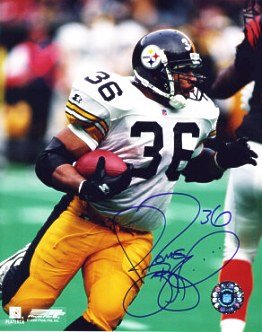
Dapper Dan Sportsman of the Year: Jerome Bettis


Sunday, April 23, 2006
By Ed Bouchette, Pittsburgh Post-Gazette

Several years ago, Jerome Bettis watched Emmitt Smith leave the Dallas Cowboys to sign with the historically pathetic Arizona Cardinals and predicted it would not go well.

"Before he even lines up," Bettis said, "he doesn't have a chance. I wouldn't do that. I'm not looking to just being a punching bag."

Instead of trying to squeeze the last dime out of football, Bettis took two consecutive and steep salary cuts to remain with the Steelers in a different role, first as a backup to Duce Staley and then to Willie Parker.

It paid off in more ways than money.

No athlete's career ended quite the way it did for Bettis, a fairy-tale finish except that this was real.

Many athletes, coaches and managers went out as champions, most notably Denver quarterback John Elway, who retired after winning consecutive Super Bowls. No one with Hall of Fame credentials had bowed out by kissing the Vince Lombardi Trophy on the floor of the Super Bowl in his hometown after a weeklong party celebrating his accomplishments -- until the Bus stopped in his native Detroit.

It is that marvelous 13-year career, 10 of them in Pittsburgh, and the joyful ending that brought Jerome Bettis his only Super Bowl ring and the Steelers their first Lombardi Trophy in 26 years that the Dapper Dan will celebrate next Sunday when they present the Bus as Sportsman of the Year.

Bettis, the NFL's fifth-leading career rusher, takes his place among Pittsburgh's long list of pro sports icons, from Roberto Clemente and Willie Stargell to Mario Lemieux and a slew of Super Steelers before him.

"It's been an incredible ride," Bettis said after the Steelers beat Seattle, 21-10, Feb. 5. "I decided to come back to win a championship and mission accomplished. So with that I have to bid farewell."

He won't fade from public view. NBC-TV hired Bettis as one of three studio hosts for the network's Sunday night NFL games. He will be on that job in Heinz Field when the Steelers kick off the NFL season Sept. 7 against the Miami Dolphins.

Bettis also will join his teammates on a visit to the White House early in June and receive his Super Bowl ring shortly thereafter.

"It means everything," Bettis said of the ring. "That's why I play this game. That's why I started years and years ago on this quest to win a championship."

He achieved personal success long ago as the most prolific big back in NFL history, at 5 feet 11, 255 pounds. A fullback at Notre Dame, he became the Battering Ram his rookie season with the Los Angeles Rams, rushing for 1,429 yards in 1993. The Rams traded him to the Steelers in 1996 and, rejuvenated as The Bus, he rushed for more than 3,000 yards in his first two seasons in Pittsburgh. He would hold the Steelers' single-season rushing record if he had not rested in the 1997 regular-season finale before the playoffs. He finished with 1,665 yards, 25 fewer than Barry Foster's 1992 total.

Bettis ended with 13,662 yards, 10,571 with the Steelers. He will be a strong candidate to enter the Pro Football Hall of Fame when he first becomes eligible in five years.

"He's big and he's strong and he can take that pounding," longtime Steelers backs coach Dick Hoak said. "A lot of guys wouldn't be able to do that."

It also is appropriate that the Dapper Dan, the charity arm of the Pittsburgh Post-Gazette, honors Bettis because his work through his Bus Stops Here foundation has been tireless. He earned the 2001 Walter Payton NFL Man of the Year for his community service.

His foundation has raised and distributed money for poor children. He issues the Jerome Bettis Friends Forever Scholarship and established the Joseph Gilbert Scholarship Fund at his alma mater, Detroit's McKenzie High School. He started Save Children Opportunity Recreation Education (SCORE) to refurbish inner city parks and playgrounds. He conducts an annual football camp in Detroit free for kids. An asthmatic since his teens, he has worked to help find a cure.

Bettis nearly missed the spectacular ending to his career because he considered bowing out one year earlier after the Steelers went 15-1 and lost to New England in the AFC championship to close their 2004 season. He weighed his decision for weeks before opting to give it one more try for what had been an elusive Super Bowl appearance.

"I struggled with it for a while," Bettis said the night the Steelers won the Super Bowl. "Even after I told coach I wanted to come back, it was tough for me. I went out to St. Louis and was training with Bob Kersee, the track coach, and there were some days I said to myself, 'What am I doing out here? I don't know if I want to keep doing this.'

"The love of the game kept pushing me around the track. The commitment was there, and the resolve was great for me to be here."

(Ed Bouchette can be reached at ebouchette@post-gazette.com or 412-263-3878. )

Monday, April 10, 2006

Ward spins biracial roots into blessing

Posted 4/9/2006 10:53 PM

By Paul Wiseman, USA TODAY

SEOUL — At school, they taunted him for his looks — half-black, half-Asian. "Jackie Chan!" they'd say. "Bruce Lee-roy!" At home, he didn't understand why his mother struggled with English, couldn't help him with his homework and made him take his shoes off before he walked in the door.

"I was a lost child," Pittsburgh Steelers wide receiver Hines Ward says. "I wasn't accepted in the black community because I was Korean, and I wasn't accepted in the Korean community because I was black." He blamed his Korean mother for the teasing he got on the playground in suburban Atlanta. "I was ashamed of the person who instilled everything in me. I let the kids get the better of me."

How different things are now. Ward, 30, describes his childhood while relaxing in the $6,300-a-night Royal Suite in Seoul's Lotte Hotel. His mother, Kim Young-hee, sits proudly beside him on an overstuffed couch, sunlight streaming through a window that offers a glorious view of the Seoul skyline and the mountains behind it.

Ward made it through adolescence, through the University of Georgia and into the NFL. He's a four-time Pro Bowl wide receiver and MVP of Super Bowl XL. His five catches for 123 yards and a touchdown led the Steelers to a 21-10 championship victory against the Seattle Seahawks in Detroit on Feb. 5.

Last week, he and the divorced mother who worked three jobs to support him returned in triumph to the country where he was born. He credits her for his transformation from confused, angry adolescent to confident NFL star. "She gave up so much," he says. "It's a great success story."

His mom still works at a high school cafeteria in suburban Atlanta; she tried retirement but gave up after two months.

Ward and his mother have been welcomed as heroes in South Korea, where kids like him — children of Korean women and American GIs — have been treated as pariahs, shunned, ridiculed and locked out of the best jobs and schools.

On this trip, Ward has met the president, thrown out the first pitch at a baseball game and endured camera crews hounding his every step as he tries to tour the city of his birth. At a news conference at the Lotte Hotel last Tuesday, 200 reporters and photographers filled a meeting hall with a capacity for 130, yelling at each other and jostling for position.

Ward even canceled some planned stops to escape. "It's been wild," he says. "I knew it was going to be crazy. But it's pandemonium crazy. I didn't know that."

The adulation is a little awkward. Ward knows if he'd grown up as a half-black child in South Korea he likely would have been relegated to a second-class existence. His Korean mother knows it too. She chose a tough, lonely life in the USA to spare him the ordeal.

"I enjoy the Korean community support," Ward says. "My mom is still leery: 'Is it because he's MVP, or do you really accept him?' "

Ward has teamed with Pearl S. Buck International, a Bucks County, Pa., organization, to support mixed-race children in South Korea. He's hoping his story will encourage South Koreans to show more tolerance. "They didn't have a choice to come into this world as a biracial kid," he says. "If you can welcome me — a guy who doesn't speak the language — you can do it for them."

South Korea's 5,000 Amerasian children born since the Korean War have struggled to fit into a society that takes prickly pride in its 99%-plus ethnic homogeneity.

Teased and bullied, 9.4% of Amerasian children drop out of elementary school; another 17.5% quit middle school, according to Pearl S. Buck International. As adults, more than 45% are unemployed or work odd jobs to get by, the Buck organization says.

Seven-year-old Ahn Arum, daughter of a Seoul woman and an absentee American father, refuses to study Korean at school. "She doesn't know why she should read Korean. She doesn't feel Korean," says her mother, Ahn Jin-hee, 29. "The boys tease her. They say she has curly hair; she is black; she is smelly. (Even) my parents didn't want to take their granddaughter outside because it was disgraceful."

Kim Su-bin, 20, says she goes to the salon every three months to straighten her curly hair, evidence that her absentee father is black. Just in case, she wears an Adidas cap: "I want to hide my frizzy hair."

For outcasts such as Ahn Arum and Kim Su-bin, Ward's celebrity is a godsend. Suddenly, their neighbors and classmates are rethinking their attitudes. "This Hines Ward phenomenon is very positive," says Seoul resident Jung Young-ja, 72. "We've been proud of our homogenous society. It's time to change."

South Korea has little choice: Already more than 10% of South Koreans marry foreigners — mostly brides imported from poorer Asian countries. The country has 35,000 "Kosians," offspring of a Korean and a parent from elsewhere in Asia; they are expected to emerge as a voting bloc over the next two decades, says Song Young-sun, a South Korean legislator.

So Ward is helping prepare South Korea for its multicultural future: "That guy has no idea how much good he's doing," says Janet Mintzer, president of Pearl S. Buck International.

Ward was born March 8, 1976. A year later, his American GI father took his Korean bride and his young son back to the USA. But the marriage quickly disintegrated. A court, convinced Kim Young-hee didn't have the language or job skills to support a child, gave custody to Ward's father.

But Kim didn't give up. She stayed in the USA, working three jobs and saving everything she could. When Ward was 7 or 8 years old, he came to live with her. The change was traumatic: He was moving from an all-black neighborhood to a mixed-race community in suburban Atlanta and into a household where he and his mother could barely communicate.

Ward excelled in athletics but still struggled to find an identity between two cultures. When he was a teenager, Kim recalls, Korean neighbors recruited him to join their basketball team for a tournament and excluded him from the celebration afterward. "They used him," she says. "I cussed them out."

Kim knew nothing about football during Ward's high school career — even when some of the top college coaches came calling, trying to woo the star from Forest Park High School. "Tom Osborne, Lou Holtz, Bobby Bowden were in our living room," Ward says. "My mom didn't know who they were."

Kim may not have known the big names or understood the X's and O's, but her values influenced the way her son played football. "You've got to be humble," she says. Sure enough, Ward won't take running plays off the way some star wide receivers do; he's a ferocious blocker. And his mom better not see him dancing after a touchdown. "I tell him don't do it," she says. "I can't stand it."

Over time, she's become a football fan. "She's like a coach now," Ward sighs. " 'You didn't do this. You dropped the ball. You should have gone for two points.' "

Kim didn't attend the Super Bowl, preferring to watch it at home with friends. She didn't want to miss the replays. When Ward called her after his MVP performance, she was fast asleep. She had to get up at 5 a.m. to go to her job in the school cafeteria.

Crosby could make NHL history


"I'm going to finish off as strong as I can. If it happens, it happens."
Monday, April 10, 2006

By Dave Molinari
Pittsburgh Post-Gazette

TAMPA -- The Penguins had a long-scheduled day off yesterday, so Sidney Crosby didn't have to skip a game. Or even a practice, for that matter.

He didn't have to do much, really, other than relax, soak up a little Gulf Coast sunshine and get treatments on the unspecified "lower-body injury" he received in the opening period of the Penguins' 1-0 loss to Tampa Saturday night.

Crosby left that game late in the first period and did not return until the third -- who the St. Pete Times Forum statisticians were watching when they decided he skated two shifts during the second is a mystery -- and his status for the Penguins' game in Philadelphia at 7:08 p.m. tomorrow remains uncertain.

Crosby, who said he is treating his condition with ice and anti-inflammatory medication, was warned that his injury would be more painful yesterday than it was Saturday, but he was not available yesterday to elaborate on how he was feeling.

The first indication of how, or whether, he's progressing might come when the Penguins practice in suburban Tampa this morning. It's conceivable, though, that he could be held out of the workout simply as a precaution.

If Crosby's injury forces him to sit out any of the Penguins' final five games -- or even impedes his effectiveness in them -- it could cost him a chance to become the youngest player in NHL history to record 100 points.

He has 91, which means he must average 1.8 points per game to hit triple figures, something only Dale Hawerchuk (103 points in 1981-82) and Mario Lemieux (100 points in 1984-85) have done when entering the league the same year in which they were drafted.

Crosby will be 18 years and 254 days old when the Penguins' season ends April 18 in Toronto; Hawerchuk was about three months older in his rookie season with the Winnipeg Jets.

Crosby doesn't focus much on statistical achievements and, a few hours before the Tampa Bay game, downplayed his motivation to reach 100 points, even as he acknowledged "it would be pretty special" to do so.

"It's something I've never really thought about a whole lot," he said. "I don't want to start thinking about it too much now, but it definitely would be a nice accomplishment. If it comes, it would be great. But I don't think I'm going to base [the assessment of] my season on that."

Based on his comments after Saturday's game, being injured didn't alter his perspective.

"I'm going to finish off as strong as I can," he said. "If it happens, it happens."

The reality is that while Crosby doesn't appear to be overly impressed by the idea of getting 100 points as an 18-year-old, the people who watch -- and work with -- him are. He entered the NHL as perhaps the most-hyped player in league history, and still has managed to exceed all reasonable expectations.

"What this kid has accomplished this year is pretty phenomenal," Penguins coach Michel Therrien said. "For a rookie like that, to be close [to 100 points] like he is right now is ... looking down the history of the league, there aren't too many guys who have done it. It leaves me speechless to see him that close."

Crosby has scored or assisted on 40.8 percent of the Penguins' goals and leads the team in goals (36) and assists (55). He has more assists than the team's No. 2 scorer, defenseman Sergei Gonchar, has points (52).

Crosby lost a bit of the edge on his game after the Olympic break, but has come on strong in the closing weeks of the season. He has had two or more points in six of the Penguins' past eight games.

"You can pretty much count on him for two points a night, most of the time," said Colby Armstrong, who has settled in on Crosby's right wing.

"That would be great for him if he could get to 100. And I think he's more than capable of doing it, with the way he's playing. When he's playing his game, he's making things happen all the time."

Although Crosby has almost no chance of being the top rookie scorer this season -- he trails Washington's Alexander Ovechkin by seven points -- there is little precedent for a player his age to be so productive.

Ovechkin, for example, was born nearly 23 months before Crosby. Teemu Selanne, who holds the rookie records for goals (76) and points (132), was 22 when he broke in with Winnipeg in 1992. Peter Stastny was 24 when he set the rookie mark of 70 assists with Quebec in 1980-81.
Crosby, conversely, won't turn 19 until Aug. 7, by which time he'll be gearing up for his second pro training camp.

"When I was 18, I was watching this league back in juniors and wishing and hoping," Armstrong said.

"It's pretty amazing to see the talent he has, and what he's done so far."

(Dave Molinari can be reached at 412-263-1144. )