Tuesday, May 03, 2016

Dirty and borderline plays are marring what was hyped as a classic series in the making


Pierre LeBrunESPN Senior Writerhttp://espn.go.com/nhl/May 3, 2016


PITTSBURGH -- The hits keep on coming in a series loaded with skill but dominating the headlines for the wrong reasons.
A game after Brooks Orpik leveled Olli Maatta with a high, late hit that garnered the Washington Capitals defenseman a three-game suspension, star blueliner Kris Letang of the Pittsburgh Penguins is now facing potential supplemental discipline for his high hit on Marcus Johansson in Game 3 on Monday night.
The series began with Tom Wilson's questionable leg-on-leg hit on Conor Shearyin Game 1, which netted him a fine.
There has been a constant undercurrent of hate between the two rivals. We all love tough, emotional, physical hockey -- as long as it doesn't cross the line.
This series needs to be reined in.
The question now is whether this series turns on Letang's hit or not. His absence would be a huge blow to a thin Penguins blue line.
All we know at this point is that the NHL's player safety department is looking at the play. Where it goes from there, we'll know on Tuesday.
"I didn't see him coming, he came from the blind side," Johansson said after his team's 3-2 loss in Game 3, which gave Pittsburgh a 2-1 series lead. "I just looked at it; he obviously leaves his feet, and hits me in the head. It's the kind of play you want out of the league. Doesn't look good."
Given Orpik's suspension, Johansson was then asked, did he expect the same thing to happen to Letang?
"Yeah, I'd say so," said the Capitals forward.
It's not that simple, of course. For starters, Letang's hit wasn't nearly as late as Orpik's. However, no question it was a high hit.
The other important factor is that while Maatta was injured and missed Game 3, his return to the series unknown, Johansson returned to the game on Monday night. The player safety group takes that into consideration.
"I went through all the concussion tests and stuff like that. Just some issues with my neck right now," Johansson said. "I just got hit right in the head and a little whiplash I think. It is what it is."
Letang, interestingly, spoke with reporters after the game. Most often players who face potential discipline don't want to say anything that might hinder them in a possible hearing with the league.
"I mean, I didn't see it," Letang said of his hit on Johansson, meaning he hadn't seen a replay of it. "Things happened fast. I know he was down after the hit. He was OK, he returned to the game. He was pretty physical on me afterward. I was happy he wasn't injured.
"I saw him coming full-speed. I tried to step up in the middle. Things happen fast, I can tell you that."
Letang also added he had no intention of hurting Johansson.
"It was just a step up to hit him. There was no intention," he said.
Letang has been suspended once before in his career, a two-game ban in October 2011 for boarding Alex Burmistrov.
In the Caps' locker room, the hope is that NHL justice treats the star players just like anyone else.
"It will be interesting how they handle it," said star Caps goalie Braden Holtby. "If it's fair, he won't be in next game. But that's out of our control."
Added Holtby: "It's one of those ones that hopefully they treat everyone the same. That's all I can say."
There were other borderline plays in this game, including Capitals center Nicklas Backstrom kneeing Letang behind the head, presumably by accident, as well as Penguins forward Chris Kunitz slashing Caps winger Justin Williams in the stomach.
The team that's going to win this series is going to be the one that's able to control itself.
"Yeah, that's extremely key in playoffs," Holtby said of playing between the whistles. "Your emotions, you have to keep them in check, you have to keep them level, where you can have your ultimate focus. We've been told by the refs and the league, retaliation is going to get called. And it should. It's about mental toughness in that area, and we're getting better and better as the playoffs go on."
The series began with all the hype centered around Sidney Crosby and Alex Ovechkin facing off again. They've been usurped as a storyline by the side of the game no one wants to see.

Monday, May 02, 2016

NHL prefers testosterone over safety come playoff time


By Mark Madden
http://www.timesonline.com/sports/
May 2, 2016


Capitals defenseman Brooks Orpik levels Pittsburgh Penguins defenseman Olli Maatta with a high hit during the first period of Game 2 in their Stanley Cup Eastern Conference semifinal series Saturday in Washington. Pittsburgh won 2-1. (AP)


Sidney Crosby got it exactly right.
“We’re a skilled, fast team,” Crosby said after the Penguins beat host Washington 2-1 on Saturday. “A lot of teams try to slow us down or be extra physical against us. We know if we get sucked into that, we’re getting away from our game. We’re not productive that way. We put ourselves in a bad position.”
Well said.
But the problem may be attrition.
Washington’s Brooks Orpik knocked the Penguins’ Olli Maatta out of the ongoing playoff series between the Capitals and Penguins. Which Penguin will be next to be injured?
Orpik’s blatant headhunting was disappointing given his class tenure as a member of the Penguins, and considering he had just returned from a concussion inflicted (albeit cleanly) by Philadelphia meathead Ryan White.
One would expect Orpik to have more respect.
But very few athletes do.
Hockey, like other sports, bleats endlessly about respect. But repeated actions reveal that to be just a lot of talk.
The notion of respect is dead. Someday, a hockey player will be, too. Killed on the ice. Maybe then, the NHL will really do something about the head-shot problem.
Or, maybe not. The reason those head shots (and other despicable acts) won’t stop is because the NHL almost always administers inadequate discipline.
Washington’s Tom Wilson is a criminal on skates. In the first game of the current series, Wilson inflicted a vicious, deliberate, knee-on-knee hit to Conor Sheary, a player eight inches shorter and 25 pounds lighter, then laughed and chirped the Penguins bench.
Wilson got a mere $2,403.67 fine. He makes $925K. For Wilson, $2,403.67 is toilet paper (mind the coins). So why wouldn’t Wilson do it? The NHL certainly didn’t provide a reason for him to stop.
Orpik got suspended three games.
Maatta’s series and season are almost certainly over because of Orpik’s deliberate and malicious act. His career may be impacted.
Maatta looked like a zombie leaving the ice. Much like Orpik when he got concussed against Philadelphia. Why would somebody who endured that turn around and inflict that?
The Penguins can’t be absolved. Not when they once employed Matt Cooke, aka Public Enemy No. 1, and James Neal, who augmented his considerable skill with a series of nasty deeds. Not when Kris Letang escaped any punishment after nearly beheading the New York Rangers’ Viktor Stalberg in an opening-round game.
Local hockey fans very much owe NHL commissioner Gary Bettman a debt of gratitude for battling to keep the Penguins in Pittsburgh. That should never be forgotten.
But Bettman’s product is shambolic and run haphazardly. It too often emphasizes hockey’s worst elements at the expense of the best.
Bettman has always struck me as a reasonable man.
But too many of his lieutenants are boneheaded Neanderthals like Colin Campbell, an erstwhile plug defenseman employed as an executive by the NHL for 18 years despite a vision for the game that’s been nothing but bad and a bedside manner that’s been nothing but crude.
The NHL’s hockey operations department employs three ex-players, a former executive and a retired referee. They have one college diploma between them.
Having played hockey in the world's best professional league doesn’t necessarily mean you’re qualified to administer that league. Hockey ops dopes Campbell, Kris King and Mike Murphy prove that.
The NHL indulges the idiotic notion that hockey is a man’s game, and that penalties and suspensions get in the way of testosterone deciding who wins.
If a player tries to injure, hypothesize why it could have been an accident. Play down what happened. Fine and suspend minimally. If a blatant penalty is committed late in a close game, ignore it.
The NHL believes that keeps the game pure.
It does anything but. The league’s approach skews results consistently and negatively.
Mark Madden hosts a radio show 3-6 p.m. weekdays on WXDX-FM (105.9)

Sidney Crosby and Alex Ovechkin not exactly lighting the lamp in second-round series


Scott BurnsideESPN Senior Writerhttp://espn.go.com/nhl/May 2, 2016

(Game One Photo: AP)
CRANBERRY, TWP., Pa. -- Two games into this dramatic second-round playoff series, it's easy enough to look at the ongoing clash between Alex Ovechkin and Sidney Crosby as a kind of standoff.
Some might view the fact that they have one point between them -- an assist by Ovechkin in the Washington Capitals' opening-game victory over the Pittsburgh Penguins in overtime -- as an indication that they are not meeting expectations.
That would be wrong.
The play of both captains in this back-and-forth series -- which is tied at one game each after the Penguins' gritty 2-1 in Game 2 Saturday night -- has been and will continue to be important elements in this series, regardless of their actual points totals.
Of course, both teams would be happy if their respective superstars lit it up in Game 3 Monday night, now that the series has shifted to Pittsburgh for the next two games.
But their place in the series is more textured, a kind of complex puzzle.
Through most of the two games, the two stars have spent a lot of time on the ice playing against each other.
Crosby and linemates Patric Hornqvist and Conor Sheary were minus-3 in Game 1, on the ice for all three T.J. Oshie goals in the Capitals' 4-3 overtime win. Crosby had one shot on goal and seven shot attempts in Game 1. Ovechkin was much the same in Game 1, with eight attempts, drawing his lone assist on the second Oshie goal.
Game 2 favored Crosby and the Penguins much more significantly, even though the score was again close. Crosby spent more than half of his even-strength time on the ice playing against the Ovechkin-Nicklas Backstrom-Oshie trio as the Penguins enjoyed a massive edge in puck-possession time.
"I think that helps us win, so even though [Crosby] hasn't ended up on the score sheet the first two games, I think he's made significant contributions in helping us win," Penguins head coach Mike Sullivan said Sunday after an optional skate at the team's practice facility.
The deployment of the two big stars brings to mind other power-versus-power matchups from recent years.
Two years ago in the Western Conference finals, Chicago Blackhawks head coach Joel Quenneville and Los Angeles Kings head coach Darryl Sutter were content to let star centers Anze Kopitar and Jonathan Toews go toe to toe every night in a seven-game classic ultimately won in overtime by the Kings.
As Sullivan reminds us, Crosby is very comfortable in these kinds of situations and there is the ripple effect of his strong play, especially when it comes to controlling the puck in the offensive zone.
"What I really like about it is for a guy that's an elite player like Sid, is he's really good underneath the hash marks," Sullivan said. "He forces other teams' top players to have to expend energy defending and they spend time in their end zone."
So, what happens now that the series has moved to Pittsburgh, where Sullivan will have last change and can adjust the matchups?
If the Ovechkin/Crosby units continue to negate each other, it seems to benefit the Penguins, who have had control of the puck for much greater periods of time through the first two games and who are getting depth scoring that the Capitals are not.
Former Penguin and New Jersey Devils forward Mike Rupp, now a national broadcast analyst, agreed that the Ovechkin-Crosby matchup is probably different from what people envisioned, especially given that in 2009 during their only other playoff meeting, the two combined for 27 points in seven games.
Rupp said he expected a pushback from the Capitals after a disappointing turn in Game 2 that saw them get outshot 28-10 through the first two periods.
"The best is yet to come with these two," Rupp said.
He did wonder if Ovechkin was ailing.
"I haven't heard anything, but visibly doesn't quite look himself," Rupp said.
He predicted that Sullivan will continue to use the Crosby line against the Ovechkin line as long as they continue to control the play, especially as they did in Game 2.
"If that changes, he needs to get away from it," Rupp said.
For both Sullivan and Capitals coach Barry Trotz, this has to be about the long view because both teams possess lineups that can benefit from a standoff between two of the game's biggest stars.
Not that anyone is expecting the standoff to continue for much longer.

Steelers bet big on defensive speed and playmaking with 2016 draft class


Jeremy FowlerESPN Staff Writerhttp://espn.go.com/blog/pittsburgh-steelersApril 30, 2016
A wrap-up of the Pittsburgh Steelers' draft.
Javon Hargrave (Def. Tackle, 3rd round)
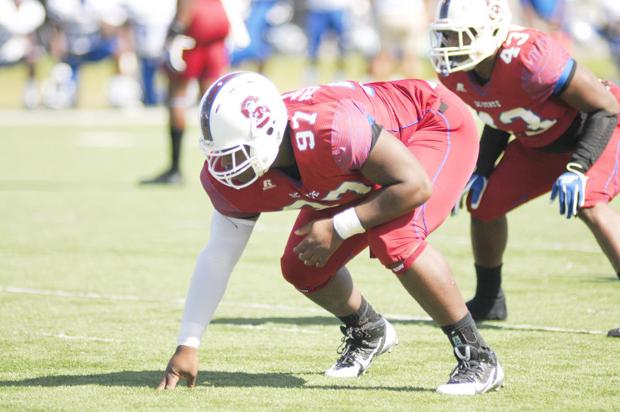
Best move: The Steelers are allergic to flash on draft days. They make sensible, late-in-the-round picks and get out of the way. That was the case once again as the Steelers got good value and upgraded their defense with the 2016 NFL draft. Five of the Steelers' seven picks went to the defense. "It's looking very defensively," said outside linebackers coach Joey Porter about the class. "Steeler Nation, we still have pride in our defense," Porter said. The Steelers feel they got a third-round gem in defensive tackle Javon Hargrave, who fought the small-school label out of South Carolina State but produced with 37.5 sacks in his career. With Steve McLendon gone and Dan McCullers hardly a guarantee to start, Hargrave will have a chance to play right away. Defensive line coach John Mitchell is high on Hargrave, who can rush the passer on third down from the tackle spot. Hargrave is considered nimble for his 300-pound frame, so if he can help stop the run on early downs, he'll make the Steelers look really smart. He's not a traditional nose tackle, but the Steelers want more versatility from the tackle spot now anyways.
Artie Burns (CB, 1st Round)
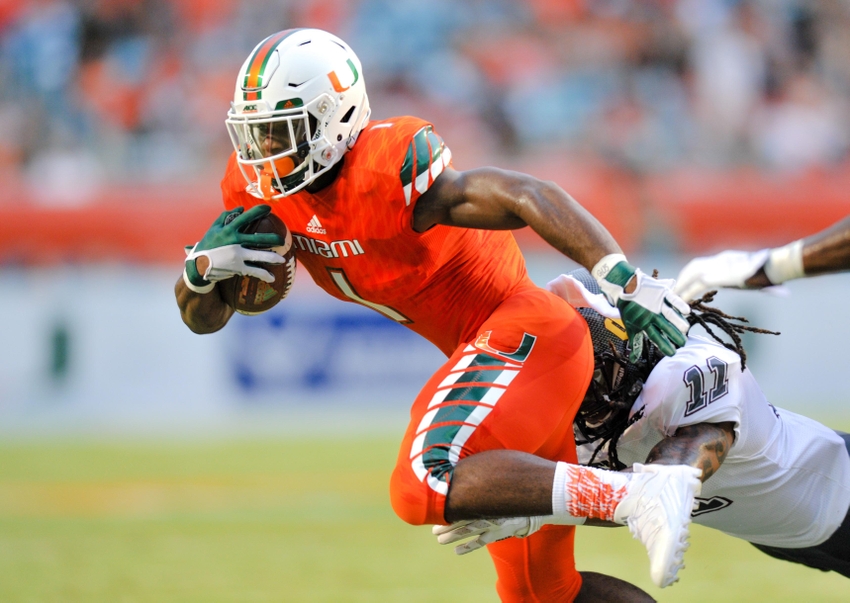
Riskiest move: The Steelers passed on several impact players to take Miami corner Artie Burns with the 25th overall pick. Some teams considered Burns a Day 2 corner. The Steelers did not. Burns' upside is obvious -- he's athletic with adequate size and tracks the football well. He's a playmaker. But the Steelers will have to be patient with Burns, a bump-and-run corner in a defense that relied heavily on zone coverage last year. The Steelers can tweak that approach, of course. Maybe Burns is the catalyst for that change. I believe the Steelers targeted William Jackson III, and when Jackson went to the Bengals one pick earlier, the Steelers went with a high-risk, high-reward cover man who wasn't considered a coveted first-rounder.
Sean Davis (S, 2nd Round)
Most surprising move: The Steelers' picks were pretty straightforward, but Maryland safety Sean Davis is at least a mild surprise, considering the talented crop of safeties available in Round 2. The Steelers took Davis over Ohio State's Vonn Bell, Boise State's Darian Thompson and many others. But despite reports of occasional poor tackling and footwork, there's a lot to like with the 6-foot-1 Davis, who has experience as a corner and safety and is an impressive athlete (4.46-second 40 time, 37 1/2-inch vertical). The Steelers have basically put the starting strong safety spot on a tee for Davis. When addressing the media Friday night, defensive backs coach Carnell Lake made it sound like he'll expect Davis to contribute right away. "Our needs require us for him to play safety," Lake said. "That is one area that we had to adjust."
Travis Feeney (OLB, 6th Round)
File it away: Sixth-round outside linebacker Travis Feeney of Washington has ridiculous upside for the sixth round. Check these measurables for a 6-foot-4, 226-pounder: 4.5-second 40-yard dash, 40-inch vertical, 130-inch broad jump. This is late-Day 2/early Day 3 ability on paper. The Steelers say they had Feeney ranked higher than the 220th spot where they found him. Pass-rusher is one position where depth is irrelevant. You can never have enough good edge guys. The Steelers have a crowded group here but Feeney will have a chance to carve out a role because of his ability.
Thumbs up: This thumb almost trended downward, but the Steelers' premium for speed and athleticism defensively prevailed here. For Pittsburgh, this draft includes the seventh defensive back off the board in the first round and an overall lack of offensive weaponry (no skill players in the first six rounds). But the Steelers were dedicated to improving the secondary with Burns and Davis in the top two rounds. Both are long and fast. This pass defense needs that. That's largely why the Steelers remain in the B range for draft grades. There are no eye sores in this class. Lots of solid moves.